Green bedroom walls: Complete guide to shades, styles and accessories
Green transforms a bedroom into a peaceful haven. Discover the best shades, winning color combinations and accessories that enhance green walls.
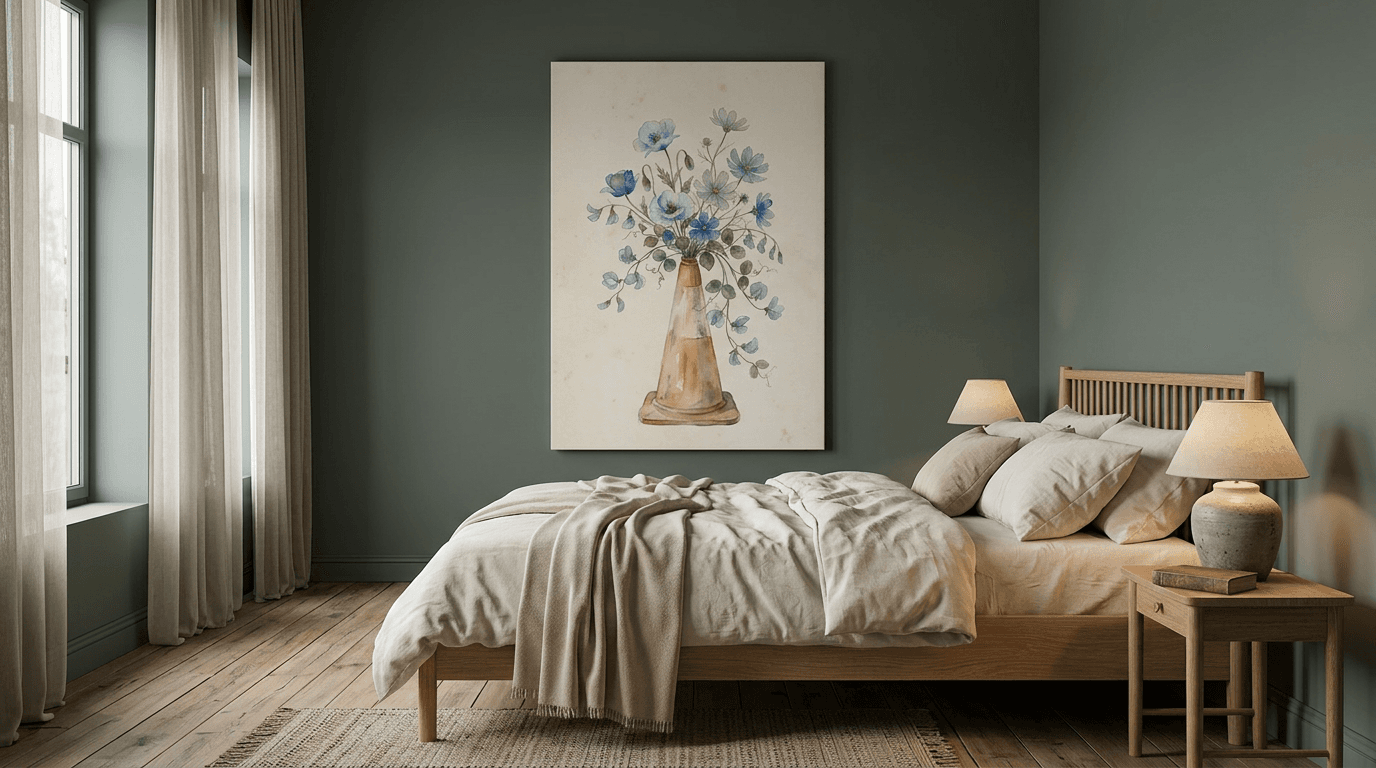
Green is emerging as the star color for bedrooms in 2025: calming, natural, infinitely versatile. Yet decorating a bedroom with green walls requires method—choosing the wrong shade or pairing it with the wrong materials can transform a cocoon into a cold or oppressive space.
This guide gives you the keys to successfully pull off your green wall bedroom decor: which shades to favor based on room orientation and size, how to compose harmonious palettes with furniture and textiles, and especially how to use posters and wall art to amplify the desired effect. You'll leave with a concrete action plan, tested combinations, and mistakes to absolutely avoid.
Why Choose Green for Bedroom Walls?
Green is establishing itself as the color of choice for transforming a bedroom into a true cocoon. Unlike classic neutral tones, it brings a living, organic dimension that speaks to our innate need for nature. This hue possesses the rare ability to be both energizing and calming, depending on the chosen shade.
The Psychological Benefits of Green
Green acts directly on our nervous system by reducing stress and promoting concentration. Studies in environmental psychology show it improves sleep quality and decreases nighttime anxiety. This color also stimulates creativity—a valuable asset if your bedroom doubles as a reading or work space. By evoking vegetation and natural landscapes, it creates a soothing connection with the outdoors, even in the heart of the city.
A Lasting and Timeless Trend
Far from being a passing fad, green spans decades without aging. From the sage greens of the 1920s to the forest greens of current Scandinavian interiors, this palette remains relevant. Its main advantage? It adapts to all styles—from Nordic minimalism to bohemian maximalism—and naturally pairs with wood, linen, rattan, or gold metal.
Essential Green Shades for a Bedroom
Not all shades of green create the same atmosphere. The choice of shade determines your bedroom's overall ambiance, its relationship to light, and even the sense of space. Here are the five essential green shades for transforming your bedroom into a calming refuge.
Sage Green: Softness and Elegance
Sage green remains the safe bet for a bedroom. This grayed shade, halfway between green and beige, brings natural sophistication without ever weighing down the ambiance. It works particularly well in medium-sized bedrooms facing east or west, where it captures natural light while maintaining its depth. Sage green pairs with almost everything: light wood, white linen, brushed brass. It's the ideal shade if you're decorating your first green bedroom.
Almond Green: Lightness and Serenity
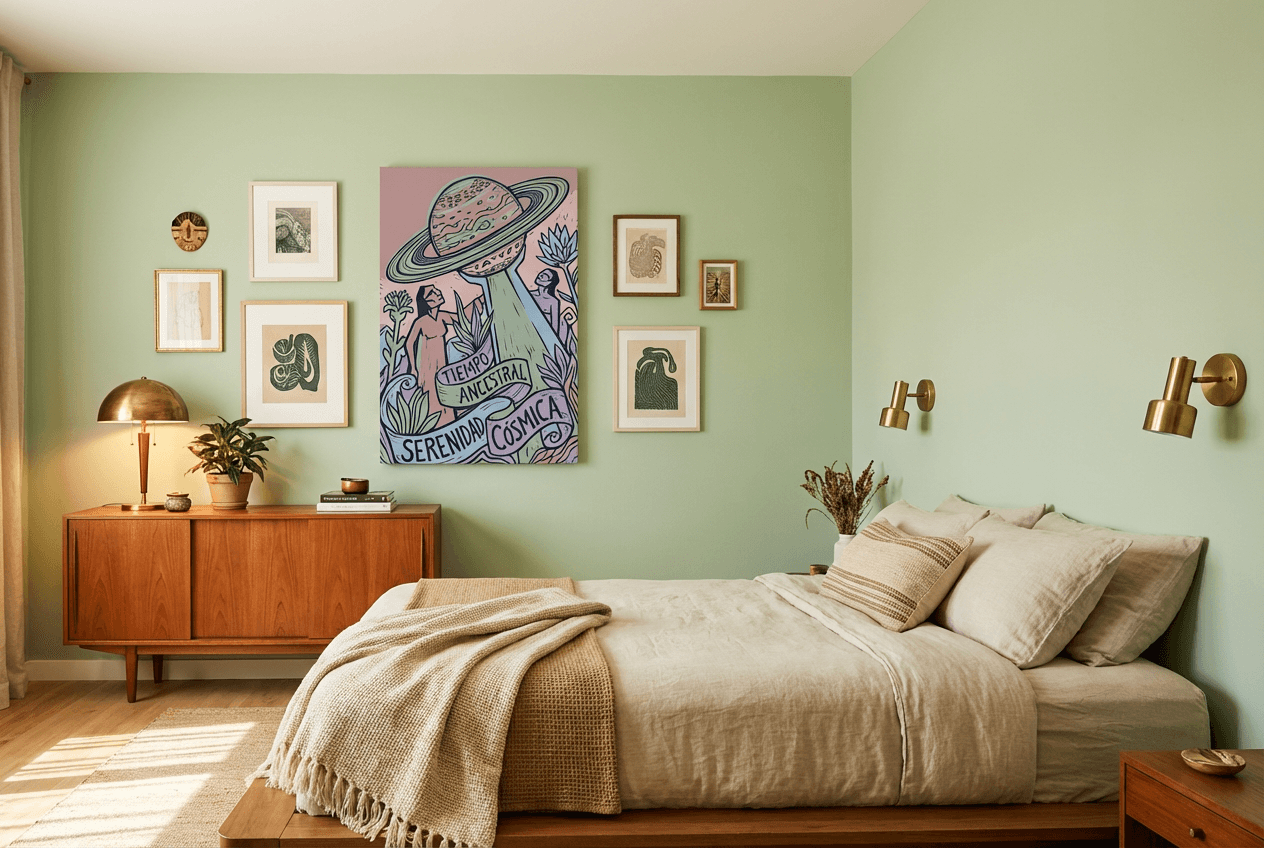
Lighter than sage, almond green leans toward very soft beige-green. This almost-neutral shade suits small bedrooms or those facing north, as it reflects light instead of absorbing it. It creates a cocooning atmosphere without ever appearing cold. Almond green naturally harmonizes with nature posters in earth and cream tones, which extend its calming effect.
Aqua Green: Freshness and Luminosity
Aqua green, with its bluish notes, evokes the Mediterranean and summer mornings. This luminous shade visually enlarges the space and suits light-filled bedrooms. It stands out for its ability to stay fresh without becoming icy. Pair it with pure white and cotton textiles to maximize its invigorating effect.
Dark Green (Teal, Bottle): Intensity and Nobility
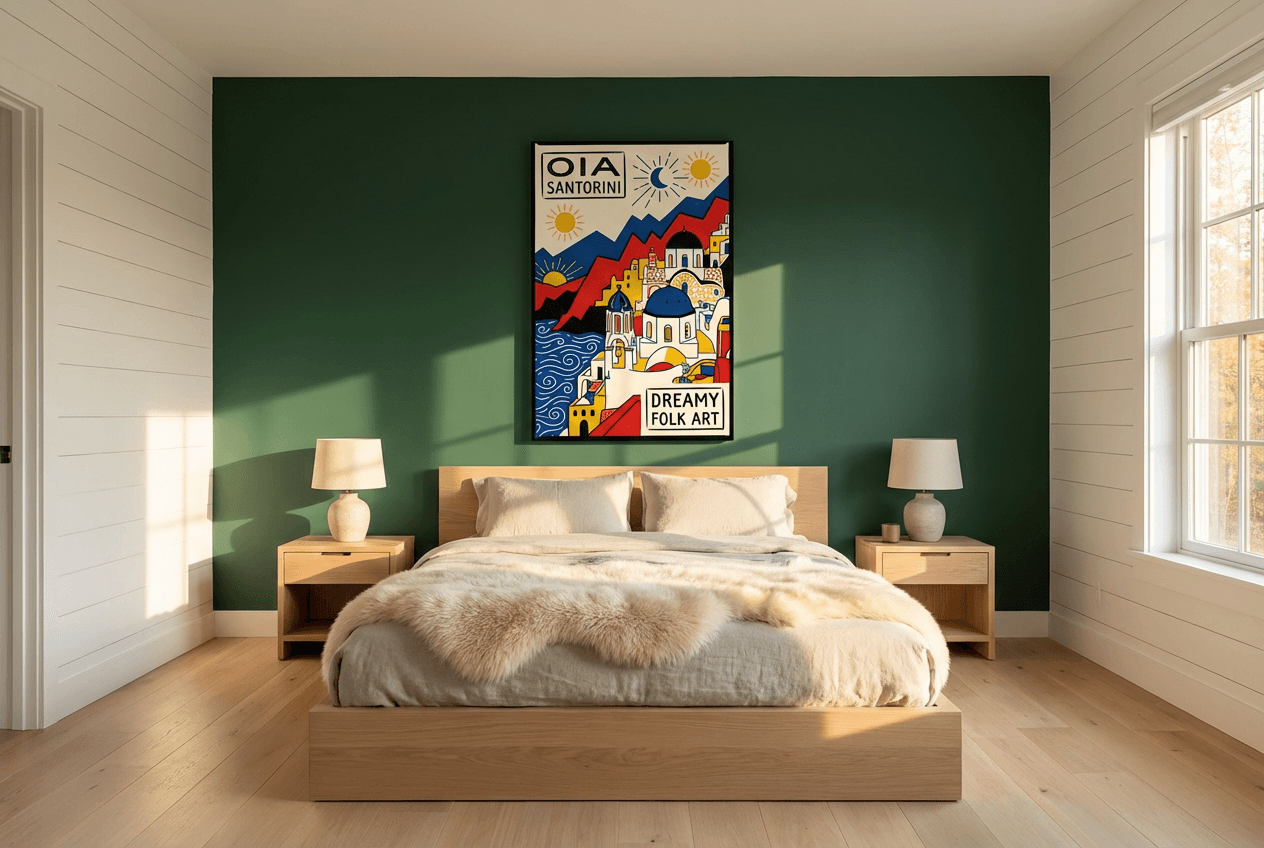
Deep greens transform a bedroom into a sophisticated jewel box. Teal or bottle green requires a spacious, well-lit room to avoid an oppressive effect. Reserve it for a single wall—ideally the headboard wall—and compensate with posters for bedroom featuring bright visuals that create visual breathing points.
Mint Green: Modernity and Whimsy
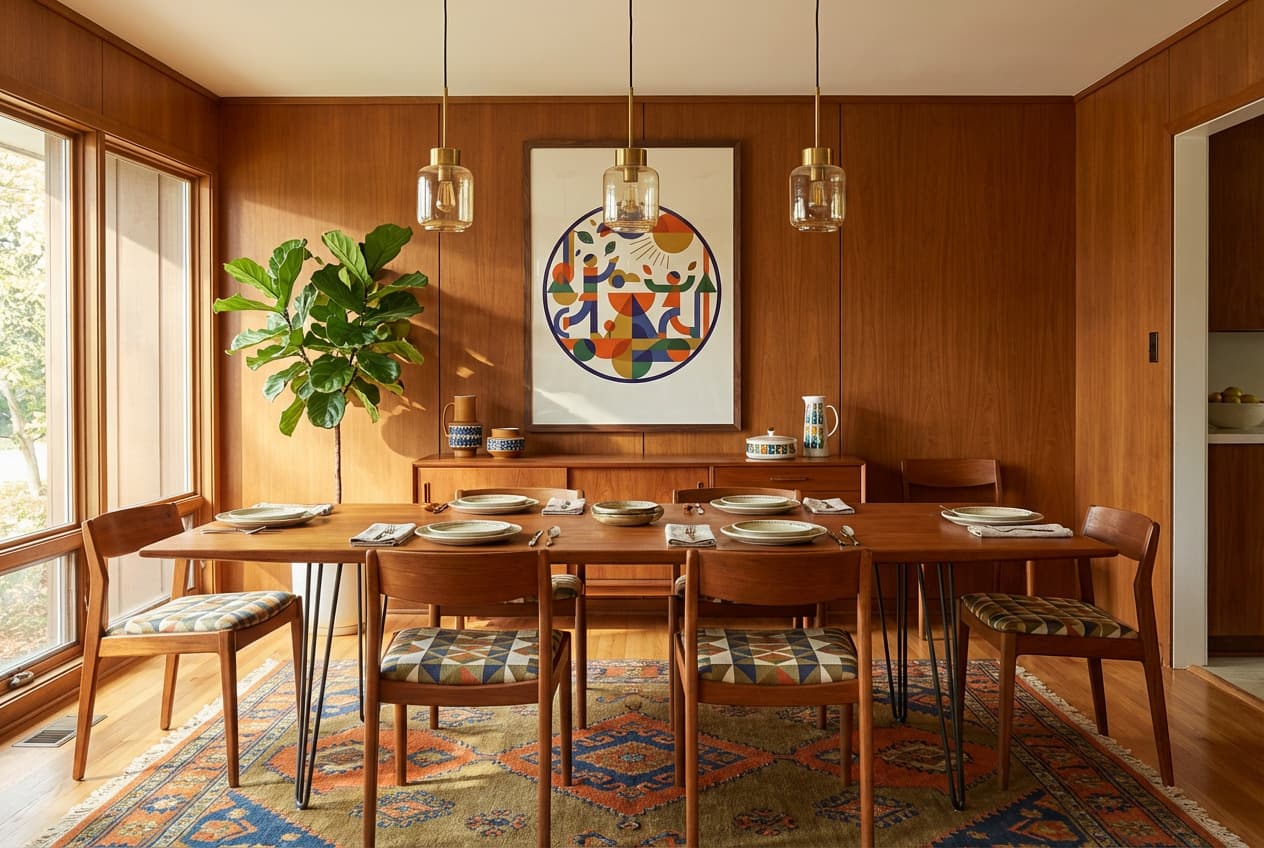
Mint green, more daring, injects a dose of contemporary freshness. This pastel shade works best in teen bedrooms or Scandinavian-style spaces. It requires streamlined furniture and minimalist accessories to avoid tipping into kitsch. Use it sparingly, on a wall section or as wainscoting.
What Colors to Pair with Green Bedroom Walls?
Green pairs with a surprisingly wide palette, but not all combinations create the same ambiance. Here are the duos that work every time, tested in real bedrooms.
Neutral Tones: Beige, Gray, Off-White
Neutrals calm green without neutralizing it. Beige warms sage or almond green, pearl gray enhances aqua green, off-white softens deep green. These shades allow green to breathe while creating a sober base for bedding and textiles. A tip: avoid pure white with dark green—the overly harsh contrast can tire the eye.
Warm Shades: Camel, Mustard, Dusty Rose
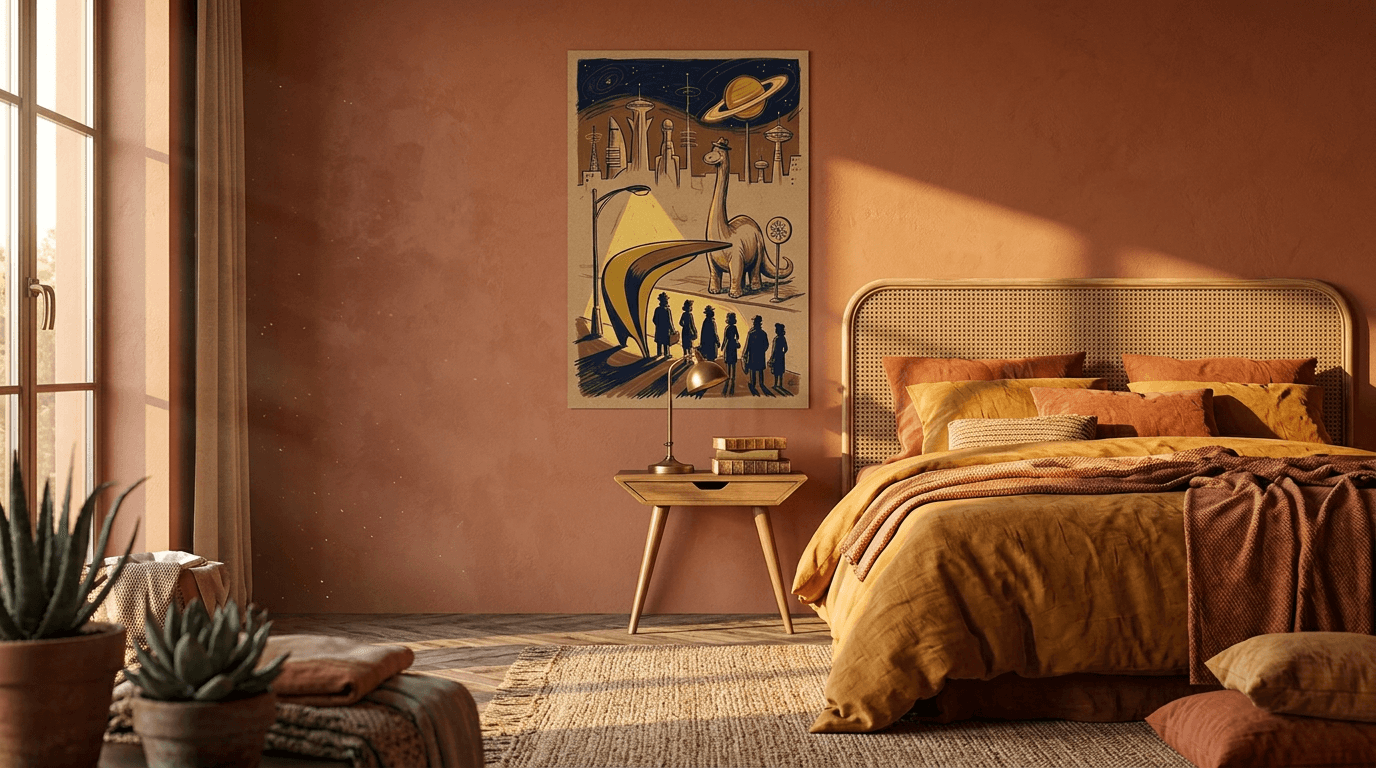
For a cocooning bedroom, go with camel or terracotta with olive green. Mustard awakens sage green without aggression, while dusty rose creates an unexpected harmony with aqua greens—a very trendy combination in 2025. These warm colors ideally appear in cushions, throws, and escape into breathtaking landscapes with golden tonalities.
Gold and Copper Accents
Brass, brushed gold, and copper amplify the luxurious side of deep greens. Bedside lamps, wall hooks, thin frames: these warm metals capture light and warm the atmosphere. Dose them sparingly—three to five touches are enough to avoid overload.
Natural and Light Wood
Light oak, beech, rattan: natural wood anchors green in an organic aesthetic. It brings texture and warmth without competing with the wall color. Favor light woods for small bedrooms, darker woods for generous spaces. Caning and rattan add an artisanal dimension that particularly enhances almond and sage greens.
Decor Styles That Enhance Green Walls
A green wall doesn't dictate a single style. On the contrary, this color adapts to a multitude of aesthetic universes, from Nordic minimalism to bohemian exuberance. The key is choosing furniture, textiles, and wall decor consistent with the desired atmosphere.
Scandinavian Style: Minimalism and Natural Elements
Sage or almond green integrates perfectly into a Scandinavian bedroom. Pair it with light wood furniture (birch, bleached oak), white or pearl gray linen bedding, and a few black touches to structure the space. Posters with clean lines—geometric patterns, Nordic landscape photographs—reinforce this aesthetic without weighing down the wall.
Bohemian Style: Textures and Plants
Deep or aqua green becomes the ideal backdrop for layering macramé, Berber rugs, and hanging plants. Multiply materials: rattan, velvet, woven cotton. Botanical posters or canvases depicting lush natural scenes amplify the cocoon effect. Dare controlled accumulation: three canvases of different sizes create a warm gallery wall.
Retro-Modern Style: Gold Details and Vintage
Bottle or teal green calls for gold and copper accents. Choose a corduroy velvet headboard, brass sconces, and gold frames for your wall art. Vintage illustrations—travel posters, antique botanical prints—dialogue with green for a sophisticated and timeless result.
Country Style: Wood and Raw Materials
Olive or khaki green harmonizes naturally with raw wood, crumpled linen, and artisanal ceramics. Favor solid oak furniture, wicker baskets, and ecru textiles. Canvases depicting rustic landscapes or farmhouse scenes complete this authentic aesthetic.
Accessories and Furniture for a Green-Walled Bedroom
A green wall isn't enough to create a harmonious bedroom. Accessories and furniture play a determining role in the visual balance of the whole. The goal: enrich the atmosphere without weighing down the space, by choosing pieces that dialogue with the chosen shade of green.
Bedding: Colors and Materials
Bedding anchors the bedroom's style. On a sage green wall, favor natural linen sheets, sand beige, or pearl gray for Scandinavian softness. Deep green calls for more luxurious textiles: terracotta velvet, Egyptian cotton in off-white, or even a discreet floral pattern. Natural materials—washed linen, cotton percale, gauze—reinforce green's calming effect. Avoid overly busy prints that would compete visually with the wall.
Green Plants: Creating an Urban Jungle
Paradoxically, green plants work wonderfully on a green wall, provided you play with contrasts in texture and shade. A monstera with large glossy leaves contrasts with a matte almond green wall. Hanging pothos or ferns add vertical depth. Three to five plants suffice in a medium-sized bedroom—beyond that, the jungle effect can become oppressive for rest.
Frames, Posters, and Wall Art
Wall art visually structures a green wall. Posters in warm tones—citrus, coffee, spices—create dynamic contrast on aqua green. For a more contemplative ambiance, opt for monochrome botanical illustrations or calming landscapes. Natural wood or matte black frames integrate better than pure white, which can create too sharp a break.
Rugs and Textiles
A natural fiber rug—jute, sisal, wool—anchors the space and softens acoustics. On a dark green wall, a beige or terracotta rug warms the whole. Off-white linen curtains filter light without weighing down, while a mustard throw tossed on the bed adds a touch of warmth.
Lighting: Pendants and Lamps
Lighting transforms the perception of green. A rattan or brushed brass pendant diffuses warm light that enriches the shades. Avoid cold LED bulbs that pull green toward gray. Multiply sources—bedside lamp, discreet string lights—to create adjustable ambiances depending on the time of day.
Enhance Your Green Walls with Decorative Posters and Canvases
The choice of wall visuals radically transforms a green bedroom's atmosphere. A green wall without decoration can seem flat, while a thoughtful selection of posters or canvases creates depth and reinforces the desired calming effect. The trick: favor works that dialogue with the shade of green rather than compete with it.
Botanical Posters and Natural Motifs
Nature prints organically extend the plant energy of green walls. Palm leaves, eucalyptus branches, or vintage botanical illustrations amplify the connection with nature without weighing down the space. On sage green, opt for sepia or black and white tonalities. On deep green, prints in ochre or terracotta tones create warm contrast.
Abstract and Geometric Art
Organic abstract forms—fluid curves, subtle gradients—bring a contemporary touch to green walls. Minimalist geometric compositions work particularly well with aqua or mint greens, creating balance between structure and serenity. Favor palettes limited to 2-3 colors including neutrals.
Calming Landscape Photographs
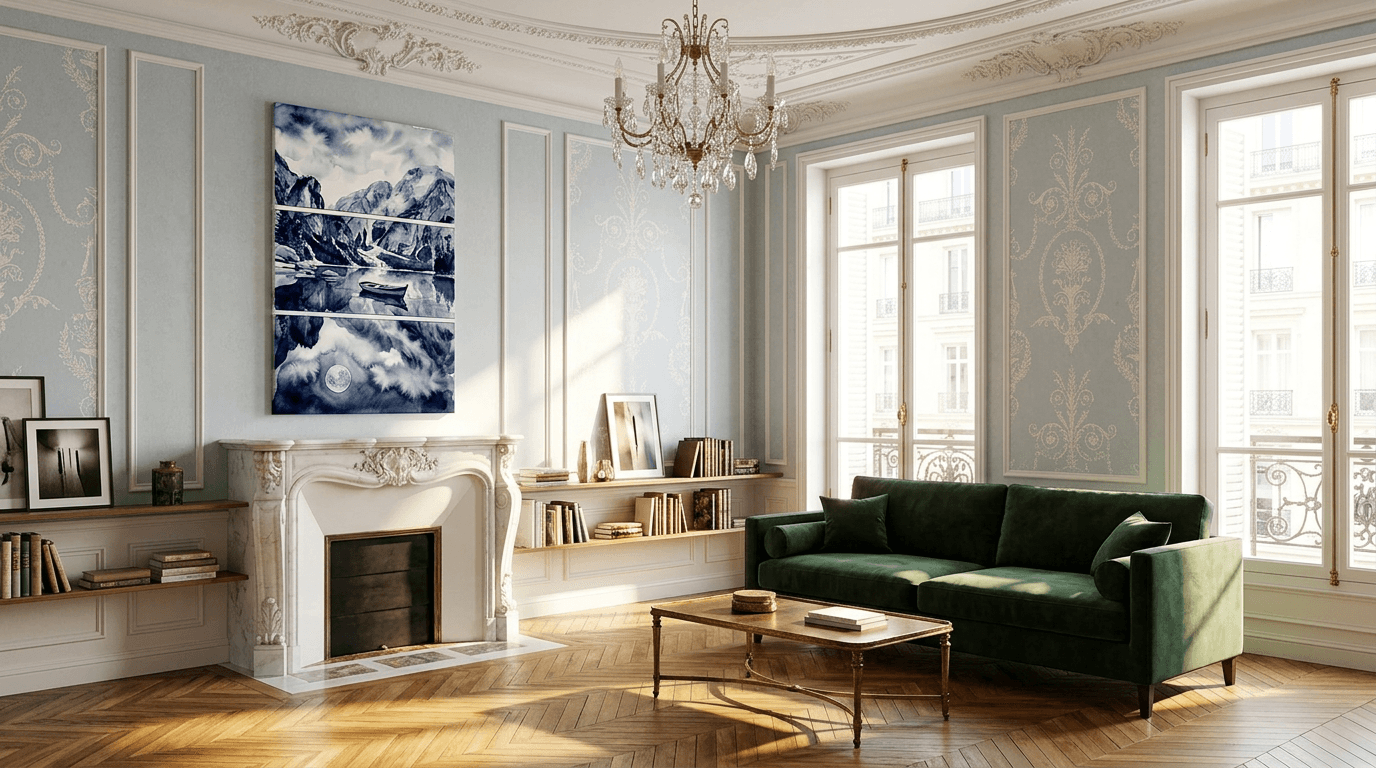
Natural scenes—dunes, oceans, misty mountains—reinforce the restful effect of a green bedroom. A large-format canvas of a seascape on an aqua green wall evokes a Mediterranean escape. Panoramic formats (50×70 or 60×90 cm) maximize visual impact without cluttering.
How to Choose Format and Framing
For a green wall, canvases on stretchers bring architectural presence without frames that could weigh things down. Large-format posters (A2 minimum) create an effective focal point. Arrange multiple pieces in a gallery wall configuration, maintaining consistent spacing between frames for a cohesive look that doesn't overwhelm the space.
Mistakes to Avoid When Painting Your Bedroom Green
Painting a bedroom green can transform the space into a calming sanctuary—or a visual disaster if certain mistakes are made. Here are the most common pitfalls and how to avoid them.
Choosing the Wrong Green Based on Light
Mistake number one: selecting a dark green for a north-facing or poorly lit bedroom. The result? An oppressive space that absorbs light instead of diffusing it. Deep greens require generous natural light. In a dark room, favor sage or almond green that captures and reflects even the slightest light source.
Overloading the Space with Too Much Green
Four green walls + green bedding + green curtains = plant cave effect. Green needs to breathe. Limit yourself to one or two accent walls, then counterbalance with neutrals (beige, natural linen, off-white). Even nature prints should be chosen sparingly: one or two visuals are enough to reinforce the theme without saturating.
Neglecting Texture Harmony
A matte green wall paired only with smooth, cold surfaces (metal, glass) creates sensory imbalance. Integrate crumpled linen, woven rattan, raw wood. These organic textures soften green and add tactile depth.
Ignoring Room Size and Proportion
In a bedroom under 12 m², painting all four walls bottle green visually shrinks the space. Opt for a single accent wall behind the bed, complemented by light tones on other walls. This asymmetry creates perspective without compromising the sense of space.
Practical Tips for Highlighting a Green Wall
A well-highlighted green wall becomes the bedroom's charm asset. Here are four concrete levers to maximize its impact without weighing down the atmosphere.
Playing with Textures and Materials
Layer textures to avoid a flat effect: a caned headboard, a crumpled linen throw, a woven jute rug. These organic materials soften green and create depth. A sage wall warms up with corduroy velvet; a bottle wall balances with raw washed cotton.
Optimizing Natural and Artificial Light
Place a table lamp near the green wall to reveal its nuances in the evening—a warm white bulb (2700K) brings out golden undertones. If the bedroom lacks natural light, install a mirror facing the window to double the luminous effect and visually lighten the space.
Creating a Wood or Fabric Headboard
A light oak or rattan headboard structures the accent wall and offers natural contrast to green. Textile alternative: a large tufted panel in ecru linen that absorbs sound while creating a cocoon zone. XXL format bedroom posters (60×90 cm) also work as graphic headboards.
Aerating with Light Accessories
Introduce off-white, sand beige, or pearl gray via cushions, curtains, and poster frames to create visual breathing spaces. These light touches prevent green from saturating the space and maintain a sense of lightness. If you're looking to extend this thoughtful approach to other rooms, exploring how to create cohesive spaces throughout your home with a complete guide to decorating your living room can help you develop a unified aesthetic vision.
Green Bedroom: From Dream to Reality
Transforming your bedroom with green walls isn't an intimidating project—it's an invitation to create a personal refuge that breathes serenity. You now have all the keys: choosing the shade adapted to your lighting, composing a harmonious palette, selecting textures that soften the whole, and avoiding pitfalls that tarnish the desired effect.
The secret to a successful green bedroom lies in three words: balance, authenticity, personalization. A sage wall enhanced by natural bedding and a large abstract canvas creates a calming atmosphere effortlessly. Bottle green paired with raw wood and posters for bedroom in warm tones transforms the space into a luxurious cocoon.
Launch yourself with confidence: start with an accent wall, test your color combinations with samples, then progressively add decorative elements that tell your story. Your green bedroom awaits you—and it will be exactly the one you dreamed of.
Green walls transform your bedroom into a calming refuge, provided you find the shade that resonates with your personality and balance it with the right materials. Whether you opt for soft sage or bold emerald, the essential thing remains creating a cocoon where you truly feel at home. Take time to observe your room's natural light, test samples at different times of day, and let yourself be guided by your instincts. A successful green bedroom is never the result of chance: it's a harmonious dialogue between color, texture, and light. So, ready to take the plunge?