Decorating your living room: Complete guide to creating a beautiful and functional space
Creating a living room that's both beautiful and practical requires a methodical approach. Discover our proven tips for decorating your living room in harmony with your lifestyle.
The living room is the beating heart of your home — the space where you unwind after a long day, where you welcome loved ones, where life truly unfolds. Yet decorating your living room can feel daunting given the multitude of choices: which color palette to adopt, how to arrange furniture, which decorative elements to favor without overcrowding the space?
This guide walks you through step by step to transform your living room into a place that reflects you — aesthetic, functional, and welcoming. You'll discover how to define your style, orchestrate colors and lighting, choose and arrange your furniture intelligently, then elevate everything with decorative touches that make all the difference. Whether you're starting from scratch or looking to refresh an existing space, you'll find concrete advice, visual examples, and tips to create a living room that invites both comfort and inspiration.
Why Decorate Your Living Room Well?
The living room occupies a special place in your home. It's the living space par excellence, where you spend your evenings, receive guests, and create your daily memories. Unlike bedrooms or the kitchen, the living room must meet multiple needs: relaxation, conviviality, work, sometimes even children's play.
Thoughtful decoration radically transforms the atmosphere of this room. A well-appointed living room promotes psychological well-being, reduces visual stress, and even improves the quality of your social interactions. Studies in environmental psychology confirm it: we're more relaxed and creative in harmonious spaces.
An Investment That Enhances Your Daily Life
Decorating your living room isn't a frivolous expense. It's investing in your daily quality of life. Every element — from the sofa to wall art — contributes to creating an ambiance that reflects you. A well-chosen poster can anchor an entire room's color palette, while thoughtful lighting instantly shifts a space's mood.
The living room also reflects your identity to your guests. It's the first impression you offer, the setting for your shared moments. Taking time to decorate it intentionally means creating a place where everyone feels welcomed.
Step 1: Choose a Cohesive Decorating Style
Identify Your Personal Style
Before buying a single cushion or repainting a wall, ask yourself this question: what atmosphere makes me feel good? Flip through magazines, pin images on Pinterest, note the living rooms that instinctively attract you. Are you drawn to clean lines and white surfaces? Or rather to layered textiles and warm colors? This preliminary exploration saves you from impulse purchases and visual inconsistencies.
List three adjectives that describe your ideal living room — "bright," "cozy," "zen," "creative." These keywords will guide every subsequent decision, from the sofa to wall posters.
Modern, Scandinavian, Cozy, Bohemian: The Major Trends
Modern style favors geometric lines, neutral colors (gray, white, black), and materials like metal and glass. Perfect if you love visual order and functional simplicity.
Scandinavian adds softness to minimalism: light wood, natural textiles, off-white. The atmosphere remains uncluttered but welcoming, almost meditative.
Cozy style relies on plush materials — wool, velvet, thick rugs — and a palette of beiges, caramels, and browns. Ideal for those seeking tactile comfort above all.
Bohemian celebrates joyful accumulation: ethnic patterns, cascading plants, mixtures of textures and earthy colors. If you love to travel and collect, this is your territory.
Industrial exposes brick, raw metal, and visible pipes, with massive furniture in reclaimed wood. Urban and assertive.
Vintage rehabilitates past decades (50s, 70s) with thrifted furniture and retro palettes — olive green, mustard, burnt orange.
Create a Harmonious Atmosphere
Once you've identified your style, stick to it for 70 to 80% of your choices. The remaining 20% can mix other influences — a Scandinavian sofa in a modern living room, an Oia Santorini poster with warm tones in a minimalist interior. This rule avoids the hodgepodge effect while letting your personality breathe.
Think coherence, not rigidity. A common thread — a color range, a recurring material, a geometric pattern — is enough to unify disparate elements.
Step 2: Master Color and Paint
Color transforms a living room's atmosphere faster than any other element. It influences mood, alters the perception of space, and creates the backdrop against which all your furniture and accessories will stand out. The rule of three colors remains your best ally: one dominant shade (60% of the room), one secondary (30%), and one accent (10%).
Neutral Colors: A Safe Foundation
Off-white, beige, light gray, or taupe offer unmatched versatility. These shades soothe the eye, visually enlarge the space, and adapt to all styles — from modern to cozy. They constitute the perfect canvas for your furniture and wall decoration, allowing textures and materials to fully express themselves.
An entirely neutral living room is never boring if you play with nuances. Pair a pure white wall with a natural linen sofa and sand beige cushions. Tonal variations create depth without assaulting the eye.
Dare to Use Color: Accent Walls
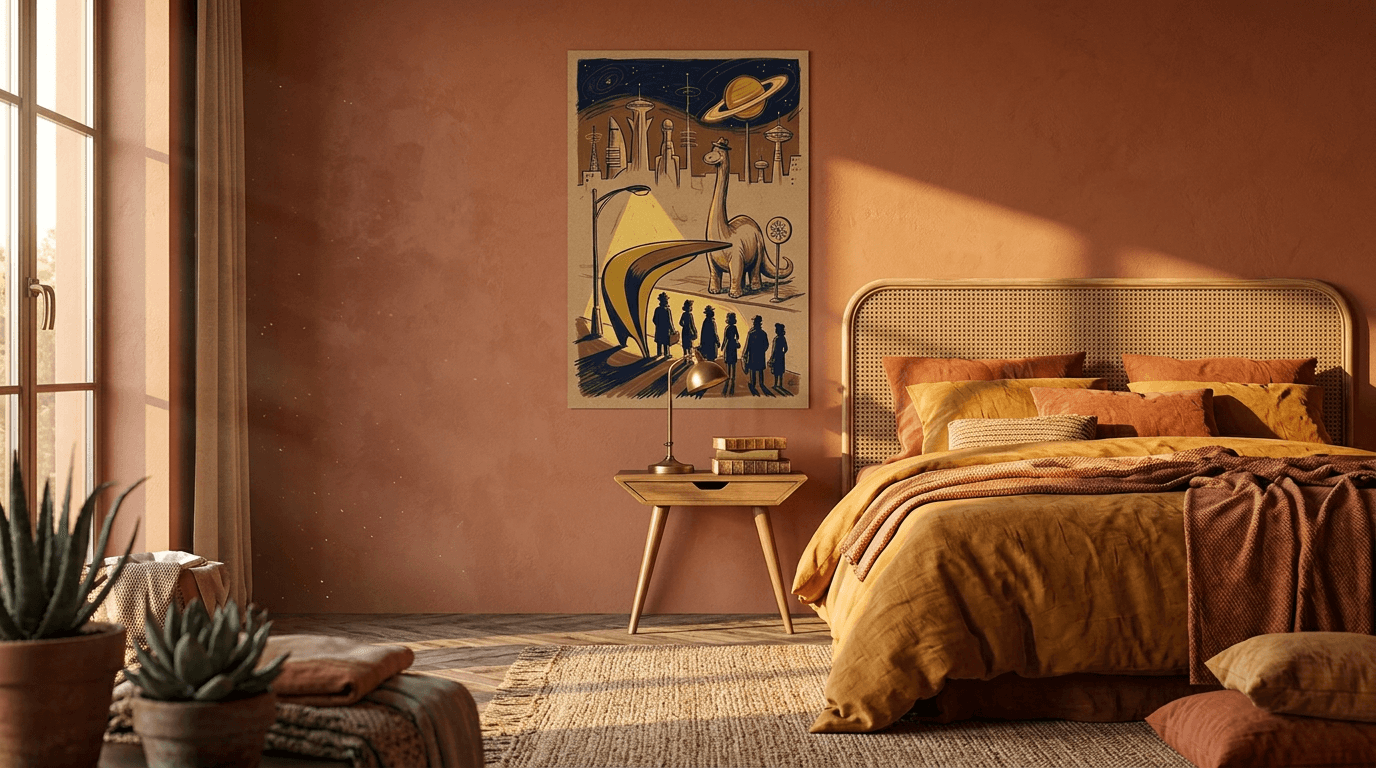
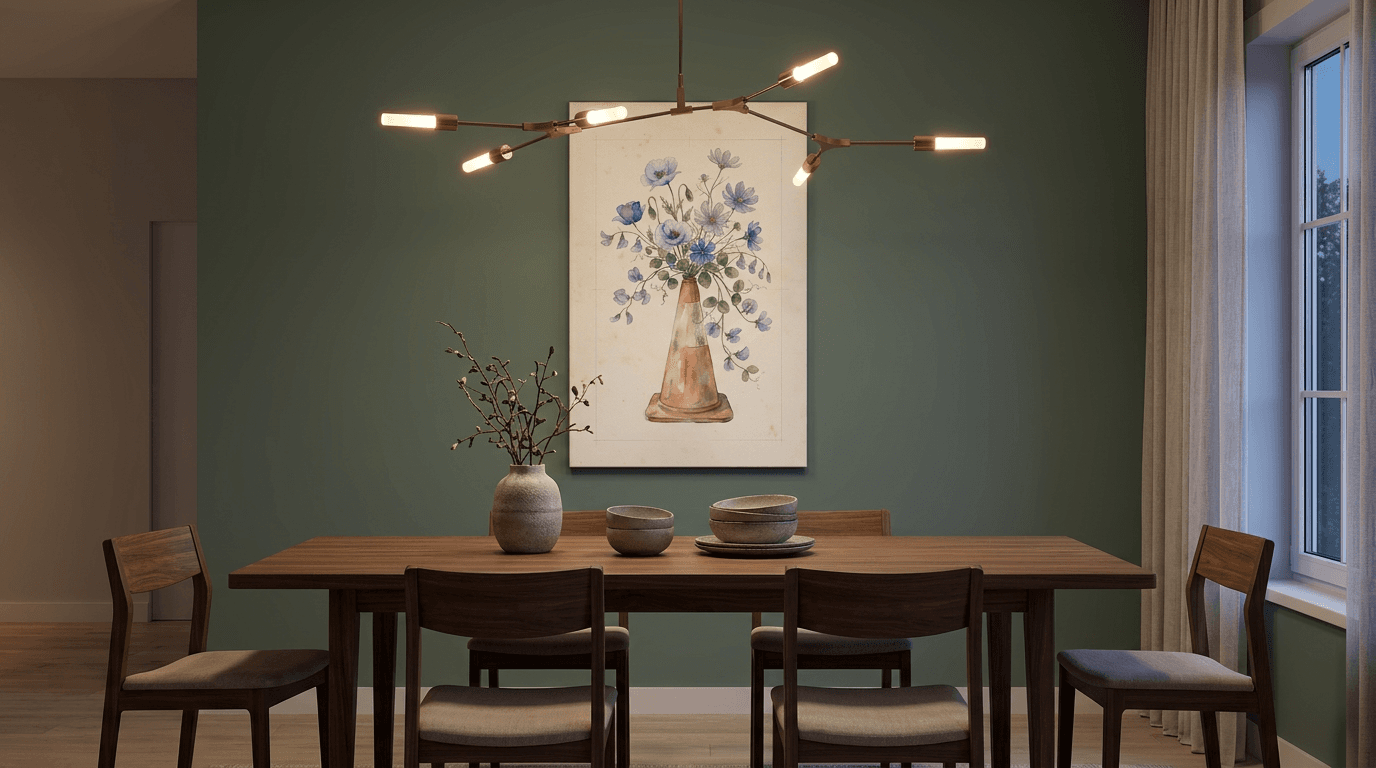
The accent wall breaks monotony without overwhelming. Choose the wall behind the sofa or the one facing the entrance — where the eye naturally lands. Peacock blue, sage green, terracotta, or anthracite gray instantly energize the room.
This technique works particularly well with contrasting wall decoration: a poster with warm tones on a deep green wall, or a black and white graphic composition on terracotta. Wall art amplifies the impact of the accent wall.
Harmonize Shades in a Small Living Room
Small spaces demand chromatic coherence. Favor a restricted palette of two to three colors maximum, avoiding overly marked contrasts that visually fragment the room. Light tones — white, rosy beige, pearl gray — reflect light and create the illusion of space.
If you dream of vivid color, reserve it for movable accessories: cushions, throws, vases. You can change them with the seasons without repainting four walls.
Step 3: Organize Space and Furniture
Successful living room layout rests on a subtle balance: each piece of furniture must find its logical place without cluttering circulation. Before buying anything, measure your room and draw a scale plan. This step will save you from the classic mistake of an oversized sofa that visually devours the space.
The Sofa: Living Room Focal Point
The sofa visually anchors your living room. Choose it proportional to the room: a 180 cm model suffices for a 15 m² living room, while a sectional or 220 cm suits spaces of 25 m² and larger. Position it ideally facing the window or perpendicular to the main wall, never with its back to the entrance — this creates an unconscious feeling of insecurity.
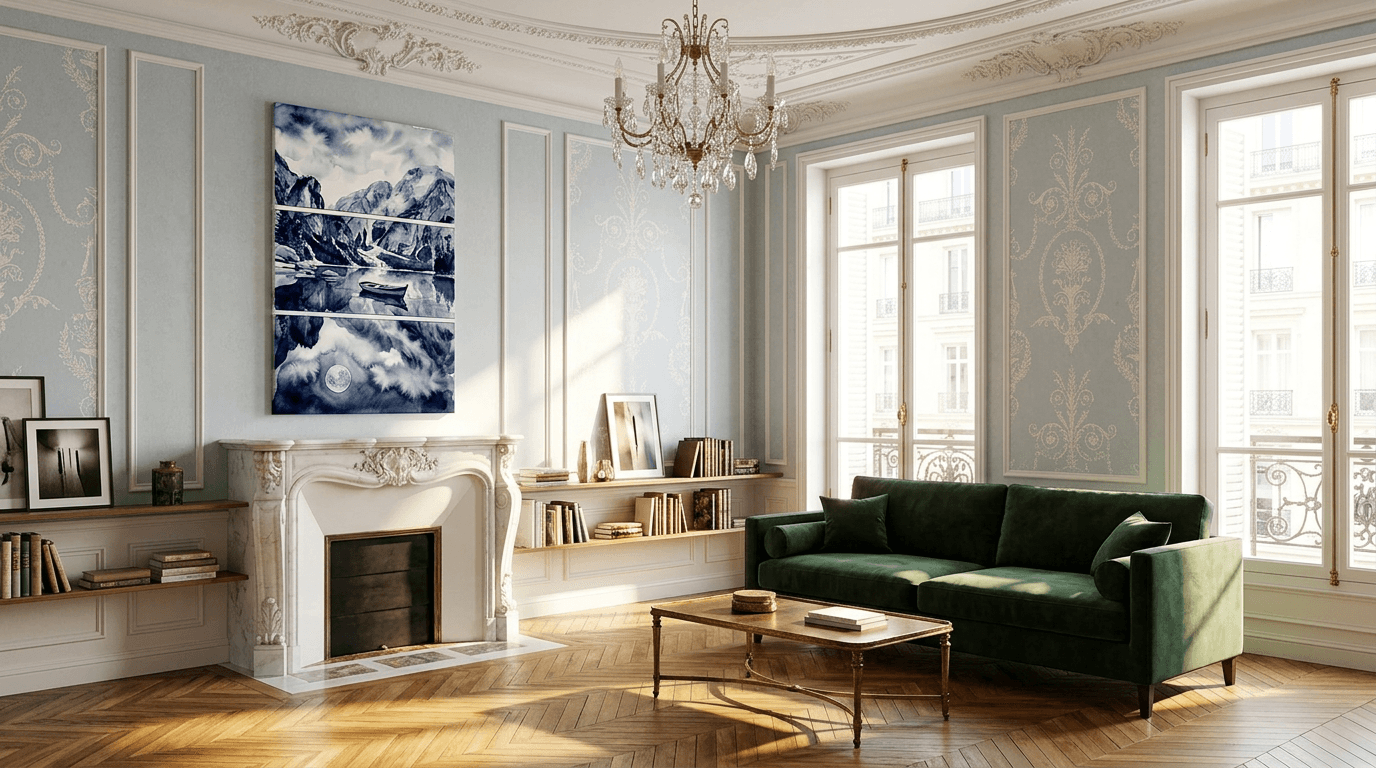
The space between the sofa and coffee table should measure 40 to 50 cm to allow comfortable seating. Above the sofa, a large format poster or a composition of several visuals creates a structuring backdrop that draws the eye without requiring additional furniture.
Arrange Furniture According to Circulation
Always leave 80 to 100 cm width for main passages. In a through living room, identify the natural path between doors and clear it completely. Low furniture — bookcases, consoles, benches — allow you to delineate space without blocking the view or light.
Avoid pushing all furniture against the walls. Pulling the sofa away slightly (even 20 cm) or positioning an armchair at an angle creates depth and makes the whole more airy.
Create Functional Zones
A well-designed living room accommodates several simultaneous activities. Define a conversation zone around the sofa, with armchairs and ottomans oriented face-to-face to facilitate exchanges. If the surface allows, install a reading corner near the window: a comfortable armchair, a floor lamp, and a small table suffice.
In large spaces, a rug visually delineates each zone without partitioning. For small living rooms, favor multifunctional furniture — a console-desk, an ottoman-storage chest — that maximizes use without multiplying volumes.
Step 4: Optimize Natural and Artificial Lighting
Lighting radically transforms a living room's atmosphere. A dark, poorly lit room always seems smaller and less welcoming, even with impeccable furniture. Light directly influences your mood, visual comfort, and the perception of your decoration's colors.
Maximize Natural Light
Start by freeing your windows. Avoid thick, opaque curtains that block light during the day — prefer light sheers in linen or white cotton that filter without darkening. If you need privacy, install venetian blinds or double-layer curtains: sheer during the day, blackout fabric in the evening.
Position your mirrors strategically facing or perpendicular to windows to reflect and multiply natural light. A large 80×120 cm mirror can significantly brighten a dark corner. Also avoid cluttering the space in front of windows with tall furniture that creates shadow zones.
Choose Appropriate Lighting Fixtures
A well-lit living room requires three layered types of light. General lighting (ceiling fixture, central pendant) provides basic brightness — aim for a minimum of 300 lux for optimal comfort. Task lighting (floor lamps, table lamps) creates islands of light near the sofa or reading chair, with warm white bulbs (2700-3000K) for a cozy atmosphere.
Accent lighting highlights your decorative elements: adjustable spots on a bookcase, wall reading lights, or sconces that emphasize your living room posters. A large canvas illuminated by a wall sconce becomes a true nighttime focal point.
Create Ambiance with Lighting
Multiply light sources rather than relying entirely on a central ceiling fixture. Three to five different light points in a 25 m² living room allow you to modulate the ambiance according to the moment — bright light for entertaining, dimmed for a movie. Install dimmer switches on your main lamps to adjust the atmosphere without changing bulbs.
Avoid harsh shadows by distributing lights evenly. A dark corner always creates an impression of incompleteness.
Step 5: Add Accessories and Personal Touches
Accessories transform a functional living room into a living space. They bring the warmth, personality, and soul that make all the difference between an impersonal room and a true cocoon. This step requires little investment but produces immediate visual impact.
Cushions, Rugs, and Textiles
Textiles create layers of comfort and texture. Arrange 3 to 5 cushions on your sofa by varying dimensions (50×50 cm and 40×60 cm) and materials: velvet for softness, linen for lightness, knit for relief. Mix geometric patterns with solids in your established color palette.
A rug delineates the living area and visually unifies furniture. Choose it large enough so that the front feet of the sofa and armchairs rest on it. Add a wool or textured cotton throw on the armrest: it serves as much as decoration as a practical element for cool evenings.
Paintings, Mirrors, and Wall Decoration
Wall decoration structures space vertically and draws the eye. Compose an asymmetrical wall gallery with 3 to 5 posters in varied formats, or opt for a large canvas above the sofa as a focal point. landscape visuals bring depth and escape, particularly effective in urban living rooms.
Mirrors amplify natural light: place one facing a window or perpendicularly to reflect a beautiful view or wall art.
Plants and Natural Elements
Living plants purify the air and create a connection with nature. A fiddle leaf fig or monstera in a corner, hanging pothos, or a collection of succulents on the coffee table suffice. Add natural elements: dried branches in a vase, decorative pebbles, driftwood. These organic touches soften architectural lines and bring calming energy.
Step 6: Integrate Storage and Organization
A well-decorated living room remains pleasant only if it stays functional. Smart storage eliminates visual clutter without sacrificing aesthetics — on the contrary, it becomes decorative elements in their own right.
Bookcases and Decorative Shelving
Open shelves structure space while displaying your favorite objects. Alternate books arranged vertically and horizontally, small sculptures, scented candles, and potted plants. Leave 30 to 40% of the space empty to avoid visual saturation. A floor-to-ceiling wall bookcase creates strong architectural impact, especially when it frames a sofa or television. For modern living rooms, favor asymmetrical wall shelves in black metal or light wood.
Multifunctional Furniture
The coffee table with integrated drawers, the ottoman chest that conceals blankets and magazines, or the window bench with hidden compartments maximize every square centimeter. A low sideboard along a wall offers an ideal presentation surface for framed posters while hiding cables, game consoles, and various accessories. These hybrid pieces are particularly valuable in small spaces.
Declutter for More Serenity
Apply the 20% rule: only 20% of your objects deserve to be permanently displayed. Store the rest in closed furniture or decorative wicker baskets. An uncluttered living room with three well-chosen decorative elements creates more impact than an overloaded room. Sort through each season — if an object brings you neither joy nor utility, free up its space.
Wall Decoration Ideas to Transform Your Living Room
Walls represent the largest visual surface in your living room. A bare wall leaves an impression of incompleteness, while a well-dressed wall instantly transforms the room's atmosphere. Wall decoration creates focal points, visually structures space, and reveals your personality.
Wall Galleries and Picture Compositions
A well-designed wall gallery tells a story and captures the eye from the entrance. Start by selecting 5 to 9 visuals that share a common thread: a similar color palette, a common theme, or coherent emotional tone. Above the sofa, favor a horizontal composition that accompanies the furniture's line without competing with it. Our dedicated gallery wall ideas guide breaks down the exact grids, spacing, and layout formulas for getting this right.
The "invisible frame" technique works perfectly: arrange your elements on the floor to test several layouts before drilling. Maintain 5 to 8 cm spacing between each piece to create breathing room. Rectangular formats in 50×70 cm and 30×45 cm naturally combine to form dynamic ensembles.
For a modern living room, opt for a geometric composition with aligned lines. A bohemian interior happily accepts a more organic arrangement, with varied heights and subtle overlaps.
Wallpaper and Textured Coverings
Wallpaper is making a spectacular comeback, far from the floral patterns of the 80s. Geometric patterns, botanical panoramics, and textures imitating concrete or caning bring architectural depth impossible to reproduce with paint alone.
Reserve wallpaper for a single wall — generally the one behind the sofa or facing the entrance — to avoid visual saturation. Textured wallpaper in neutral tones (linen, clay, graphite) creates a sophisticated backdrop that highlights your other decorative elements without competing with them.
XXL panoramics transform a wall into a work of art. A misty forest, a mountain landscape, or a watercolor abstraction instantly give depth to a small living room. Pair them with streamlined furniture to let the wall fully express itself.
Posters and Canvases for Every Style
Large format posters and canvases constitute the most accessible and modular solution for dressing your walls. A single 50×70 cm or 60×90 cm visual above the sofa creates immediate impact without requiring complex composition.
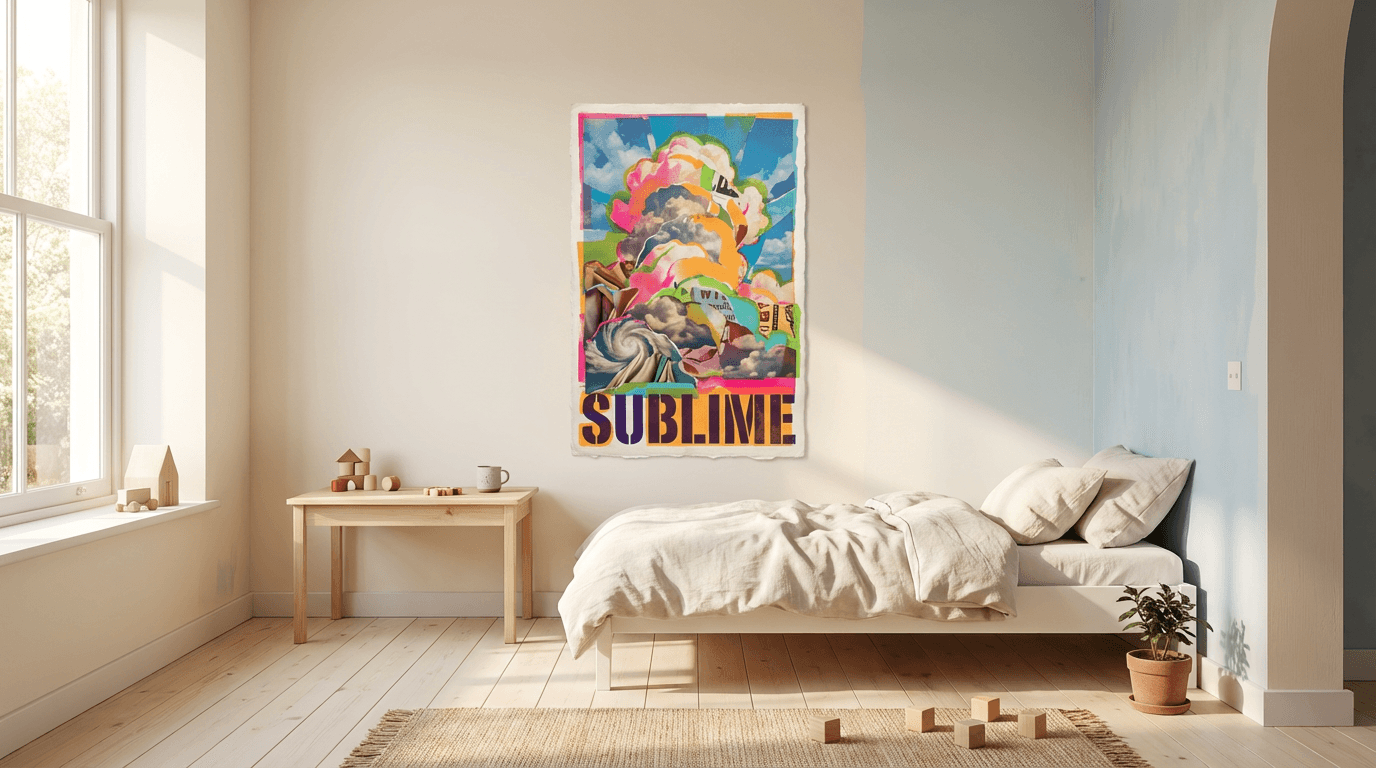
For a Scandinavian living room, favor minimalist visuals with clean lines — Nordic landscapes in pastel tones, elegant typography, or botanical compositions on light backgrounds. A bohemian living room flourishes with sunny scenes, Mediterranean architecture in warm hues, or abstract terracotta and ochre compositions. If this ambiance inspires you, our collection of living room posters offers visuals that capture exactly this energy.
Industrial interiors gain character with contrasting graphic visuals, nocturnal urban landscapes, or geometric compositions in black and white. Stretched canvases add a tactile dimension and more assertive presence than a poster — particularly effective for large formats in generous spaces.
Common Mistakes to Avoid When Decorating Your Living Room
Even with the best intentions, certain decorating mistakes can transform your living room into a cluttered or unbalanced space. Identifying these common pitfalls saves you from regrettable investments and helps you create a harmonious interior from the start.
Overcrowding the Space
The most frequent mistake consists of accumulating too much furniture, accessories, and decorative objects. An overloaded living room visually suffocates and reduces the feeling of space, even in a large room.
Limit yourself to functional essentials: a sofa, a coffee table, two or three light sources, and 3 to 5 decorative elements maximum per visible surface. Prefer one large impactful landscape poster rather than a dozen small scattered frames. Each object must justify its presence by its function or beauty — if you hesitate, remove it.
Apply the rule of free surfaces: keep 30% of your shelves and tables empty so the eye can breathe. This visual discipline transforms a loaded interior into an elegant and restful space.
Ignoring Scale and Proportions
Proportion errors create visual imbalance difficult to correct without replacing furniture. A sofa too small in a large living room seems lost, while massive furniture crushes a reduced space.
Respect these ratios: your sofa should occupy about two-thirds of the main wall's length, your rug must extend at least 20 cm on each side of the sofa, and your wall art should cover 60 to 75% of the width of the furniture it surmounts. A 50×70 cm poster above a 180 cm sofa will appear tiny — opt instead for a 60×90 cm format or a composition of several visuals.
Always measure before buying, and use masking tape on the floor to visualize a piece of furniture's actual footprint. This simple precaution avoids costly returns and years of aesthetic frustration.
Neglecting Light and Ambiance
Inadequate lighting ruins even the most beautiful decoration. Settling for a central ceiling fixture creates flat, unflattering light, while lighting that's too dim makes the space sad and impractical.
Multiply light sources: a floor lamp near the sofa, a table lamp on the side furniture, and adjustable spots to highlight your posters or plants. Vary temperatures between warm white (2700-3000K) for relaxation zones and neutral white (4000K) for work areas if you have a desk corner.
Decorating your living room is above all about creating a space that reflects you — a place where aesthetics meet comfort, where every element has its reason for being. You now have all the keys in hand: a coherent palette, thoughtful layout, strategic lighting, and those personal touches that make all the difference. Start with a single centerpiece — a large canvas above the sofa, a new furniture arrangement, or simply a cushion that changes everything. The rest will follow naturally. And if you're looking for inspiration to dress your walls, our collection is full of visuals designed to transform any living room into a true favorite.