Kids room wall decor: Inspiring ideas and practical tips
Transform your child's room with original wall decor ideas adapted to their age. Find styles, tips, and products to create a magical space.
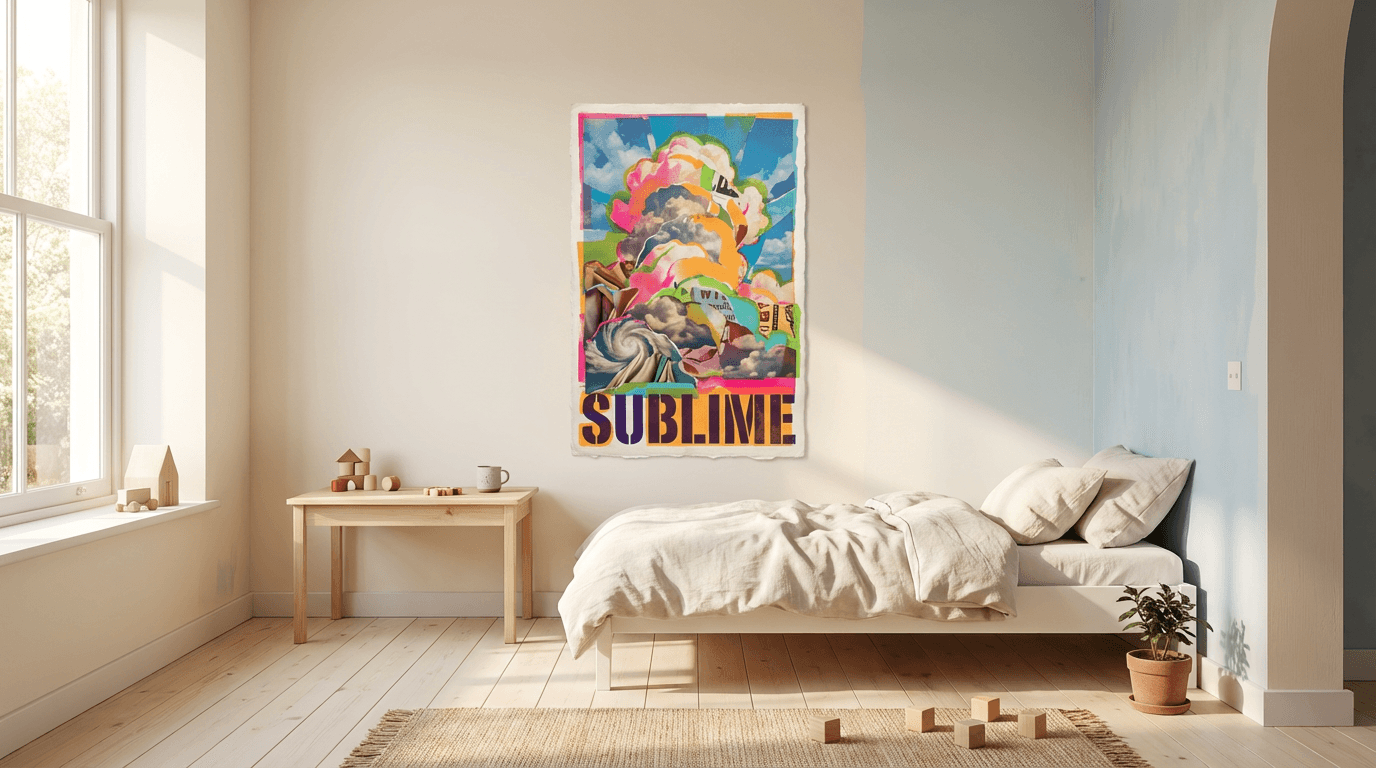
Turning a child's room into a personal haven requires more than a simple coat of paint or a few randomly hung posters. Kids' room wall decor must grow with your child, stimulate their creativity without overstimulating their sleep, and reflect their personality while maintaining overall visual coherence. In this guide, we'll walk you through a structured decision-making framework—from selecting age-appropriate themes to proven color combinations, along with concrete product solutions that transform Pinterest inspiration into reality on your walls. You'll leave with a clear action plan to create a space that will naturally evolve with your child, without requiring a complete overhaul every two years.
Why wall decor is essential in a child's room
A child's room isn't simply a place to sleep—it's their first personal territory, the space where they develop their imagination and build their identity. The surrounding walls play a much deeper psychological role than we realize. A bare wall creates an emotional void, while thoughtful wall decor instantly creates a reassuring atmosphere that promotes well-being and creativity.
Impact on development and autonomy
canvas prints for kids room and other visual elements provide visual landmarks that help children navigate their space. From 18 months old, a toddler recognizes familiar patterns on their walls—animals, geometric shapes, bright colors—and develops a sense of belonging. This visual appropriation reinforces their autonomy: they identify "their" room, play in it more willingly, and sleep better.
Wall decor also influences concentration and mood. Studies in environmental psychology show that children exposed to visually stimulating yet coherent environments develop better attention spans. A balance between calm zones (soft tones, soothing patterns) and dynamic zones (playful illustrations, saturated colors) structures the space intuitively, without the need for physical partitions.
The 5 most popular wall decor styles for kids
Choosing a wall decor style for a child's room can seem daunting given the abundance of options. Yet most successful arrangements revolve around five major aesthetic families, each offering distinct advantages depending on the child's personality and the desired atmosphere. Understanding these styles allows you to structure your choices rather than accumulating disparate elements.
Scandinavian minimalist: softness and simplicity
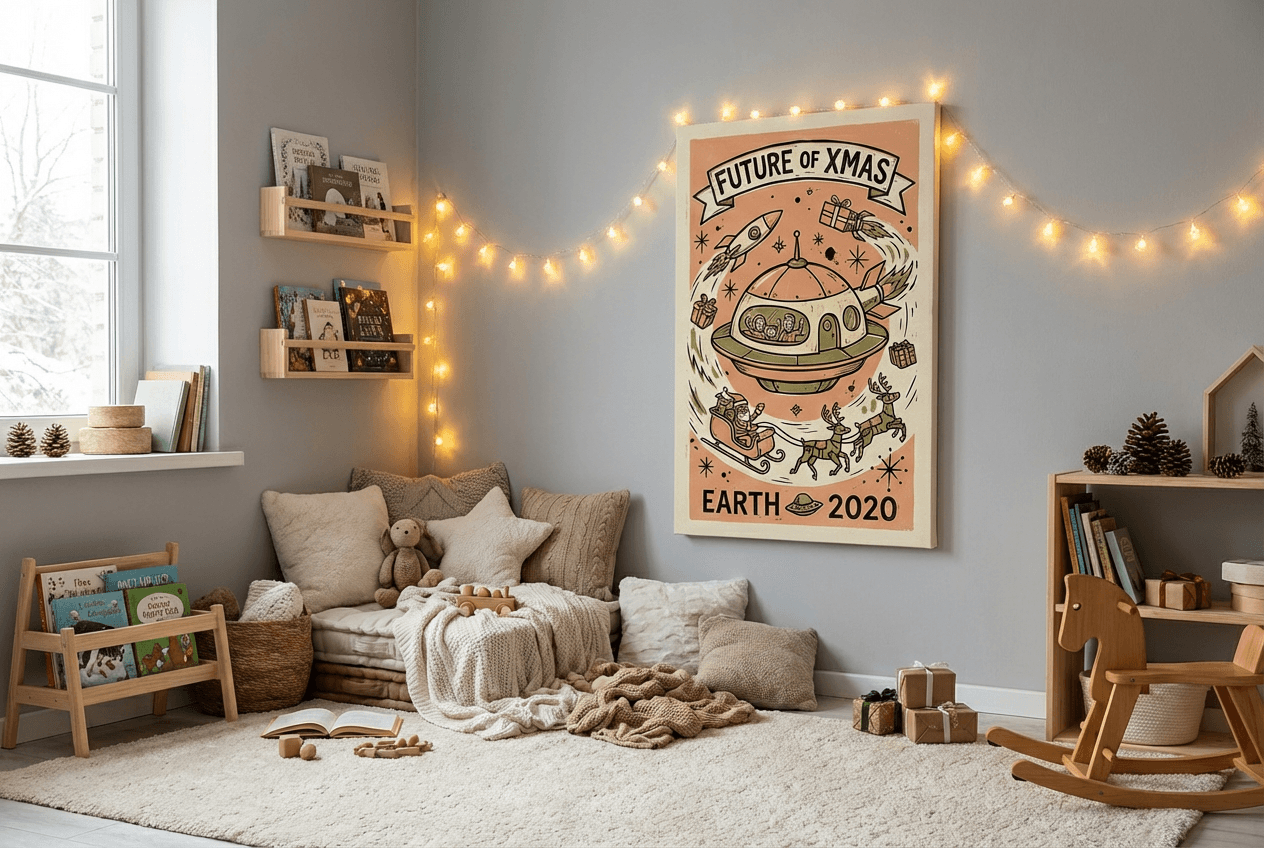
The Scandinavian style favors clean lines, neutral tones (white, beige, soft gray), and understated illustrations. This approach creates a calming environment that promotes concentration and sleep, particularly suited to children sensitive to visual stimuli. posters for kids room with soft geometric patterns or pastel watercolors naturally fit this aesthetic. The major advantage: this style transcends ages without becoming infantilizing, allowing a smooth transition from early childhood to adolescence.
Thematic and adventure: imaginary worlds
Themed rooms (space, jungle, ocean, fairy tales) immerse children in a cohesive universe that stimulates their imagination. This approach works particularly well between ages 3 and 10, when children are actively building their inner world. The trick is to choose a theme broad enough to allow variations: "exploration" rather than "specific dinosaurs," "nature" rather than a specific cartoon character. Canvas prints and posters then become narrative windows rather than simple decorations.
Geometric and colorful: visual stimulation
Geometric shapes and vibrant palettes create dynamic energy ideal for play spaces or extroverted children. Triangles, circles, abstract lines in mustard yellow, teal blue, or terracotta visually structure the space while remaining timeless. This style lends itself particularly well to wall compositions where several posters of varying sizes dialogue together, creating a focal point without overwhelming.
Nature and animals: calm and curiosity
Botanical illustrations, soft landscapes, and stylized animals respond to children's natural curiosity while maintaining a serene atmosphere. This aesthetic works remarkably well for reading corners or rest areas. Realistic yet gentle representations of forest animals, birds, or vegetation create a reassuring connection with the natural world, particularly valuable in urban settings.
Vintage and retro: timeless charm
The vintage style borrows from 1950s-1970s illustrations with their slightly faded colors and characteristic graphic compositions. This aesthetic brings a nostalgic warmth that appeals to both parents and children, creating a reassuring and distinctive atmosphere. Retro posters of vehicles, stylized maps, or animals treated in an antique engraving style offer a refined alternative to contemporary visual codes.
Adapting wall decor according to the child's age
A child's room decor is never static. It naturally evolves with developmental phases, and anticipating these transitions saves you from complete overhauls every two years. Rather than replacing everything at each birthday, a layered approach—a neutral background complemented by easily interchangeable kids' room posters or canvas prints—allows you to adjust the atmosphere at your child's pace without starting from scratch.
0-3 years: simple shapes and soft colors
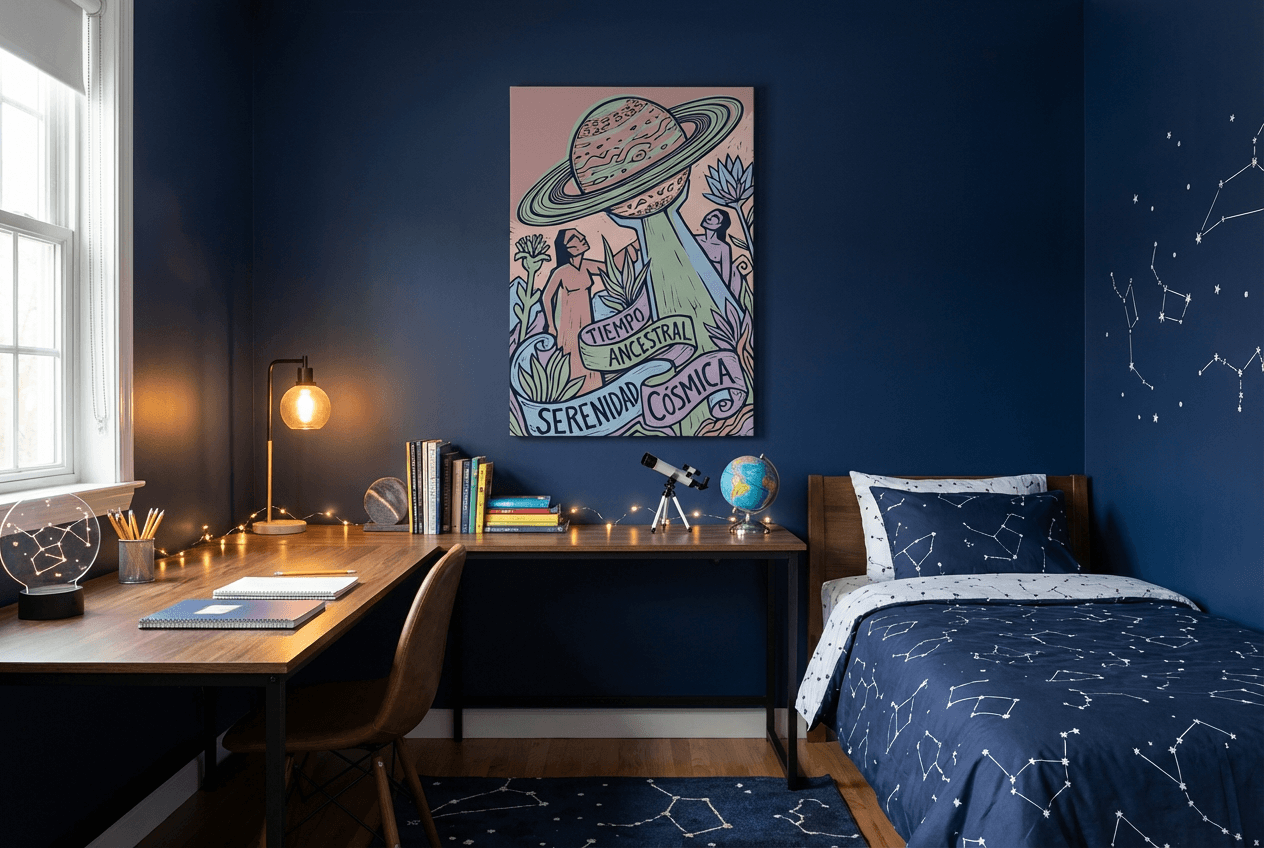
Toddlers first perceive strong contrasts, then gradually refine their perception of nuances. Favor simple geometric patterns—circles, triangles, clean lines—in pastel shades or black-and-white combinations. Figurative illustrations remain blurry for an infant; a round shape evoking a cloud or stylized sun captures their attention better than a complex narrative scene. Avoid overload: two or three visuals are enough to structure the space without overstimulation.
3-6 years: characters and playful worlds
The age of unbridled imagination. Preschoolers attach to characters, anthropomorphic animals, jungle or farm scenes that fuel their symbolic play. This is the time to embrace thematic kids' room canvas prints—dinosaurs, vehicles, fairies—that transform the room into a mental playground. However, maintain chromatic coherence (three dominant colors maximum) so the ensemble remains harmonious despite the whimsy of subjects.
6-12 years: passionate themes and interactive elements
Children assert their tastes: soccer, astronomy, music, nature. Decor becomes a reflection of their current passions. Opt for modular compositions—a constellation of small posters they can reorganize themselves, or a large central canvas surrounded by satellite elements. This autonomy in arrangement reinforces their sense of ownership and facilitates adjustments when their interests evolve.
Teens: trendy designs and personal expression
Preteens often reject "childish" aesthetics. Enter inspiring typography, urban photography, graphic abstractions that dialogue with their cultural references. posters for bedroom with clean lines, monochromes, or sophisticated tertiary palettes create a space that resembles a student studio more than a child's room—exactly what they're looking for to mark their transition to adulthood.
Color palettes and winning combinations
Color choices in a child's room directly influence their mood, concentration, and sleep quality. A thoughtful palette creates a balance between visual stimulation and rest, while offering a coherent foundation that spans years without requiring repainting with each decor change.
Calming colors for quality sleep
Soft hues—powder blue, sage green, rosy beige, pearl gray—naturally promote calm and relaxation. These colors reduce visual stimulation before bedtime and pair perfectly with kids' room posters featuring understated patterns. Sky blue lowers heart rate and facilitates falling asleep, while our green bedroom walls guide explores how soft green evokes nature and creates a serene atmosphere. Avoid bright reds and oranges near the sleep zone—reserve them for play areas.
Trending color combinations in 2024
Current winning combinations favor soft contrasts: terracotta + cream, navy blue + mustard, forest green + powder pink. These duos offer personality without assaulting the eye. The "earthy pastels" trend—slightly muted pastel tones—brings sophistication and longevity. A neutral base (off-white, linen, light gray) allows easy accent changes via posters or canvas prints without repainting.
Color-zoning: creating distinct zones on a wall
Color-zoning involves visually delimiting different room functions through color. A blue wall section behind the bed signals the rest zone, while a pale yellow corner structures the desk space. This technique works remarkably with coordinated posters: arrange three illustrations in the same tones to reinforce each zone's identity without physically partitioning the space. If you're looking to extend this approach to other areas of your home, our guide to creating an inspiring and functional workspace offers valuable insights on using color zones to enhance productivity and focus.
Types of wall decor: stickers, posters, paint, wallpaper
Choosing the right medium to decorate a child's room walls depends on three factors: your time commitment, your renter or owner status, and how frequently you wish to refresh the decor. Each option presents distinct advantages in terms of durability, investment, and reversibility.
Repositionable stickers: flexibility and ease
Wall stickers offer the most accessible solution for busy parents or renters. Their application requires no tools and takes just minutes, while removal leaves no trace on paint. Their main asset: total flexibility that allows following a 3-to-7-year-old's fleeting passions without major investment. Their limitation? Average durability of 2-3 years and sometimes less sophisticated rendering than other options, with peeling risks in humid rooms.
Posters and prints: immediate impact and changeable
Kids' room posters represent the best compromise between visual impact and adaptability. Available in standard rectangular formats (A3, A2, 50×70 cm), they change in seconds and allow seasonal or thematic rotation without drilling new holes. Their moderate cost authorizes experimentation: you can test a jungle vibe for six months, then switch to a space universe without financial regret. Posters also offer superior print quality to stickers, with fine details and saturated colors that resist light for several years.
Wall paint: permanent personalization
Wall paint suits homeowners ready to commit long-term. A terracotta wall section or geometric frieze painted at mid-height visually structures the space durably. This option requires time investment (preparation, protection, drying) and a material budget of $60-180, but creates a coherent foundation that then enhances the posters or canvas prints you hang. The major drawback: any modification requires complete repainting.
Kids' wallpaper: texture and exclusive patterns
Modern wallpaper, especially easy-to-install and removable non-woven versions, offers texture richness inaccessible to other mediums. Exclusive patterns—stylized forests, illustrated world maps, constellations—transform a wall into an architectural element. Its cost ($95-240 for one wall) and more technical installation make it an option for larger projects, ideal in combination with kids' room canvas prints on adjacent walls to balance the budget.
Wall hangings and fabrics: softness and mobility
Suspended wall fabrics (light tapestries, decorative macramé) bring a tactile and acoustic dimension absent from rigid mediums.
Wall decor ideas to discover for your child
Transforming a child's room into a personalized space doesn't require a colossal budget or interior design skills. A few strategic choices suffice to create an environment that stimulates imagination while remaining visually coherent. Here are four concrete approaches that work in all room styles, from Scandinavian minimalist to adventure-themed.
Inspiring and motivating posters
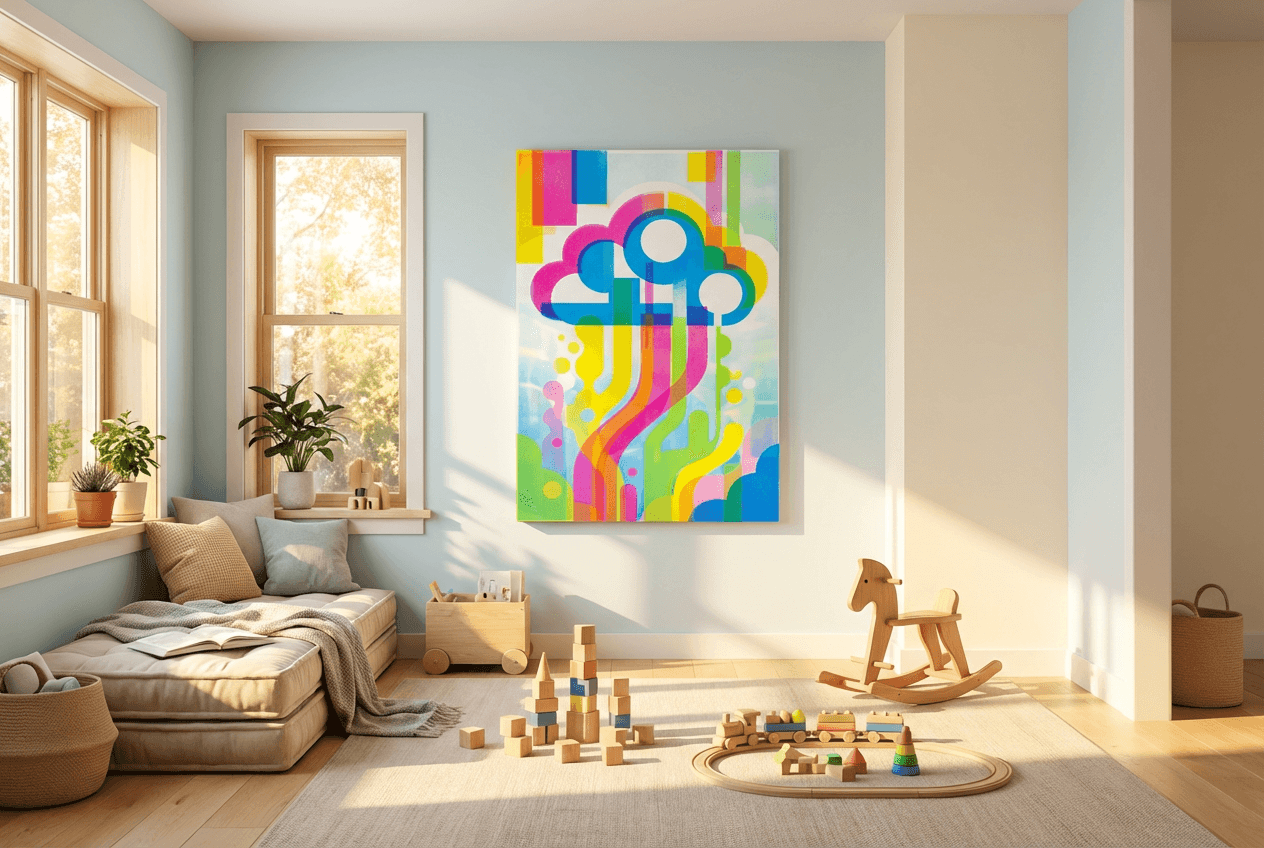
Kids' room posters offer the most flexible solution for introducing positive messages or illustrations that evolve with the child. Opt for soft typography accompanied by encouraging quotes ("Dream big," "Be brave") or abstract illustrations in calming colors. Geometric patterns and stylized animal representations work particularly well between ages 3 and 10, a period when children build their identity while needing reassuring visual landmarks.
Photo frames and wall galleries
A wall gallery creates a dynamic focal point without overwhelming the space. Mix A3 and A2 formats, alternating posters and personal photographs for a balanced result. Favor asymmetric arrangement on a neutral wall rather than rigid alignment—this brings movement without visual chaos. For toddlers, place some elements at their height so they truly appropriate the space. If you're interested in mastering the art of wall galleries beyond the nursery, our comprehensive guide to decorating your living room explores sophisticated gallery wall techniques that create visual impact in any space.
Thematic and repositionable stickers
Wall stickers remain the ideal emergency solution for renters or parents who dread the commitment of complete painting. Choose large-scale patterns (trees, mountains, clouds) rather than a multitude of scattered small elements. A single XXL sticker on the main wall structures the space better than twenty dispersed decals that create visual confusion.
Wall hangings in felt and natural materials
Felt or cotton hangings bring an appreciable tactile and acoustic dimension, especially in rooms with smooth walls that amplify noise. They soften the atmosphere while serving as a backdrop for more graphic posters for bedroom. Favor natural tones (beige, terracotta, sage green) that age well and adapt to all ages.
Practical tips for successful wall decor
Involving the child in decor choices
Including the child in the selection process transforms decoration into a shared project that reinforces their sense of belonging. From age 4, a child can express clear visual preferences—present three pre-selected options rather than unlimited choice that risks overwhelming them. This method frames the decision while giving them real autonomy over their personal space.
Balancing decoration and empty space
A common mistake is saturating walls, creating excessive visual stimulation that harms rest. Apply the one-third rule: one-third of wall surfaces decorated, two-thirds left neutral so the eye can rest. A large A2 poster or a kids room canvas print 50×70 cm creates more impact than an accumulation of scattered small elements. Areas around the bed should remain particularly uncluttered to promote falling asleep.
Creating a cohesive ambiance with the rest of the room
Visual coherence arises from repeating 2-3 dominant colors between walls, bedding, and textiles. If the room features blue and beige tones, favor kids room posters that incorporate these shades rather than introducing new colors. This same color-matching principle is what keeps a themed room from feeling like a costume set—the palette stays consistent even as the subject matter changes with your child's interests.
Maintenance and durability of wall elements
Posters under glass clean with a simple microfiber cloth swipe, while canvas prints require monthly dusting with a soft brush. Avoid direct sun exposure that fades prints in 18-24 months—position artwork on walls perpendicular to windows. Investing in quality prints guarantees color retention for 5-7 years, avoiding frequent replacements and unnecessary waste.
Kids' room wall decor: our product recommendations
Trending posters for all ages
Kids' room posters constitute the most versatile choice for decorating a child's room, offering an ideal balance between visual impact and budget flexibility. For toddlers, favor soft patterns like stylized clouds or calming geometric shapes that accompany falling asleep. Children aged 3 to 8 appreciate thematic universes—savanna animals, space exploration, or botanical illustrations—that stimulate their imagination without visually saturating the space.
Canvas prints for durable decoration
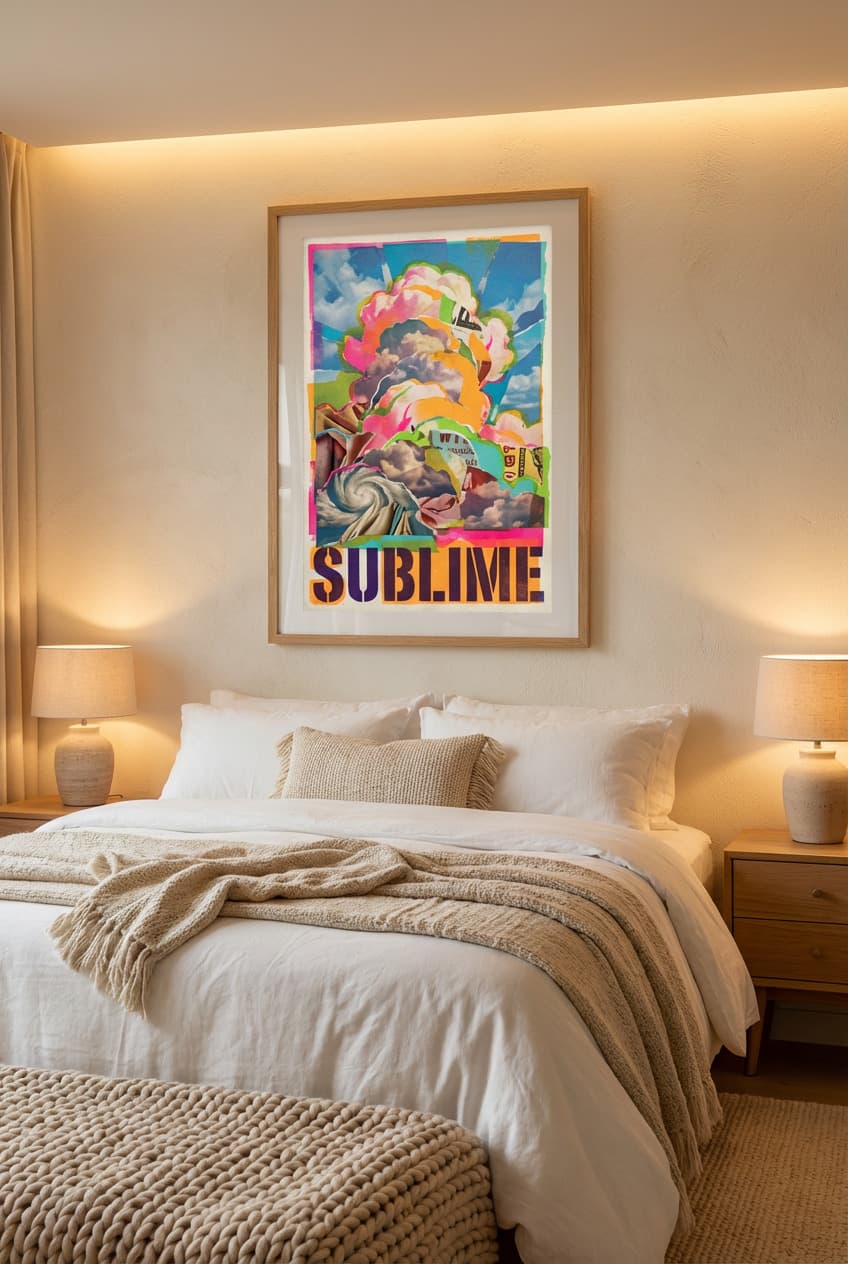
Kids' room canvas prints represent a slightly higher investment but offer more structuring wall presence thanks to their texture and depth. Canvas format particularly suits main room walls, creating a coherent focal point that visually anchors the entire decoration. Their robustness makes them suitable for active children's rooms, resisting handling better than a framed poster.
Transforming a child's room into a truly personalized cocoon requires neither a pharaonic budget nor professional decorator skills. A few well-chosen posters, a coherent palette, and involving your child in the process are enough to create a space that will evolve with them. The essential? Focus on modularity: visuals that can easily be replaced as passions and ages change, without repainting or starting over. Whether you're decorating your child's room or looking to surprise them with a custom portrait of the family pet, take time to observe what makes your little one's eyes shine, then translate those emotions into decoration. You'll see that a room that truly resembles them becomes their favorite refuge—and a playground for imagination.