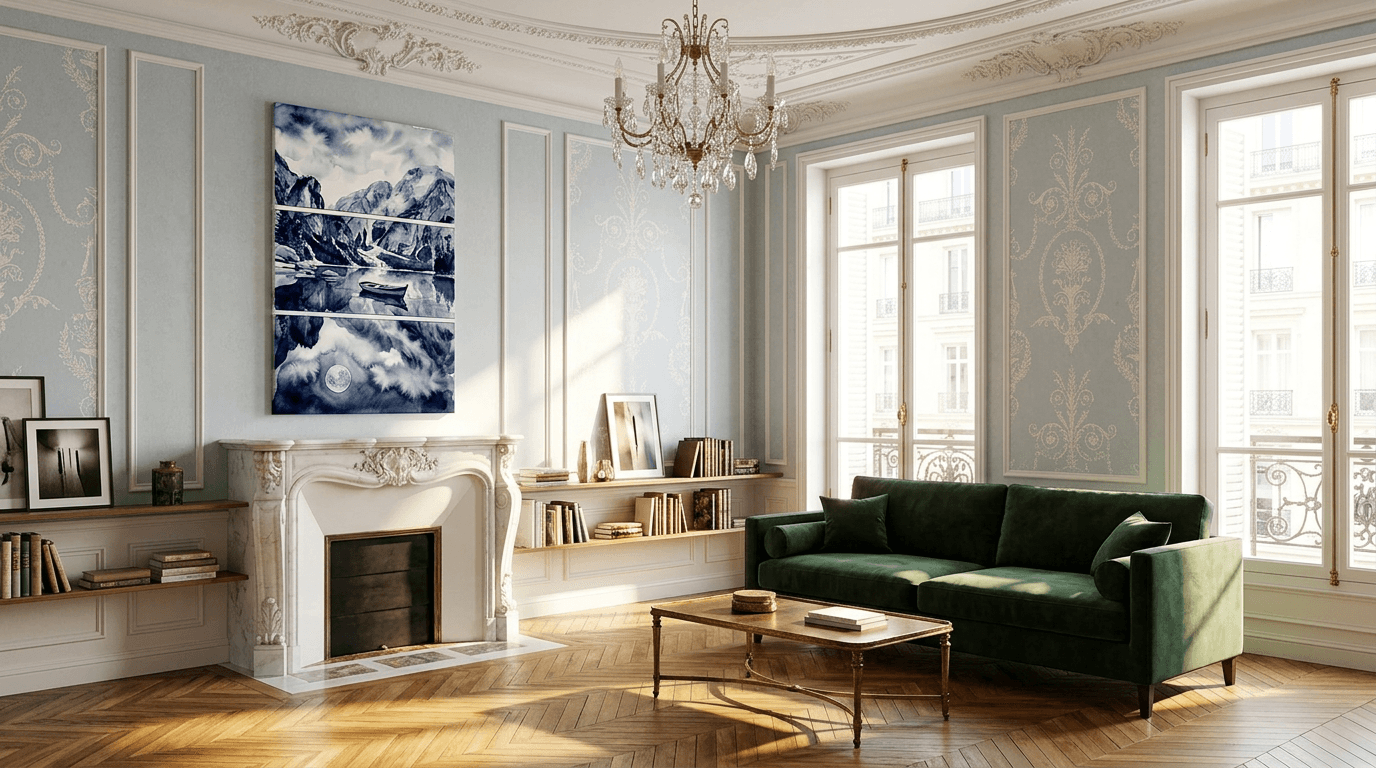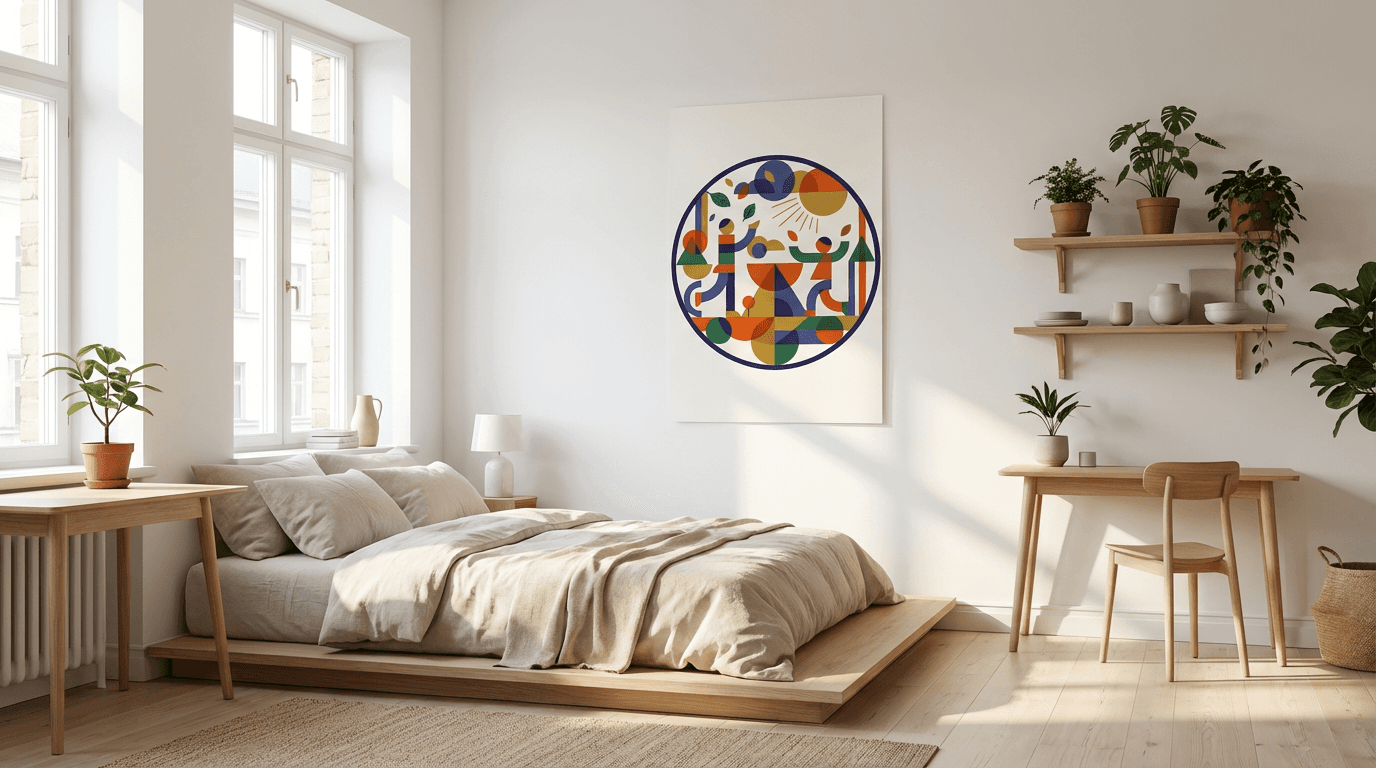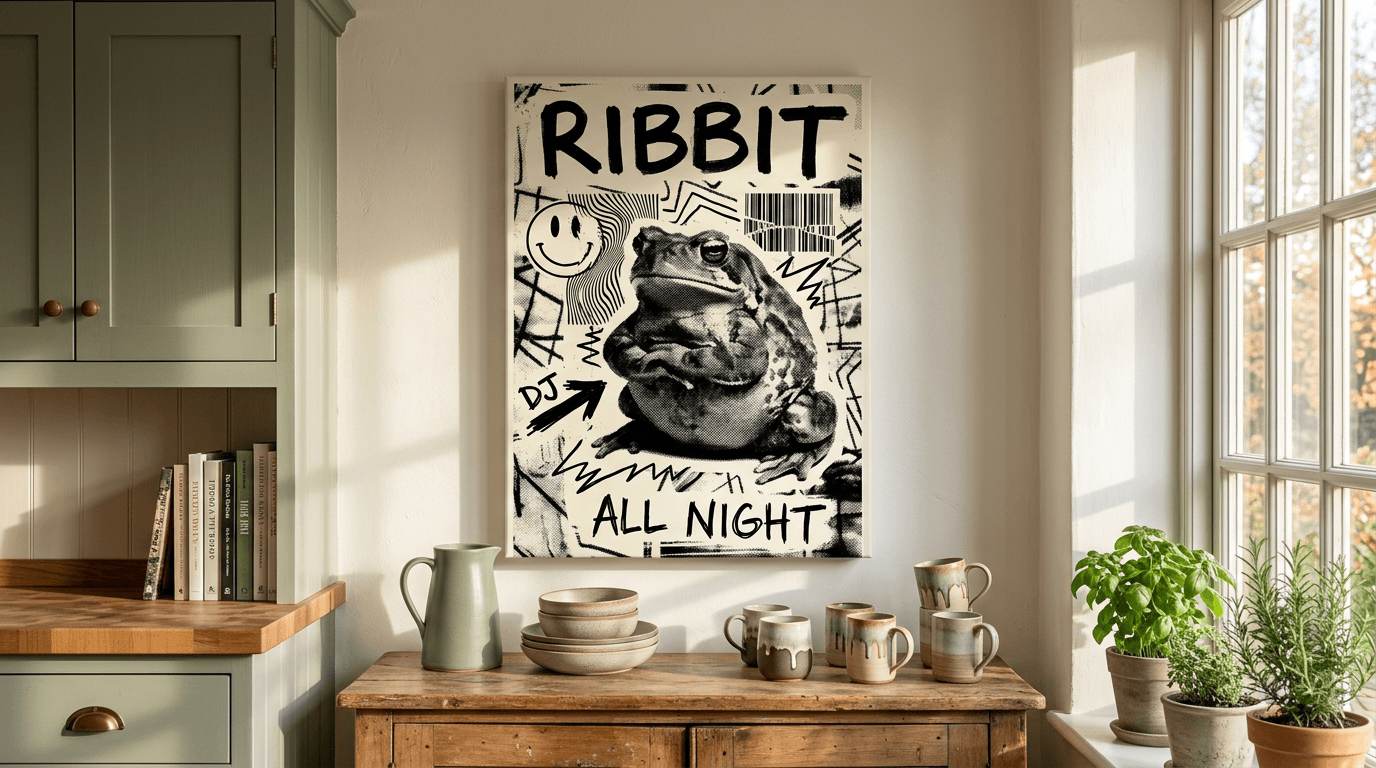
Office decor: Ideas to create an inspiring and functional workspace
Want to transform your office into an inspiring space? Discover 50 decor ideas to combine productivity, storage, and personal style.
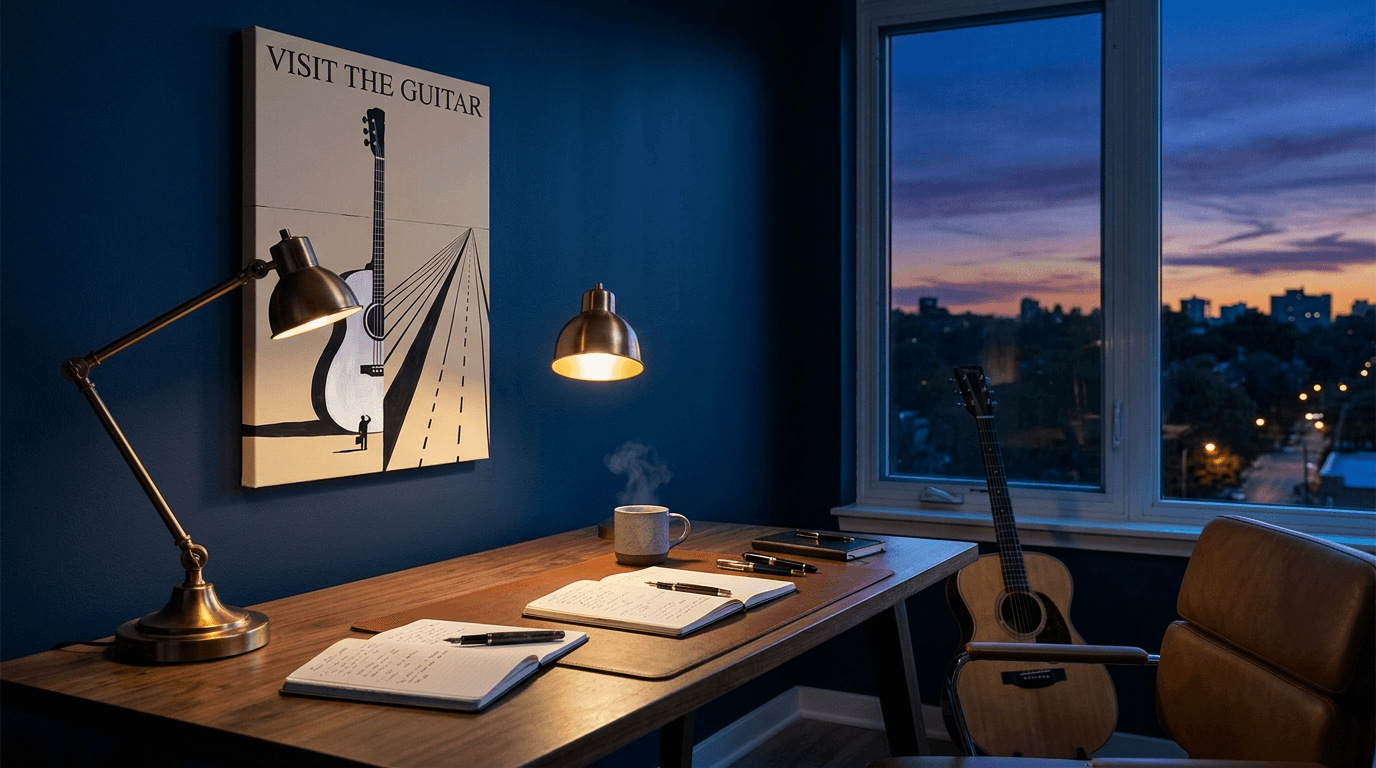
Your office isn't just a workplace—it's the space where your ideas take shape, where your focus crystallizes, where your creativity flourishes. Yet, between accumulating clutter, impersonal white walls, and harsh lighting that strains your eyes, it quickly becomes an environment that drains rather than inspires. This guide shows you how to radically transform your office decor by combining proven design principles, smart organizational solutions, and a thoughtful selection of wall art that reflects your personality. You'll discover why certain choices work better than others, how to balance aesthetics and functionality, and most importantly, how to create a space that makes you want to sit down and produce your best work—day after day.
Why Decorate Your Office Well?
Your office isn't just a piece of furniture in a corner. It's where you spend six, eight, sometimes ten hours a day—thinking, creating, solving problems. Yet how many offices still resemble gray cells, with bare walls, cold lighting, and accumulating clutter? Your physical environment directly influences your state of mind. A personalized workspace can meaningfully boost productivity. Colors, textures, visual organization: everything matters.
Productivity and Well-being Go Hand in Hand
A well-decorated office isn't just about aesthetics—it's a performance lever. When your space breathes order and reflects your tastes, your brain functions better. Fewer visual distractions, more mental clarity. A wall adorned with an inspiring canvas prints for home office can transform a glance break into a moment of rejuvenation, while a cluttered desk generates latent stress, even if you don't consciously notice it. Decoration becomes a tool: it structures your day, delineates zones (intense work, creative break, storage), and reminds you why you love what you do.
Create a Space That Reflects You
Your office should tell your story. Whether you love Scandinavian minimalism, the energy of bright colors, or the serenity of natural landscapes, every decorative choice is an opportunity to express your identity. A graphic poster above the screen, a green plant on the shelf, a carefully designed lamp: these details seem trivial, but they transform a functional place into a personal refuge. And when you work in a space that reflects you, you stay longer—by pleasure, not obligation.
Key Principles of Successful Office Decoration
Before choosing your accessories and wall art, it's essential to understand the foundations of a harmonious workspace. These universal principles guide every decorative decision and transform a simple office into a place where it's good to work. Whether you're setting up a corner in your living room or a dedicated room, these rules apply to all contexts.
Clear the Workspace
A cluttered desk is the enemy of concentration. The golden rule: your work surface should only accommodate what you need daily—computer, notebook, a few pens. Everything else finds its place in drawers, wall shelves, or elegant storage boxes. This minimalist approach isn't just aesthetic: it reduces visual distractions and facilitates cleaning. A clear space creates a sense of spaciousness, even in a small room. Think vertical: walls offer considerable storage and decoration potential, thus freeing your work surface for the essential.
Choose a Coherent Color Palette
Chromatic consistency unifies your space and directly influences your mood. Start by identifying two or three main colors that calm or stimulate you according to your needs. Neutral tones—off-white, soft gray, sand beige—form a versatile base on which you can add touches of color through your accessories and wall art. For an energizing office, integrate mustard yellow or terracotta in small touches. To promote concentration, favor deep blues or sage greens. Your nature posters can serve as a starting point: pick up a dominant shade from your favorite poster in your cushions, mouse pad, or supplies.
Maximize Natural and Artificial Light
Light shapes your office ambiance more than any other element. Position your desk perpendicular to the window to avoid screen glare while benefiting from natural clarity. If daylight is limited, compensate with multiple light sources: an adjustable desk lamp for precise tasks, an accent lamp to create a warm evening ambiance, and soft general lighting. Avoid aggressive fluorescents that tire the eyes. Color temperature matters: opt for 4000-5000K (neutral white) during the day to maintain alertness, and 2700-3000K (warm white) in the evening to preserve your circadian rhythm. Light walls reflect light—another reason to favor posters landscapes with bright tones rather than dark visuals.
Integrate Storage Aesthetically
Storage should never be an afterthought—it's an integral part of your decoration. Open shelves display your books and decorative objects like a personal gallery, but require constant organizational effort. Alternate utilitarian objects and purely decorative elements to create visual rhythm. Boxes matching your color palette hide clutter while structuring the space. A pegboard painted in a coordinated shade transforms your supplies into an artistic installation. Even your cables deserve attention: group them with discreet clips or hide them behind an elegant cable cover. The goal is for every functional element to contribute to the overall aesthetic, thus creating an environment where productivity and beauty mutually reinforce each other.
Storage Accessories: Beauty and Organization
Organization isn't the enemy of aesthetics—it's its pillar. A well-organized desk relies on accessories that hide daily chaos while adding character to your space. The key? Choose storage solutions that naturally integrate into your color palette and style, transforming functional necessity into a decorative element in its own right.
Wall Shelves and Hanging Panels
Wall shelves free your work surface while creating a vertical composition that draws the eye. Favor floating shelves in light wood for a Scandinavian style, matte black metal for an industrial ambiance, or solid oak for a classic office. The trick: vary depths (15 cm for small objects, 25 cm for books) and heights to create dynamic visual rhythm.
Wall-mounted hanging panels—whether natural cork, colored felt, or metal mesh—offer remarkable flexibility. You can pin notes, postcards, or even small fabric samples that recall your dominant colors. Position them at eye level, ideally to the right or left of your screen, so they remain in your peripheral vision without distracting.
Design Storage Boxes and Cabinets
Drawer cabinets and storage boxes no longer need to look utilitarian—lacquered bamboo, linen-covered cardboard, or seagrass baskets in tones that echo your wall art keep the whole desk-to-wall composition visually coherent instead of competing with it.
Pencil Holders and Pen Stands
Even a pencil holder can echo your wall art's palette—a ceramic pot in a matching accent color turns a small necessity into a coordinated detail rather than visual clutter beneath your posters.
Pegboards and Modular Systems
Pegboards have experienced a spectacular renaissance in recent years. Painted in your wall color or a contrasting tone, they turn storage into an artistic installation—brass hooks for headphones and cables, small shelves for succulents, alongside the visual inspirations pinned next to your framed pieces.
Visual organization also involves what you display. A pegboard can accommodate not only your work tools, but also visual inspirations that dialogue with your canvas prints for home office—thus creating continuity between function and decoration that characterizes the most successful workspaces.
Lighting: Creating the Ideal Ambiance
Lighting radically transforms an office's atmosphere—a room bathed in soft light invites concentration, while an under-lit or poorly lit space tires the eyes and dampens morale. Color temperature directly influences your circadian rhythm: cool light (5000-6500K) stimulates wakefulness and alertness in the morning, neutral light (4000K) supports productivity during the day, and warm light (2700-3000K) promotes relaxation in late afternoon. The goal isn't to flood your office with harsh light, but to create adjustable lighting layers according to time and task.
Designer Desk Lamps
A desk lamp isn't just a functional tool—it's a sculptural element that visually structures your workspace. Favor articulated arm models in brushed or matte black metal for an industrial-modern style, or arched brass lamps for an elegant mid-century touch. Height matters: position the light source about 40 cm above the work surface to avoid shadows cast on your keyboard. Integrated LEDs with dimmers are ideal—they consume 80% less energy than halogens and generate little heat. For a minimalist office, a cylindrical lamp in concrete or wood brings organic texture without visual clutter.
Optimize Natural Light
Daylight remains your best ally for reducing eye fatigue and keeping your biological clock synchronized. Position your desk perpendicular to the window—never facing or with your back to it—to benefit from lateral lighting without parasitic screen glare. If your window faces due south, install adjustable slat blinds or a semi-transparent linen curtain that filters intensity without completely blocking light. Light walls reflect up to 80% of natural light: off-white, sand beige, or pearl gray amplify brightness without the glare of pure white. Even nature posters with light tones—pastel skies, misty landscapes—help diffuse light in the room.
Combine General and Focused Lighting
Effective office lighting relies on three layered levels: ambient lighting (ceiling light or central pendant), task lighting (desk lamp), and accent lighting (spotlights or wall sconces). The ceiling light provides a uniform light base at about 300-500 lux, while the desk lamp locally brings intensity to 750-1000 lux for reading or precision work. Add a floor lamp in a corner or a wall sconce above your canvas prints for home office zone—this indirect lighting creates depth and avoids the "cave" effect of single-source offices. A dimmer on each circuit allows you to adjust the ambiance according to the moment: frank light at 100% for morning video conferences, reduced intensity at 60% for late-day reflection.
Decoration Styles for All Tastes
Your office reflects your personality as much as your wardrobe or living room. The style you choose directly influences your mood, motivation, and even creativity. Contrary to popular belief, there's no universal "right" style—only the one that resonates with you and supports your way of working. Let's explore five distinct aesthetic approaches to transform your space.
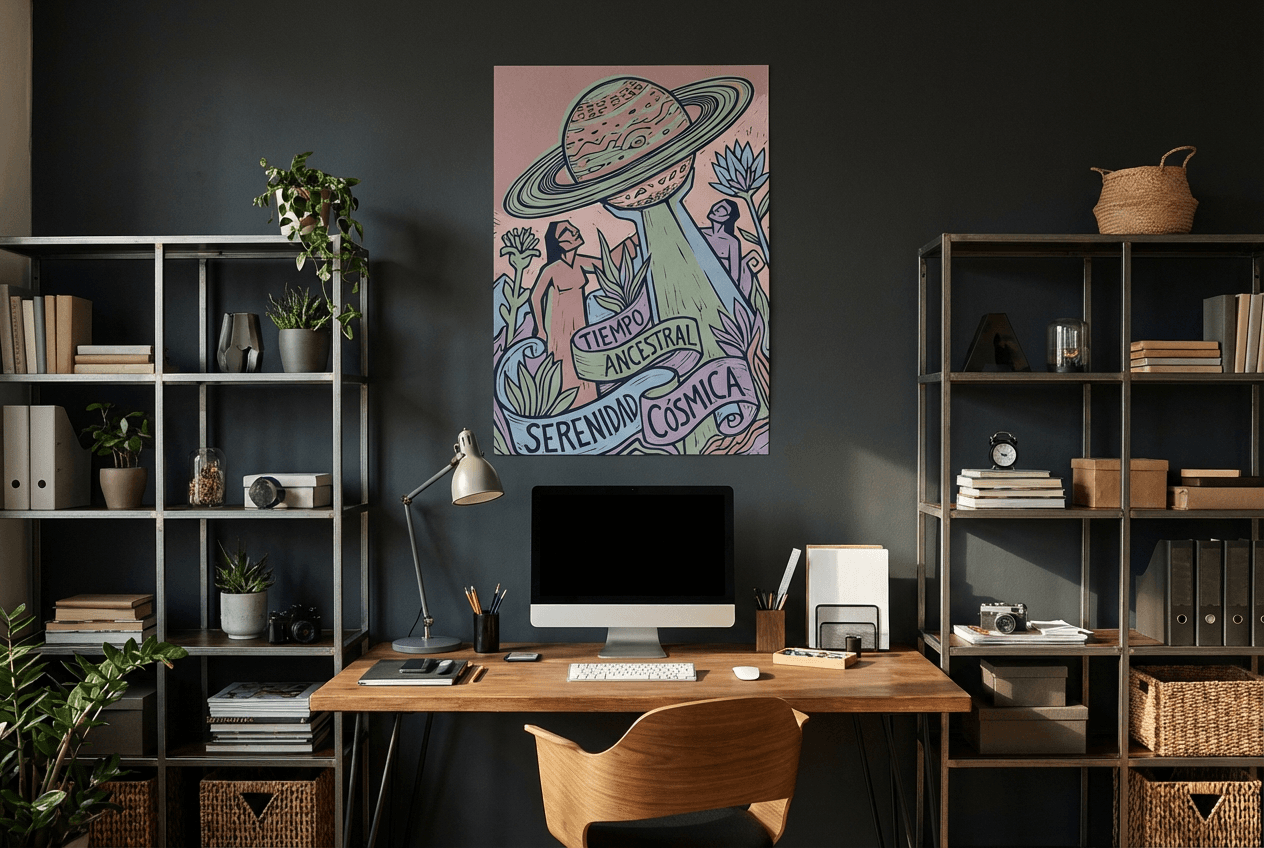
Minimalist and Clean Office
Minimalism doesn't mean coldness—it's about eliminating the superfluous to keep only the essential. A minimalist office favors clean lines, a palette of two colors maximum (often white, gray, black, or beige), and clear surfaces. Each object has a specific function and a defined place.
To succeed with this style, limit your wall decoration to one or two pieces maximum. A large canvas in neutral tones or a minimalist graphic poster is enough to create a focal point without visually cluttering the space. Natural materials like light wood, linen, and brushed metal add warmth without compromising simplicity.
The common mistake? Confusing minimalism with emptiness. A well-designed minimalist office has a strong presence through deliberate choices—a sculptural architectural lamp, a handcrafted ceramic vase, or a plant with graphic leaves are enough to give character.
Vintage and Warm Office
Vintage style evokes nostalgia and the comfort of another era. Think dark wood, patinated brass, aged leather, and warm shades like terracotta, olive green, or duck blue. This style works particularly well in spaces with architectural character—moldings, old parquet, high ceilings.
Retro posters—50s travel posters, Victorian botanical reproductions, antique typography—naturally integrate into this aesthetic. Mix eras without fear: a 30s industrial lamp coexists perfectly with a 60s Scandinavian armchair.
The key lies in thoughtful accumulation. Unlike minimalism, vintage allows collections—stacked old books, vintage metal boxes, gilded frames of various sizes. Maintain consistency through color palette and materials rather than object uniformity.
Modern and Design Office
Modern style combines functionality and contemporary aesthetics. Clean lines, innovative materials (glass, acrylic, chrome metal), and a bold approach to color characterize this aesthetic. Modern furniture favors geometric shapes and multifunctional solutions—adjustable desks, modular storage, integrated tech accessories.
For wall decoration, opt for bold graphic compositions—abstract shapes, architectural photography, or digital art. Large format canvases (60×90 cm or larger) create immediate impact in a modern office. Don't hesitate to play with contrasts: black and white, complementary colors, or opposing textures.
Lighting becomes a decorative element in its own right. Variable intensity LED lamps, designer pendants, or concealed light strips transform the ambiance according to times of day. Modern style embraces visible technology rather than hiding it.
Colorful and Playful Office
Who decreed that offices must be sober? A colorful workspace stimulates creativity, boosts energy, and reflects a strong personality. This style works particularly well for creative professions—designers, artists, communicators—but suits anyone who refuses monotony.
Build your palette around three main colors: a dominant (60% of space), a secondary (30%), and an accent (10%). For example: dominant sky blue, secondary mustard yellow, and touches of coral. Posters and canvases become the main vectors of this chromatic energy—vibrant abstract compositions, playful illustrations, or saturated photographs.
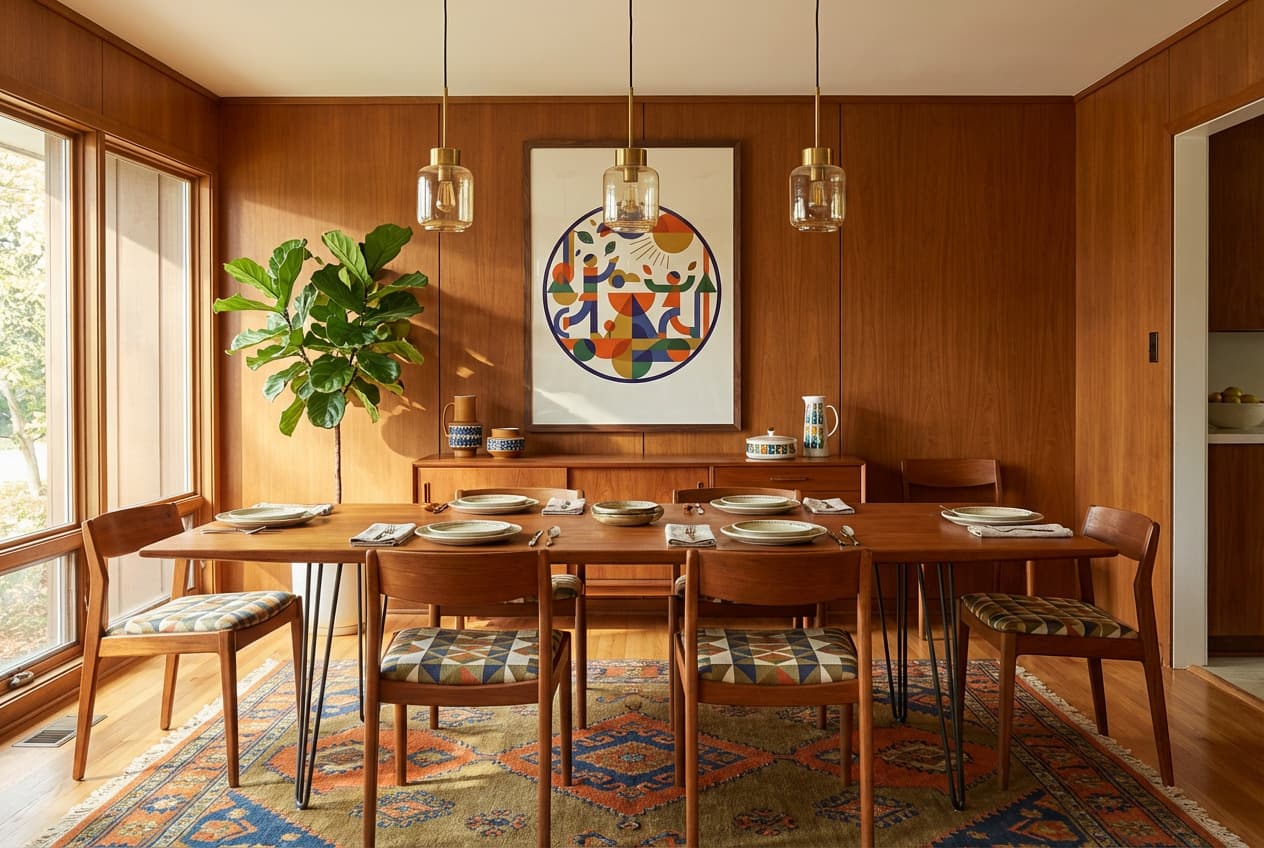
Balance intensity by keeping large surfaces (walls, furniture) in softer tones, and concentrate bright colors in accessories and wall art. A golden rule: if every element shouts, none is heard. Let the eye breathe between colored zones.
Professional and Elegant Office
For an office that welcomes clients or important video conferences, professional elegance is essential. This style combines credibility and refinement without falling into corporate austerity. Favor noble materials—solid wood, genuine leather, textured fabrics—and a sophisticated palette of anthracite gray, navy blue, taupe beige, or forest green.
Wall decoration should project competence and personality. Avoid generic motivational clichés in favor of works that tell something about your field or values. Architectural photography for a law firm, abstract landscape for a consultant, geometric composition for an accounting firm.
Arrangement matters as much as content. A symmetrical composition of two or three coordinated-size canvases exudes order and mastery. Indirect lighting—floor lamps, wall sconces—adds depth without the aggressiveness of direct ceiling lights. Every detail communicates: you master your environment, therefore your work.
Posters and Wall Art: Personalize Your Space
Wall art transforms a functional office into a space that reflects you. Where accessories organize and lighting structures, posters and canvases bring that personal touch that makes all the difference—a reflection of your values, aspirations, or simply what inspires you daily. A bare wall remains neutral, almost clinical. A wall dressed with intentionally chosen works becomes a constant source of motivation and creative energy.
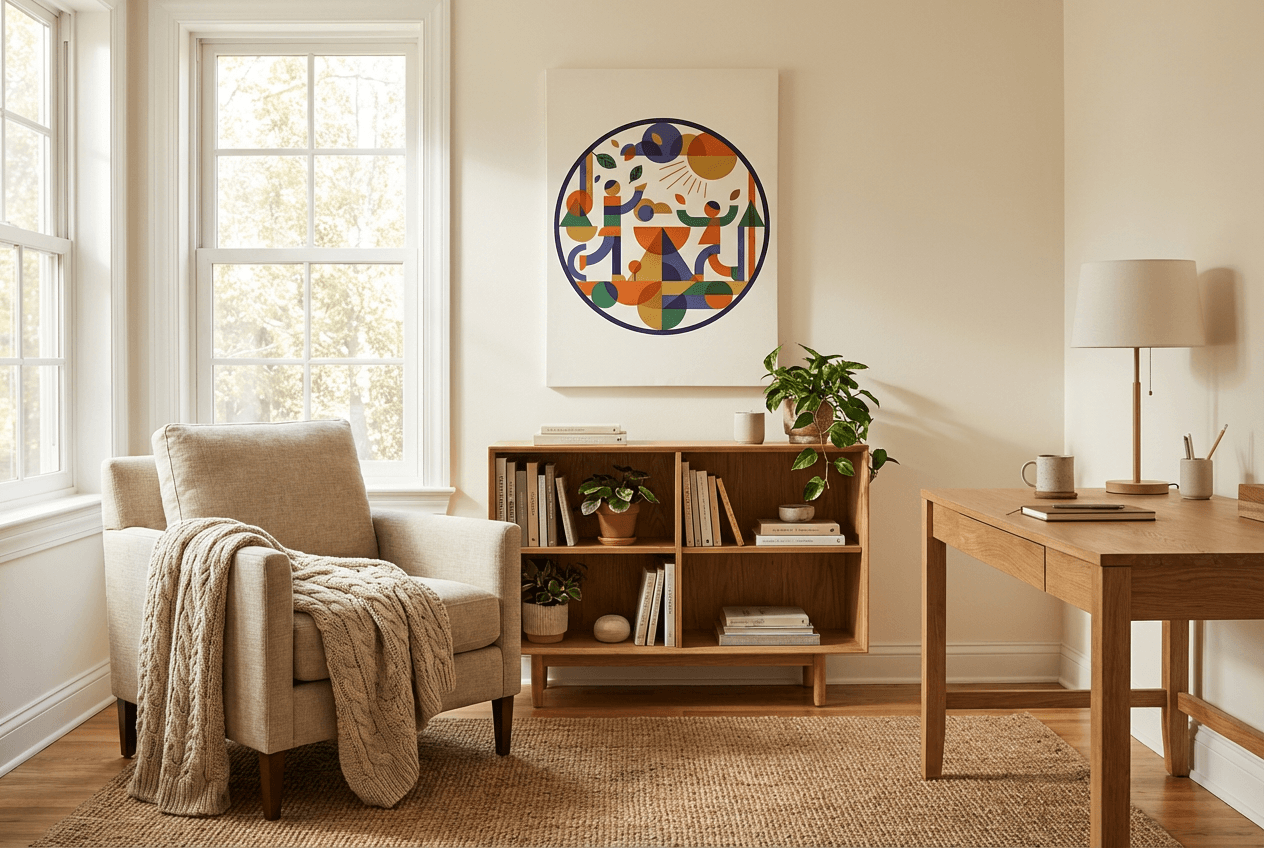
Choose Motivating Visuals
Your wall visual choices should answer a simple question: what energizes or calms you during your work hours? For some, it will be a natural landscape that evokes escape—a misty forest, a deserted beach, a mountain summit. For others, bold typographic quotes or abstract geometric compositions stimulate concentration. The essential is to avoid images that distract or generate anxiety. An office isn't a living room: favor works that support your productive state of mind rather than those that invite prolonged daydreaming.
Colors play a major role. Blue and green tones promote calm and reflection—ideal for analytical or creative professions requiring long periods of concentration. Warm shades like terracotta, ochre, or mustard infuse energy without aggression, perfect for spaces where you conduct video conferences or work in collaborative mode. If your office follows a neutral palette, a poster with color accents becomes the focal point that visually structures the entire room.
Create a Harmonious Wall Gallery
A well-composed wall gallery follows simple but effective rules. Start by defining an imaginary central axis—often at eye level, about 145-150 cm from the floor—and arrange your works around this guideline. For a symmetrical arrangement, align two or four posters of identical size in a regular grid. For a more organic composition, mix three different formats (for example, a large 50×70 cm surrounded by two smaller 30×45 cm) while maintaining a constant spacing of 5 to 8 cm between each piece.
Thematic or chromatic consistency unifies the whole. You can group black and white botanical photographs, architectural illustrations with clean lines, or abstractions in the same color range. The common mistake? Accumulating too disparate styles that create visual noise rather than harmony. Three works that dialogue are worth more than five that compete.
Formats and Frames Adapted to the Office
Vertical rectangular formats (30×45 cm, 50×70 cm) are particularly suited to narrow walls or spaces between windows and doors. Horizontal formats (40×60 cm, 60×90 cm) work above a long desk or console. In a compact space, a single large format (A2 or 50×70 cm) creates more impact than a multiplication of small pieces that visually fragment the room.
For the medium, posters on premium paper offer an elegant matte finish and accessibility, ideal for regularly renewing your decoration according to your desires. Canvases stretched on frames bring a more architectural presence, with their 2 to 4 cm depth projecting a subtle shadow on the wall—particularly suited to professional offices where you receive clients. In both cases, the absence of glass eliminates annoying reflections under artificial lighting, a significant advantage for a workspace.
Placement matters as much as choice. Position your works in your peripheral vision rather than directly facing you—you thus benefit from their presence without them constantly diverting your attention from the screen. The side wall or the one behind your screen (visible in the background during video conferences) are strategic locations that maximize aesthetic impact while preserving your concentration.
Small Decorative Objects That Make the Difference
The big choices—wall color, furniture, wall art—lay the foundations of your office. But it's the small decorative objects that breathe soul and character into the space. A textured ceramic vase, a patinated brass pen holder, a plush rug under your feet: these details create visual anchor points that catch the eye and tell your story. The art lies in rigorous selection—each object must justify its presence by its beauty or utility, ideally both.
Plants and Natural Elements
Nothing humanizes an office like the presence of living things. Indoor plants bring oxygen, texture, and organic movement to an environment often dominated by straight lines and flat surfaces. A Monstera deliciosa in a terracotta pot creates a sculptural focal point; a trio of succulents aligned on the shelf adds rhythm and repetition without requiring daily maintenance.
Choose species adapted to your actual light: Pothos and Sansevieria thrive in indirect light, while cacti and succulents require direct exposure. Planters themselves become decorative elements—woven wicker for a bohemian ambiance, glazed ceramics for a contemporary look, aged zinc for an industrial touch. Beyond living plants, driftwood branches, smooth pebbles in a glass bowl, or vases filled with dried stems (eucalyptus, pampas) extend this connection with nature without watering constraints.
Calendars and Office Accessories
Daily tools deserve to be as beautiful as they are useful. A wall calendar with clean typography and delicate illustrations transforms planning into an aesthetic moment in its own right—generous formats (A3 or larger) hold their own next to your framed pieces instead of disappearing into the desk clutter below them.
Rugs and Textiles
The floor often remains neglected in office decoration, yet a well-chosen rug visually anchors the space and absorbs acoustic resonances. Under your office chair, a low-pile rug (120×170 cm minimum) delimits the work zone while protecting the parquet. Discreet geometric patterns or textured solid colors add depth without distracting.
Textiles also soften vertical surfaces: a merino wool throw draped over the chair back, linen cushions on a reading bench. These tactile touches invite comfortable breaks and counterbalance the rigidity of office furniture. Favor natural fibers (cotton, linen, wool) that breathe and age with elegance, in tones that dialogue with your main palette without exactly duplicating it.
Photo Frames and Personal Objects
Your office should tell your story. A few framed photographs—memorable trip, loved one, moment of professional pride—create emotional anchors that support motivation during difficult days. Limit yourself to 3-5 images maximum to avoid visual clutter, and choose frames with consistent finishes that harmonize with your existing wall art.
Significant personal objects—travel souvenir, miniature sculpture, inherited antique box—add narrative depth. Balance lies in curation: each object must evoke positive emotion or aesthetic admiration. Arrange them according to the rule of thirds or in asymmetrical compositions that naturally guide the eye. These personal details, combined with more structural decorative choices, transform four walls into a creative sanctuary that truly reflects you.
Professional Office Decoration: Specific Tips
A professional office requires a delicate balance between personalization and neutrality. Unlike a home office where you're free to fully express your style, professional space must inspire confidence in clients, colleagues, and partners while remaining a place where you feel good. The key lies in intentional decoration that reinforces your credibility without sacrificing your identity.
Maintain a Professional Ambiance
Professional ambiance is built on three pillars: visual consistency, chromatic sobriety, and perceived quality. Favor a restricted color palette—two neutral tones (anthracite gray, beige, off-white) complemented by a discreet accent (navy blue, sage green, burgundy). This chromatic restraint communicates seriousness and mastery without falling into the corporate austerity of the 2000s.
Wall decoration plays a strategic role in this balance. A large-dimension canvas (60×90 cm or 50×70 cm) creates an elegant focal point without visually cluttering the space. Opt for abstract compositions with clean lines, calming landscapes, or motivating typography—visuals that stimulate reflection without distracting. Avoid overly personal motifs (vacation photos, humorous quotes) that can harm professional perception during video conferences or client meetings.
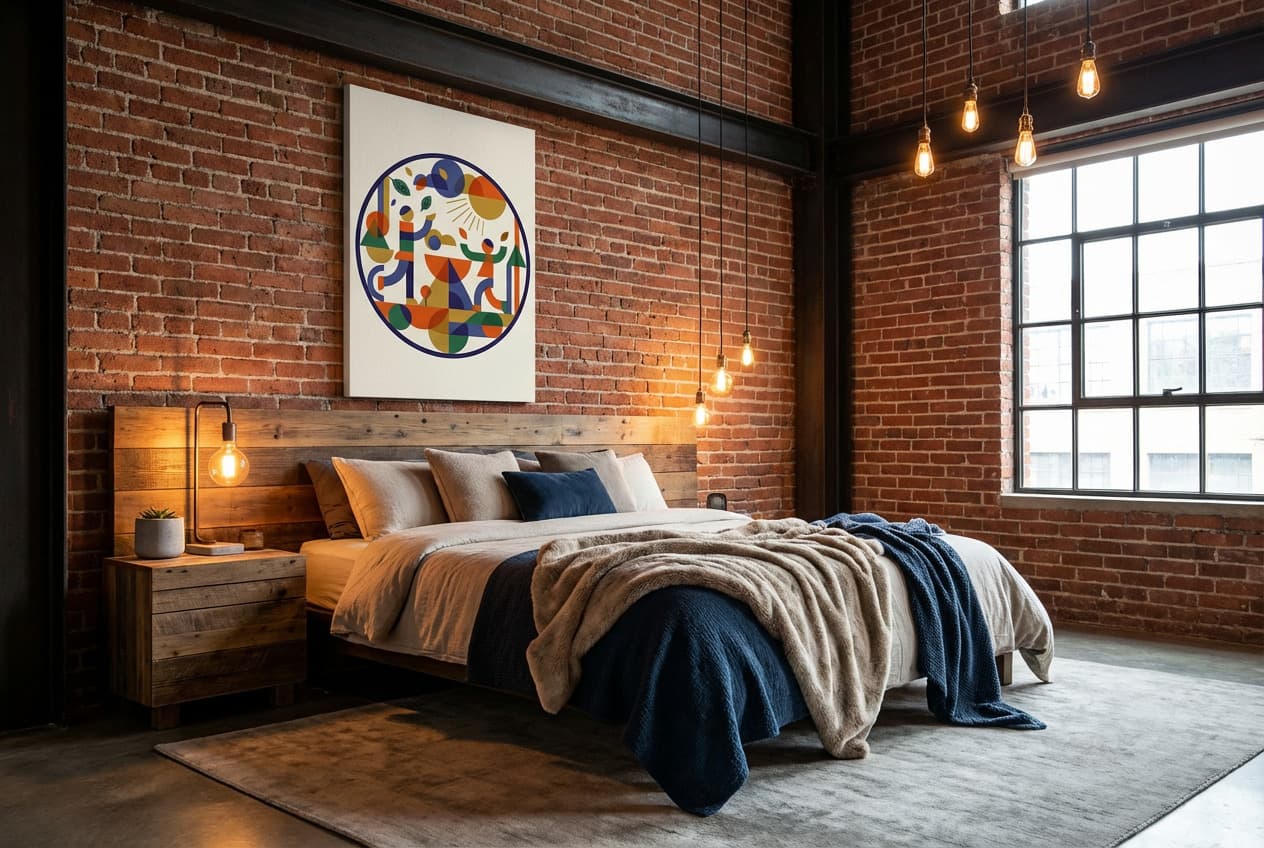
Accessories should reflect the same philosophy: a few quality objects are worth more than an accumulation of gadgets. A matte ceramic vase, a solid wood tray to organize your pens, a desk lamp with timeless design—each element must justify its presence by its utility and aesthetics. The golden rule: if an object doesn't serve daily or doesn't significantly beautify the space, it has no place on your professional desk.
Soft & Elegant Office Styles
This softer, elegant register moves past pink-and-floral clichés toward contemporary sophistication—clean architectural lines softened by organic textures and earthy tones.
The most successful palettes mix warm neutrals (terracotta, sand, camel) with metallic accents (brushed brass, rose copper). Wall art can dare more color than a strictly minimal office: stylized botanical compositions, abstractions in ochre and rust tones, or landscapes in golden shades create an ambiance that's both professional and welcoming. A nature poster with calming tones instantly transforms the perception of a space without compromising its seriousness.
Textiles also play a key role: a linen cushion on the office chair, a small Berber rug under the desk, natural voile curtains that filter light. These textile touches humanize the space while remaining perfectly appropriate in a professional context—refined rather than overtly decorative.
Adapt Decoration to Your Industry
Your industry partly dictates your decorative choices. A law firm will favor dark woodwork, patinated leather, and monochrome abstract canvases that evoke tradition and stability. Conversely, a creative agency can afford bright colors, bold graphic compositions, and eclectic furniture that signal innovation and originality.
Medical and therapeutic professions benefit from calming palettes—pale blues, water greens, warm beiges—accompanied by natural visuals that reduce patient anxiety. Consultants and coaches gain from creating inspiring spaces with motivating typography and open landscapes that suggest possibilities and transformation. In all cases, decoration should reinforce—never contradict—the message you wish to convey through your professional practice.
Transform Your Office: Steps and Inspiration
You now have all the keys in hand—what remains is to move from idea to reality. Transforming an office doesn't happen randomly: it requires a clear vision, a structured action plan, and above all, intelligent prioritization of your investments. Here's how to orchestrate your project to obtain a coherent result, without scattering yourself or blowing your budget.
Plan Your Decoration Project
Start by photographing your office from multiple angles, natural and artificial light. These images often reveal defects invisible in daily life: dark zones, cable accumulation, visual imbalances. Then measure your workspace—width of the main wall, ceiling height, desk dimensions—and note technical constraints (electrical outlets, radiators, windows). Create a physical or digital mood board by gathering 10-15 images that inspire you: cut from magazines, pin on Pinterest, save Instagram photos. After a few days, a common thread naturally emerges—recurring color palette, favored materials, level of minimalism or accumulation. This thread becomes your creative compass.
Then establish a three-column list: "essential" (what blocks your current productivity), "important" (what would significantly improve your comfort), "bonus" (what perfects aesthetics). Deficient lighting falls in the first category. Effective wall storage in the second. A collection of small decorative objects in the third. This hierarchy guides your purchases and avoids impulsive spending.
Budget and Priorities
For an average-sized office, plan 300-800 € for a complete transformation, intelligently distributed: 35-40% for lighting and functional furniture (quality desk lamp, storage), 25-30% for wall art (two to four posters or canvases), 20-25% for decorative accessories (vases, pen holders, textiles), and 10-15% in reserve for unforeseen events or impulse buys. If your budget is tighter, concentrate 70% on lighting and wall art—these two elements radically transform a space at lower cost. Accessories can be added gradually.
Stagger your purchases over 2-3 months rather than ordering everything at once. Start with foundations (lighting, storage), live a few weeks in this organized space, then add wall art once you better visualize the areas to dress. This approach avoids costly mistakes and allows you to refine your vision along the way.
Before/After: Concrete Examples
A freelance entrepreneur's office: before, a white Ikea desk facing a bare wall, lit by a cold ceiling light. After, the same desk repainted in anthracite gray, flanked by an oak wall shelf, lit by an architect lamp + indirect LED string, and dressed with three abstract posters in terracotta and ochre tones. Total cost: 420 €. Impact: radical.
A shared corporate space: before, impersonal white partitions and aligned desks. After, each workstation personalized with a canvas above the work surface (minimalist landscapes, inspiring typography), plants on common shelves, and individual desk lamps. Budget per station: 85 €. Result: the team feels valued, turnover rate drops.
The key to success? Respect your initial plan while remaining open to adjustments. Your office evolves with you—what works today may require tweaks in six months. And that's perfectly normal.
Conclusion: Create a Space That Reflects You
Your office is much more than a simple workstation—it's the reflection of your ambitions, personality, and way of approaching each day. Successful office decoration doesn't follow a rigid formula: it's born from the balance between your functional needs and visual identity. Whether you've opted for a clean minimalist style, a warm vintage universe, or a bold modern ambiance, the essential remains that this space truly inspires you.
The most successful transformations always start with honest observation of your work habits. Do you need clear surfaces to think clearly? Do you prefer a visually rich environment that stimulates your creativity? Do you work better under bright or subdued light? These answers guide every decision—from choosing your lighting to selecting your wall posters.
Never forget that office decoration is an evolving process, not a fixed project. Start with foundations (lighting, storage, wall art), then gradually refine with accessories that tell your story. Your space will grow with you, adapt to your projects, and continue to nourish your best work, day after day. If you're drawn to rich textures, vintage furnishings, and moody color palettes that evoke scholarly sanctuaries, exploring dark academia decor can transform your workspace into an intellectually-inspired retreat.
Your office deserves more than just a screen and a chair: it's a living space where you spend hours each day, and it must reflect you. The same principles that transform an office—intentional color choices, thoughtful wall art, and personal touches—apply equally to dining room wall decor ideas where curated aesthetics create polished, finished spaces. The essential isn't to revolutionize everything at once, but to advance in small touches: an inspiring poster here, a breathing plant there, a coffee corner that makes you smile. Start with what speaks to you most, test, adjust, and above all: take pleasure in inhabiting your workspace.