Wall art size guide: Find the right dimensions for every wall
The 2/3 rule, a cm-first size chart, and room-by-room picks — everything you need to choose wall art dimensions with confidence.
Buy a print that's too big and it swallows the wall. Buy one that's too small — the far more common mistake — and it floats there looking apologetic, like a postage stamp on a billboard. Choosing the right wall art size is the difference between a room that feels styled and one that feels unfinished, and yet most of us pick a size by squinting at the wall and hoping.
This guide replaces the squinting with numbers. You'll get the three sizing rules decorators actually use, a complete size chart in centimetres (with inch equivalents), format picks for every room in the house, and exact compositions for the walls people struggle with most — above the sofa, the bed, and the desk. By the end, you'll be able to order a print knowing precisely how it will sit on your wall.
Why Wall Art Size Matters More Than You Think
Walk into a beautifully decorated room and your eye rarely goes to the art first — it goes to the balance. The artwork, the furniture, and the empty space around them form a single composition, and size is what holds that composition together. Get it right and even an inexpensive poster looks deliberate and gallery-worthy. Get it wrong and a stunning artwork reads as an afterthought.
Interior designers consistently name undersizing as the most common art mistake in home decor. It happens for an understandable reason: prints look enormous on a laptop screen and in your hands, then shrink dramatically the moment they meet two and a half metres of open wall. A 30×45 cm print that dominated your desk disappears above a 220 cm sofa.
Scale also changes how a room feels. Large-format art lowers visual noise — one confident 60×90 cm piece calms a wall that a scatter of small frames would fragment. Smaller formats, used deliberately in pairs and trios, add rhythm to narrow spaces where a single large piece couldn't breathe. Neither approach is wrong; they're tools for different walls.
The good news is that none of this requires an eye for design. Sizing follows simple, repeatable rules — three of them, and they cover almost every situation you'll meet.
The Golden Rules of Wall Art Sizing
If you remember nothing else from this guide, remember these three numbers: two-thirds, 60–75%, and 145 cm.
The 2/3 rule above furniture
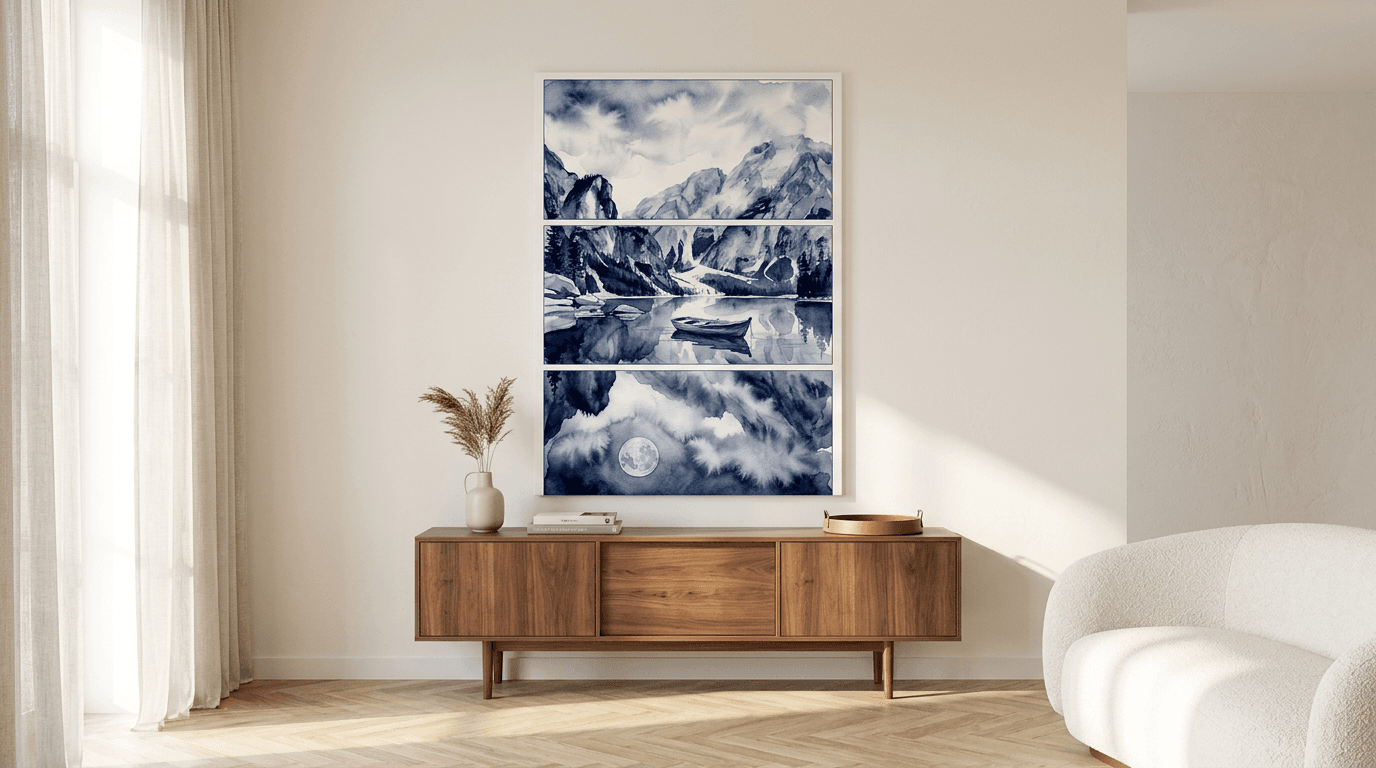
Art hanging above a sofa, bed, sideboard, or any anchoring piece of furniture should span two-thirds to three-quarters of the furniture's width. Above a 180 cm sofa, that means an artwork — or a group of artworks — measuring roughly 120 to 135 cm across. Narrower than two-thirds and the art looks detached from the furniture; wider and it feels top-heavy.
The 60–75% rule for empty walls
On a wall with no furniture beneath it, the artwork should fill 60–75% of the available wall width. Measure the open stretch of wall, multiply by 0.6 and 0.75, and you have your target range. A 150 cm stretch of hallway wall calls for roughly 90 to 110 cm of art — a single large piece or a pair with a small gap.
Eye level: 145 cm to the centre
Galleries hang art so its centre sits at about 145 cm from the floor — average standing eye level. In homes, people hang art noticeably higher than this, which is why so many walls feel vaguely "off". Measure 145 cm up, mark where the centre of the print should go, and work out your nail position from there. Above furniture, a second rule takes over: leave 15–25 cm between the furniture and the bottom edge of the art so the two read as one unit.
Wall Art Sizes in Cm: The Complete Chart
Print sizes sound abstract until you map them to real walls. The chart below covers the five portrait formats we print at Effigiz, from shelf-sized to statement, with the imperial equivalents you'll see on international sites.
| Format (cm) | Inches | Best for |
|---|---|---|
| 20×30 cm | 8×12" | Shelves, desks, nooks, gallery-wall accents |
| 30×45 cm | 12×18" | Hallways, kitchens, small bedrooms, pairs and trios |
| 40×60 cm | 16×24" | Bedrooms, home offices, above sideboards |
| 50×75 cm | 20×30" | Living rooms, dining rooms, generous single walls |
| 60×90 cm | 24×36" | Statement walls, above sofas and beds |
Availability varies by finish: canvas prints come in all five sizes, from the compact canvas 20x30 cm up to 60×90; paper posters and framed posters come in 30×45, 50×75, and 60×90 cm.
Portrait 2:3 formats and how to combine them
Every size in the chart shares the same 2:3 portrait ratio — the classic proportions of gallery prints, noticeably taller than wide. This matters for sizing, because a single vertical print carries less width than the numbers suggest: a 60×90 cm piece spans only 60 cm across.
The solution decorators use is composition. Two 40×60 cm prints hung 6 cm apart span 86 cm and read as one artwork. Three 30×45 cm prints make a 102 cm ensemble with a pleasing rhythm. A vertical format also earns its keep on narrow wall sections — beside a window, between two doors — where landscape art simply doesn't fit.
When in doubt between two sizes, take the larger one. Nobody ever regrets art that feels generous; almost everyone regrets art that feels timid.
The Right Size for Every Room
Rules are the skeleton — rooms are where sizing decisions actually happen. Here's the format to reach for in each one, and why.
Living room
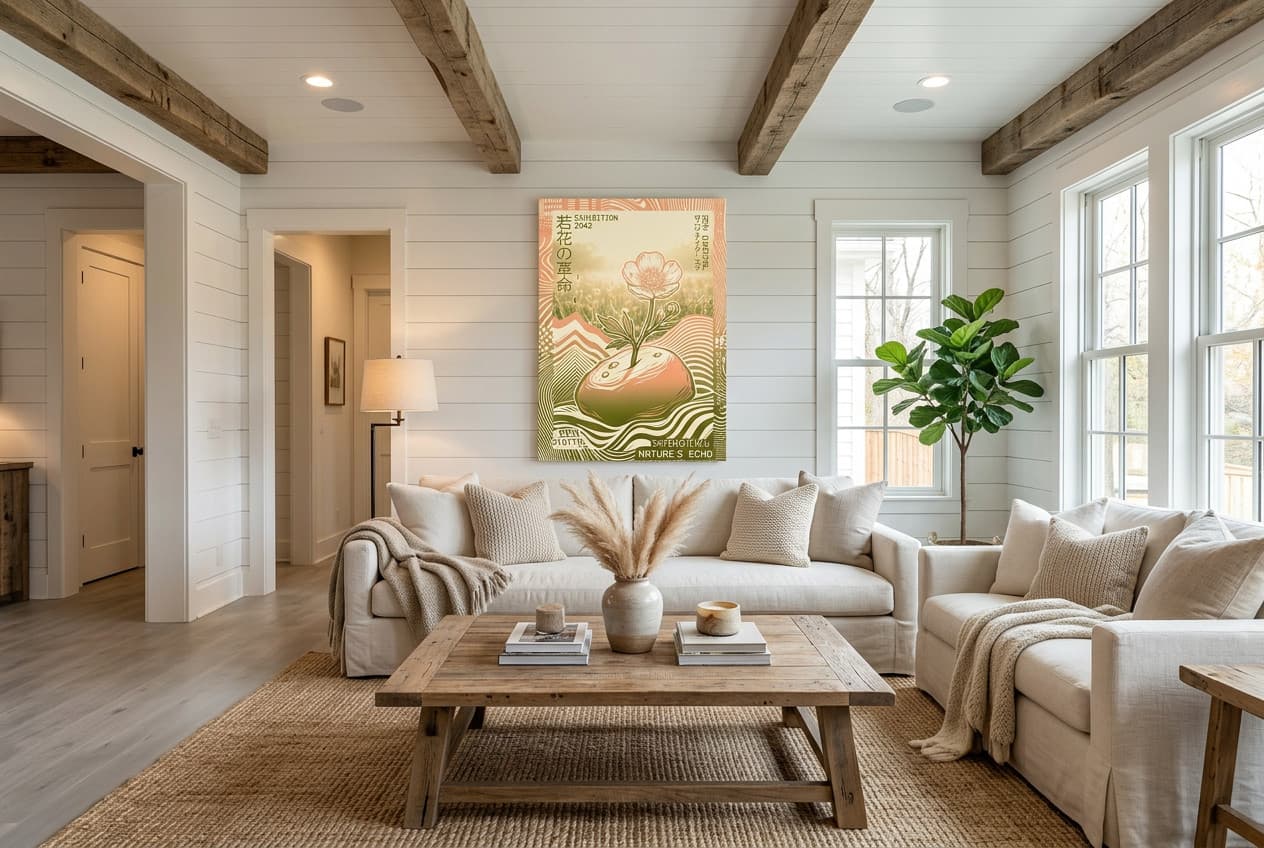
The living room rewards scale. Viewing distances are the longest in the home (typically 3–4 metres), so art here can and should be bold: 50×75 cm as the baseline, 60×90 cm above the sofa or on the main wall. If your sofa is wide, compose: a pair of 50×75 prints spans about 106 cm — perfect over 160 cm of seating.
Bedroom
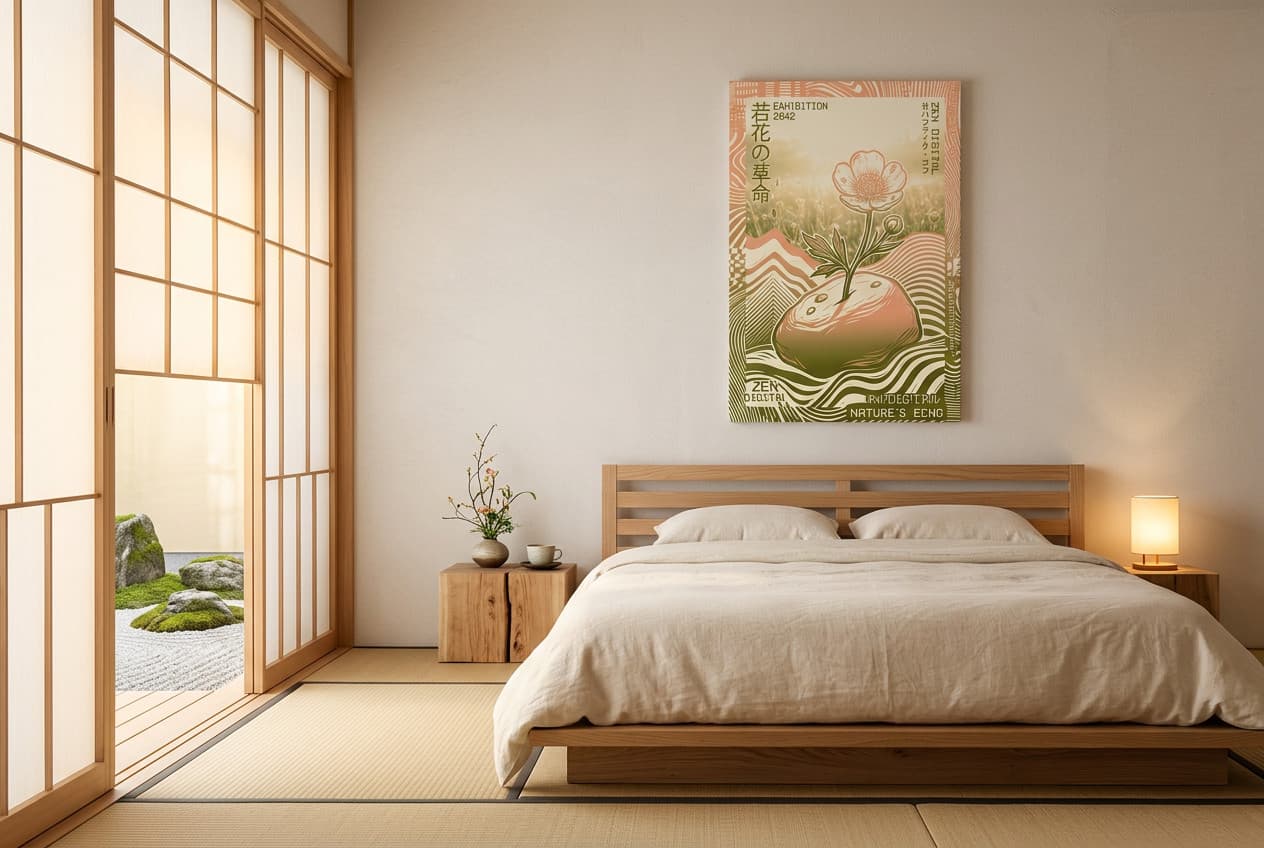
Bedrooms are viewed close-up and in low light, so the art can sit one step smaller than the living room: 40×60 cm above a bedside dresser, 60×90 cm or a pair of 40×60 above the bed itself. Calm, low-contrast subjects work with the room instead of against your sleep.
Kitchen and dining room
Kitchens offer fragments of wall rather than open expanses, which suits 30×45 cm — over a countertop, beside open shelving, above a coffee corner. Dining rooms take a step up: 50×75 cm on the wall facing the table gives guests something to look at without dominating the meal.
Home office
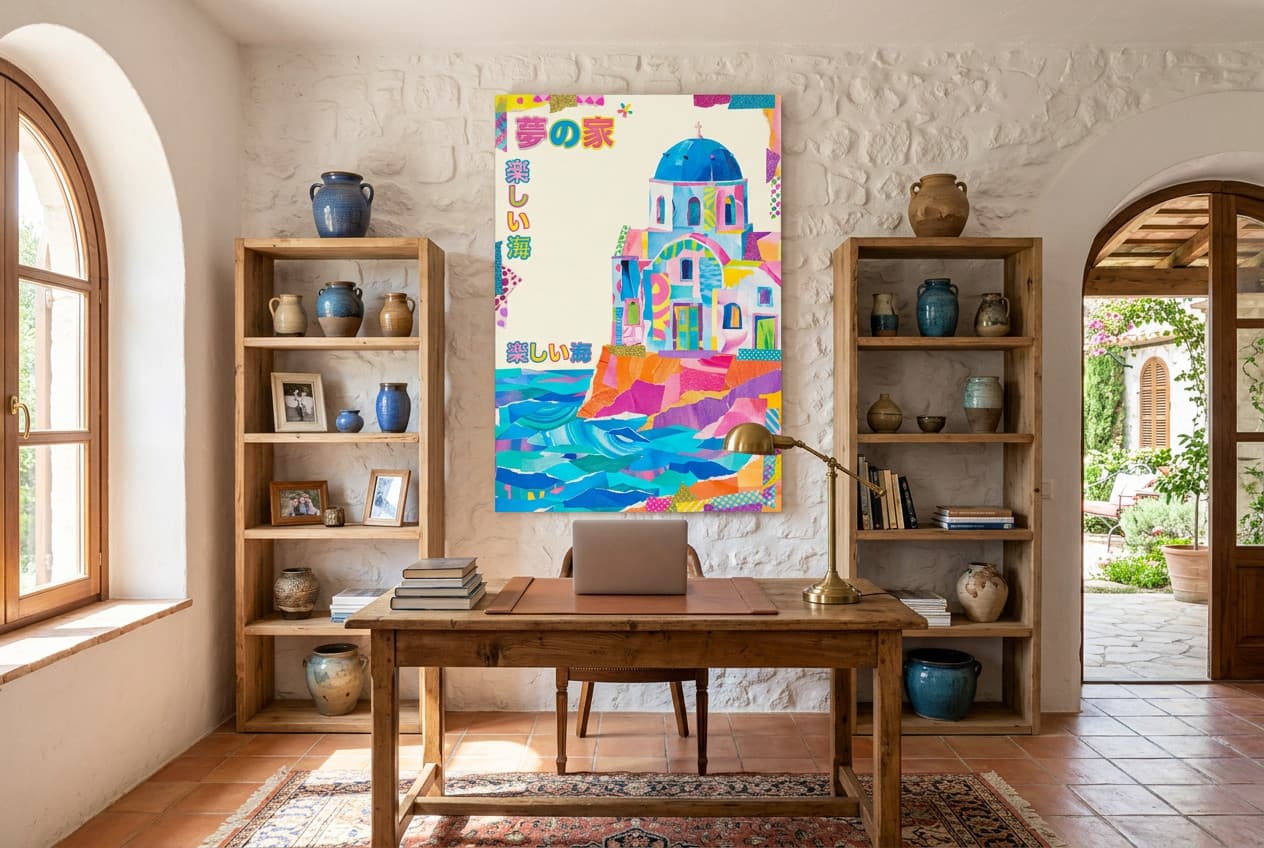
Art in a home office lives in your peripheral vision all day and in every video call behind you. 40×60 cm above or beside the desk hits the balance: present on camera, not looming. A pair of 30×45 prints works beautifully on the wall you face when you look up from the screen.
Hallway and small walls
Narrow spaces are where the portrait format shines. A 30×45 cm print on the wall at the end of a corridor draws the eye forward; a rhythmic row of three along the hallway turns dead space into a mini gallery. Keep centres at 145 cm — corridors are viewed standing and moving.
Sizing Art Above Furniture: Sofa, Bed, and Desk
Furniture walls are where the 2/3 rule earns its keep, because the furniture — not the wall — defines the composition. Three cases cover almost every home.
Above the sofa
A standard 3-seater runs 180–220 cm. Two-thirds gives you a 120–165 cm target span — wider than any single portrait print, which is exactly why pairs and trios exist. Two 60×90 cm canvases with a 6 cm gap span 126 cm; three 40×60 prints span about 132 cm. Hang the group with its centre at 145 cm and the bottom edge 15–25 cm above the backrest, and the wall instantly looks professionally styled.
Above the bed
Beds bring the headboard into play: hang art 20–25 cm above the headboard's top edge rather than at strict eye level. For a 140 cm bed, a single 60×90 cm piece is the confident choice. For 160–180 cm beds, a pair of 50×75 prints spans roughly 106 cm and matches the bed's presence without crowding the ceiling.
Above a desk or sideboard
Desks and sideboards typically run 120–160 cm, giving a 2/3 target of 80–110 cm. A single 50×75 cm print anchors a 120 cm desk; a pair of 40×60 covers a longer sideboard. Leave a slightly bigger gap here — 25 cm — so lamps and monitors don't collide with the frame line.
Five Sizing Mistakes to Avoid
Going too small. The classic. If you're hesitating between two sizes, the larger one is right more than nine times out of ten. Tape newspaper to the wall at both candidate sizes and step back three metres — the small option will almost always look lost.
Hanging too high. Art creeping toward the ceiling is the second most common error. Centre at 145 cm from the floor, always, unless furniture dictates otherwise.
Ignoring the furniture width. A gorgeous print in the wrong proportion to the sofa beneath it will never look right, whatever its size on paper. The 2/3 rule comes before personal taste.
One size everywhere. A home where every wall carries a 30×45 print feels flat. Contrast creates hierarchy: one 60×90 statement in the living room makes the smaller formats elsewhere feel intentional.
Forgetting viewing distance. Art seen from four metres needs to be twice as assertive as art seen from one. Match the format to how far away you'll actually stand — generous in living spaces, more intimate in hallways and nooks.
Wall Art Size FAQ
What is the rule for wall art size?
Two rules cover it: above furniture, art should span 2/3 to 3/4 of the furniture's width; on empty walls, it should fill 60–75% of the wall's width. Centre the piece at 145 cm from the floor.
What is the 2/3 rule for hanging art?
Artwork above a piece of furniture should measure about two-thirds of that furniture's width — roughly 120 cm of art above a 180 cm sofa. It's the fastest way to make art and furniture read as one composition.
What is the 70/30 rule?
In decorating, it means keeping about 70% of a room in a dominant, quiet style and 30% as accent. Applied to walls: leave the majority of wall surface calm and let one well-sized artwork carry the visual interest.
What is the most popular size for wall art?
For statement walls, 60×90 cm (24×36") is the most popular large format; 50×75 cm is the everyday favourite for living areas. Smaller formats like 30×45 cm dominate in pairs, trios, and gallery walls.
Choosing wall art size stops being intimidating the moment you replace guesswork with three numbers: two-thirds of the furniture, 60–75% of the wall, centre at 145 cm. Measure once, tape the outline if you're unsure, and then choose with confidence — and remember that between two sizes, the generous one is almost always the one you'll still love in five years. Your walls have been waiting for it.