Dog room ideas: 12 ways to design a space you'll both love
A dog room doesn't have to look like a kennel with a rug. These 12 dog room ideas cover the practical checklist quickly, then go deep on what makes the space feel designed: palette, materials, lighting and the walls.
The best dog room ideas start with three practical decisions — where the space goes, what your dog actually needs in it, and how it survives daily use — and then treat everything else as decor. That second half is where most dog rooms fall apart. They get the crate and the food bowls right, then stop, and the result looks like a storage corner rather than a room.
Designers have noticed the same thing: the dedicated dog room has quietly become a legitimate interior-design project, styled with the same care as a reading nook or a home bar. You don't need a spare wing to join in. You need a well-chosen spot, a short list of essentials, and a design layer — palette, materials, light and wall art — that makes the space feel like it belongs to your home instead of being carved out of it.
Here are twelve ideas, ordered the way you'd actually build the room.
1. Crown the room with a portrait of your own dog
One piece instantly separates a designed dog room from a furnished one: a portrait of the actual resident. Generic paw-print decor says "a dog lives here"; a portrait of your dog, in a style you chose, says this room was made for someone specific. It's the single highest-impact move on this list, and it's why we put it first.
The classic placement is directly above the dog bed — the same logic as hanging a portrait above a fireplace. The bed is the focal point of the room, the portrait doubles it, and the whole corner suddenly reads as intentional. Guests notice it before they notice anything else.
Creating one takes a few minutes with a custom pet portrait: upload a clear photo of your dog, pick an art style — from painterly classic to bold graphic — and choose poster or canvas. The artwork is generated from your photo, so the ears, the markings and that one crooked eyebrow all make it in. It also happens to be one of the best gifts for dog lovers if the dog room you're designing isn't your own.
2. Claim the right spot before you decorate
Location decides everything that follows, so choose it before buying a single item. The best dog rooms borrow leftover space: the void under the stairs, the end of a hallway, a walk-in closet, a corner of the laundry room or a slice of a home office. A full spare room is a luxury, not a requirement.
Two tests tell you whether a spot will work. First, proximity: dogs are pack animals, and a room far from where the household lives will simply go unused. Second, sightlines — your dog should be able to see comings and goings from the bed, which is why under-stairs nooks and hallway ends work so well despite their size.
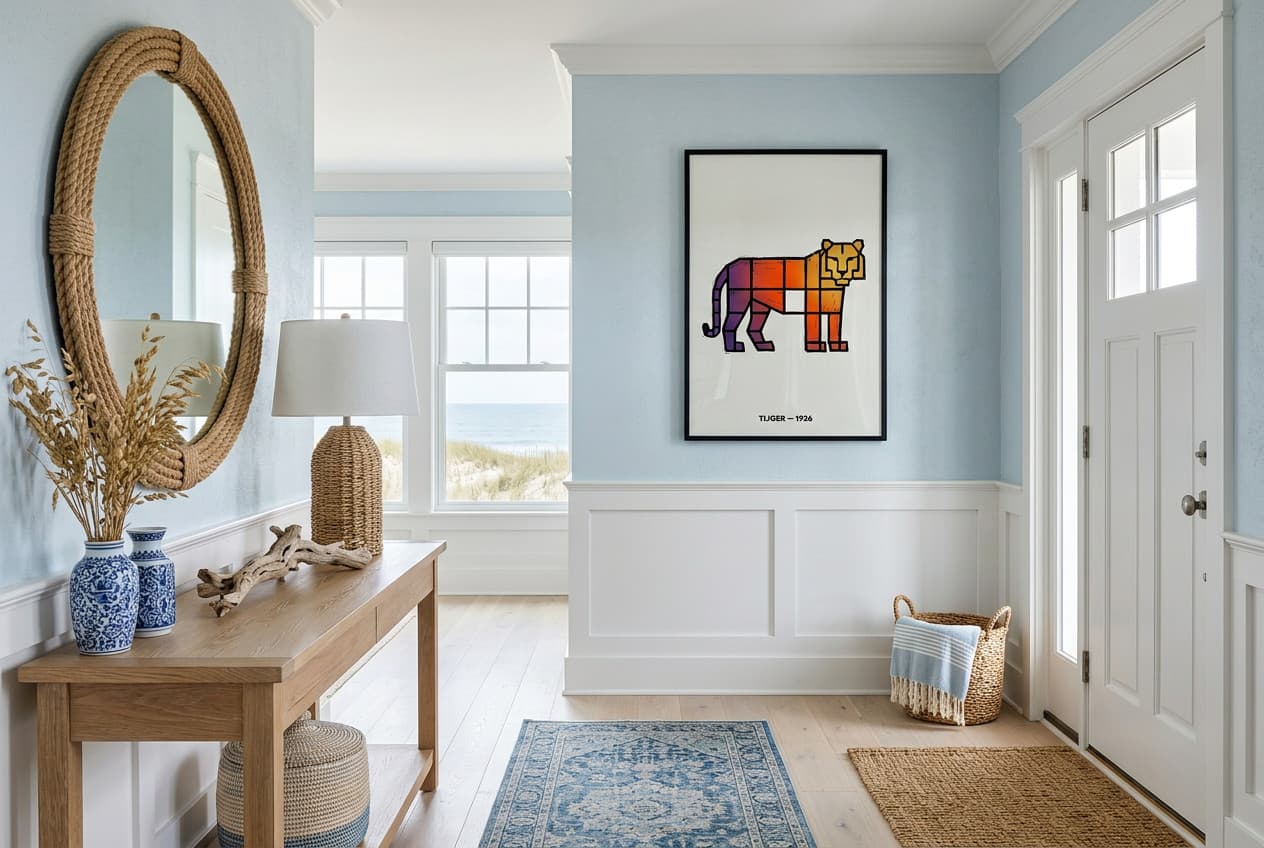
If you're claiming the under-stairs void, finish it like architecture rather than leaving it as a cave. Paint the interior a deliberate color, run the same skirting board inside, and consider a curved or arched opening — the difference between "we put the bed under the stairs" and a built-in dog alcove is about a day of trim work.
With multiple dogs, resist the bunk-bed novelty and think in parallel instead: identical beds side by side, one shared water station, and enough clearance that each dog can reach its bed without crossing another's. Dogs negotiate space constantly; a layout that removes the negotiation keeps the room peaceful.
If you're converting a whole room, resist the urge to fill it. A dog uses a room the way a minimalist would: one sleeping zone, one eating zone, one play zone, and generous empty floor. The restraint also happens to look better.
3. Get the essentials out of the way first
Every dog room needs the same short checklist: a washable bed sized so your dog can stretch fully, a water station (plus food if you feed in the room), storage for leashes and toys, and a crate if your dog is crate-trained. That's it — everything else on this list is design, not equipment.
Spend your money on the bed and your restraint everywhere else. A pile of gadgets makes the space feel like a pet store; one good bed, one basket and clear floor make it feel like a room. If your dog is a chewer, choose a bed with a removable, replaceable cover rather than a sculptural one you'll mourn.
The crate deserves one design decision of its own: treat it as furniture. A wooden crate that doubles as a side table, or a wire crate recessed under a counter and softened with a fitted cover, disappears into the room. A bare wire box in the middle of the floor is the fastest way to make even a beautiful space read as temporary.
One honest note: we're a wall-art shop, so we won't pretend to rank dog beds. What we can tell you with confidence is what turns this checklist into a room — and that's the remaining nine ideas.
4. Build the palette around calm
Choose the palette for the humans, but tilt it toward what dogs perceive. Dogs see blues and yellows far more clearly than reds and greens, so a soft blue-grey or warm sand wall reads as something to your dog, while a dramatic red reads as murky brown. Muted, dusty versions of blue and gold flatter both audiences.
The stronger argument for a calm palette is continuity. A dog nook painted in a jarring "fun" color announces itself as an afterthought; one painted in a deeper or lighter shade of your home's existing palette looks planned. If your living room is warm white and oak, try a clay or olive tone for the nook — related, but distinct enough to define the zone.
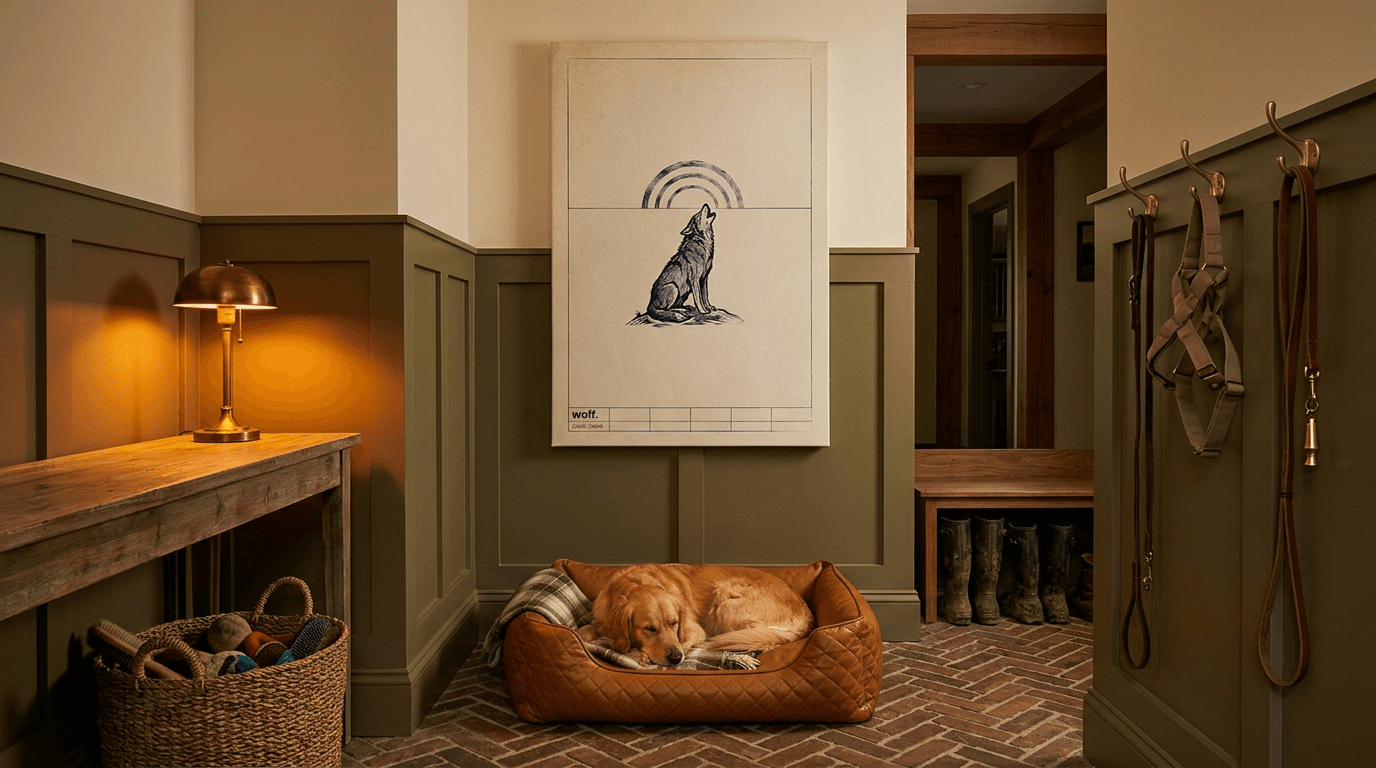
Dark colors are underrated here. An olive, ink-blue or espresso nook feels den-like and secure — which is precisely what dogs seek out — and hides scuffs far better than white ever will.
If you want a starting point, three pairings that consistently work: dusty blue walls with natural rattan and cream textiles; olive green with caramel leather and brass hooks; warm sand with off-white and one black accent. Each gives you a wall color your dog can actually perceive, and a scheme you won't tire of repainting around.
5. Choose materials that forgive
Every surface in a dog room should pass one test: can you clean it without thinking about it? Washable matte or eggshell paint on the walls, a low-pile or flat-weave rug you can hose down, and performance fabric on any cushion. Save the boucle and the linen for rooms without claws.
Flooring matters more than owners expect. Slippery tile and polished wood are genuinely uncomfortable for dogs, especially older ones — they splay, they hesitate, they avoid the room. A rubber-backed runner or a large flat-weave rug fixes it for the price of one vet visit avoided.
Protect the wall zone your dog actually touches. The lower metre of wall around the bed takes tail thumps, wet-nose prints and the occasional shake-off; a wipeable painted panel, tongue-and-groove wainscoting or even a strip of peel-and-stick splashback behind the bed keeps that band cleanable while adding architectural interest the rest of the room borrows.
Texture is also enrichment. A mix of surfaces underfoot — rug, cool tile at the water station, a soft bed — gives a dog small sensory choices through the day. It's a detail borrowed from professional kennel design that costs nothing to apply at home.
6. Turn the wall above the dog bed into a gallery
Here's the gap in almost every dog room you'll find online: the walls. Ranking guides cover feeding stations and storage bins in detail, then leave the vertical space blank — which is exactly why so many dog rooms feel like utility closets. Wall art is what re-classifies the space from "pet corner" to "room".
Animal art is the natural theme, and it's deeper than paw prints. A confident graphic piece from a collection of animal posters sets a tone — wild, playful or stately — that generic pet decor never manages. Choose art you'd hang elsewhere in your home; the dog room shouldn't have lower standards.
There's a well-loved trick here: hang a wolf. A wolf print above a sleeping labrador is the kind of visual joke that rewards every guest who gets it — the ancestor watching over the descendant.
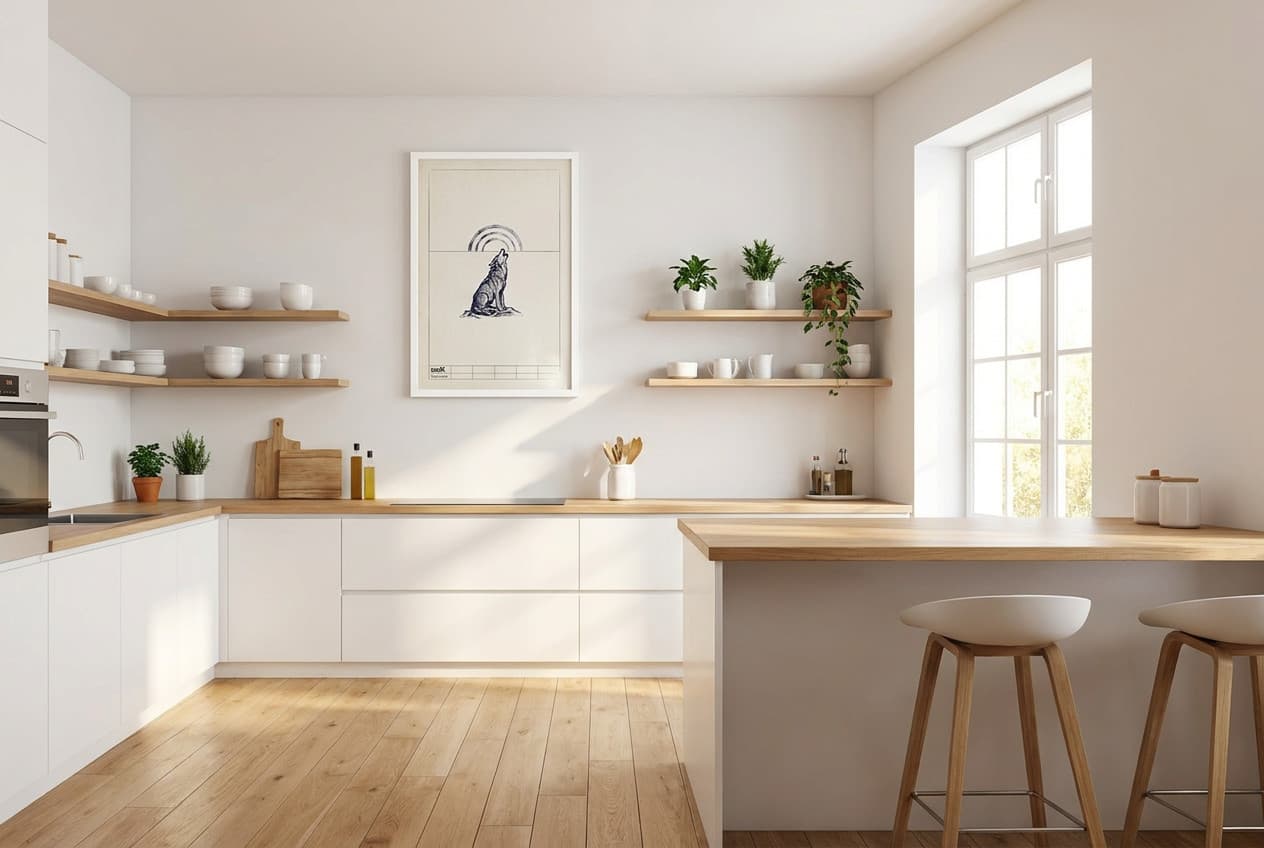
Size and hanging rules are the same as above a human bed: the artwork or grouping should span roughly half to two-thirds the width of the bed below it, hung low enough to connect visually. Our guide to above bed decor ideas covers the exact measurements, and they transfer directly — a 50×75 cm piece anchors a large dog bed beautifully, while a 30×45 cm print suits a nook.
The arrangement can do as much work as the art. A single statement piece suits a full dog room with a proper wall; a vertical pair flanking a peg rail suits a hallway nook; and in a generous space, one oversized 61×91 cm print above the bed with nothing else on that wall is the most gallery-like move of all. Whatever you choose, hang it securely and above shake height — canvas on a proper hook, not a pin.
7. Give the feeding corner dining-room manners
The feeding station is the messiest zone in a dog room, which is exactly why it rewards styling. Raise the bowls on a low stand or tray, put a wipeable mat beneath them, and give the corner one piece of art at human eye level. The mess stays practical; the corner stops looking like it.
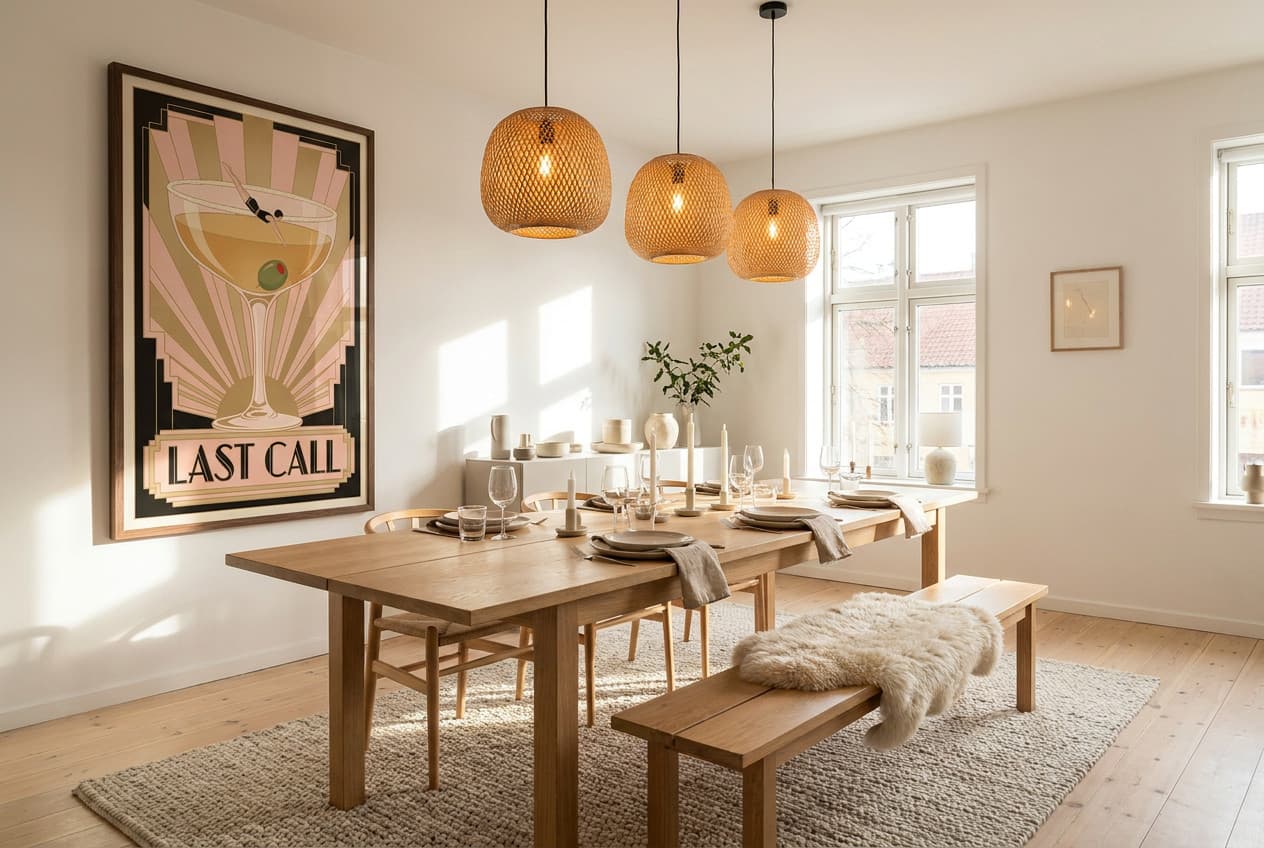
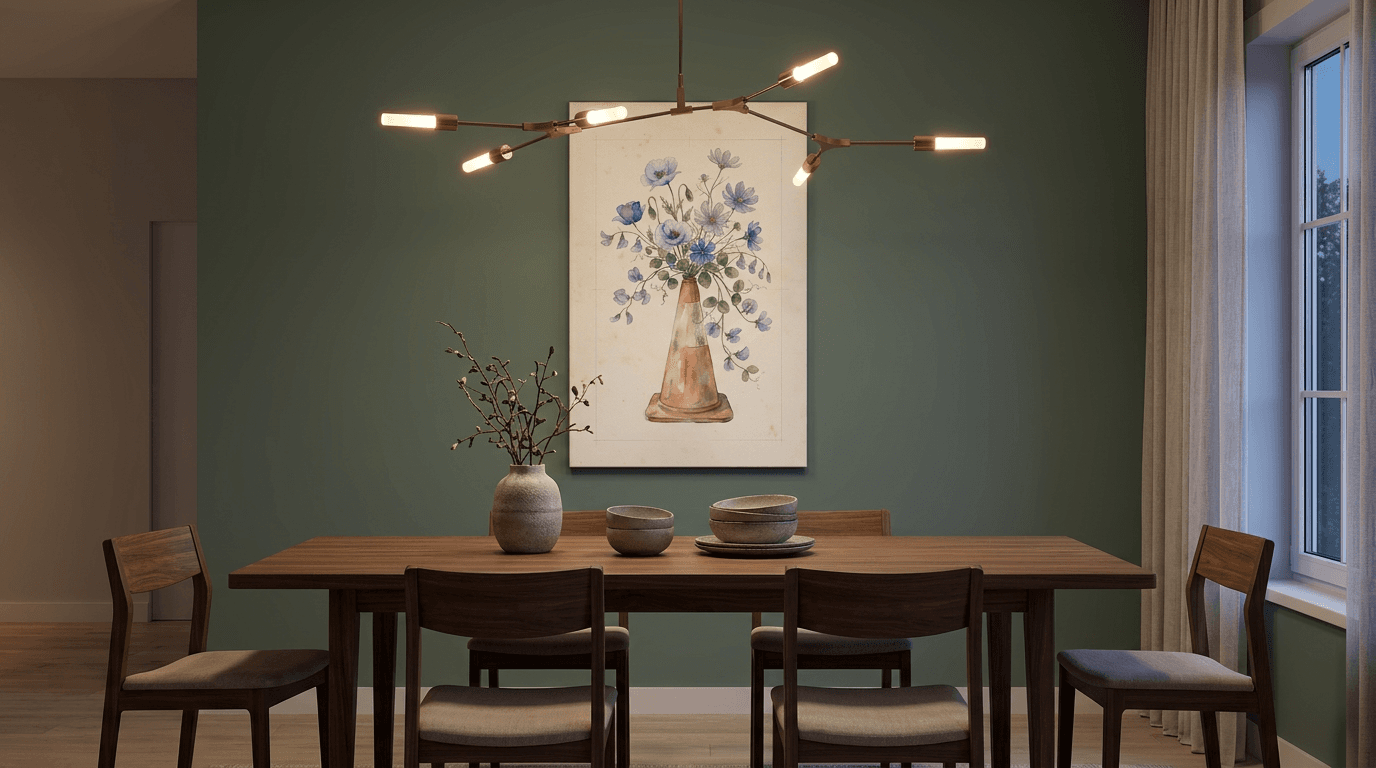
Treat it, in other words, as a tiny dining room. The same design logic applies: art near the table (or bowls) should be relaxed and appetizing rather than formal — the sort of pieces you'd find among posters for dining room, from botanical studies to playful food and drink prints. A cocktail print above the water bowls is a joke that never gets old.
If the feeding corner sits in your actual kitchen or dining space, this idea matters double: the dog zone should extend your dining decor, not interrupt it.
8. Light the nook like a real room
Overhead light alone makes any small space feel institutional, and a dog nook is no exception. Add one warm, low light source — a small wall sconce, a plug-in picture light above the artwork, or a lamp on the adjacent shelf — and the nook gains the same evening coziness as the rest of your home.
There's a functional bonus. A soft light near the sleeping area helps anxious dogs settle in a dark house, the same way a nightlight works for children. Put it on a timer or smart plug and the nook glows on at dusk without a thought from you.
Aim the light at the wall, not the bed. Washing the artwork and the paint color in warm light defines the zone visually while leaving the sleeping spot itself in comfortable shadow. Choose the warmest bulb you can find — the amber end of the range, the kind sold for restaurants and reading corners — and keep it dim; the nook should glow, not shine.
9. Make storage part of the decor
Dog gear multiplies, and open clutter is what makes pet corners look chaotic. The fix is the same as in any small room: go vertical and go closed. A peg rail for leashes and coats, one large lidded basket for toys, and a small cabinet or bench with storage for food and grooming kit will swallow everything a dog owns.
A peg rail also creates a styling moment. Hang the leashes on two pegs, leave two empty, and mount a small piece of art on the wall above — a compact piece from a collection of animal canvas prints works well here, since canvas needs no frame and shrugs off the occasional knock. Suddenly the storage wall is a composed vignette rather than a row of hooks.
The discipline that matters: nothing lives on the floor except the bed, the bowls and the current favorite toy. Everything else has a home above ground. It's the single cheapest idea on this list and the one with the most visible effect.
10. Keep the playful pieces on the walls
A dog room is allowed to be funny — it's arguably the one room where whimsy is mandatory. The trick is altitude: humor on the walls stays charming for years, while novelty furniture and toy-shaped decor on the floor read as clutter within a month.
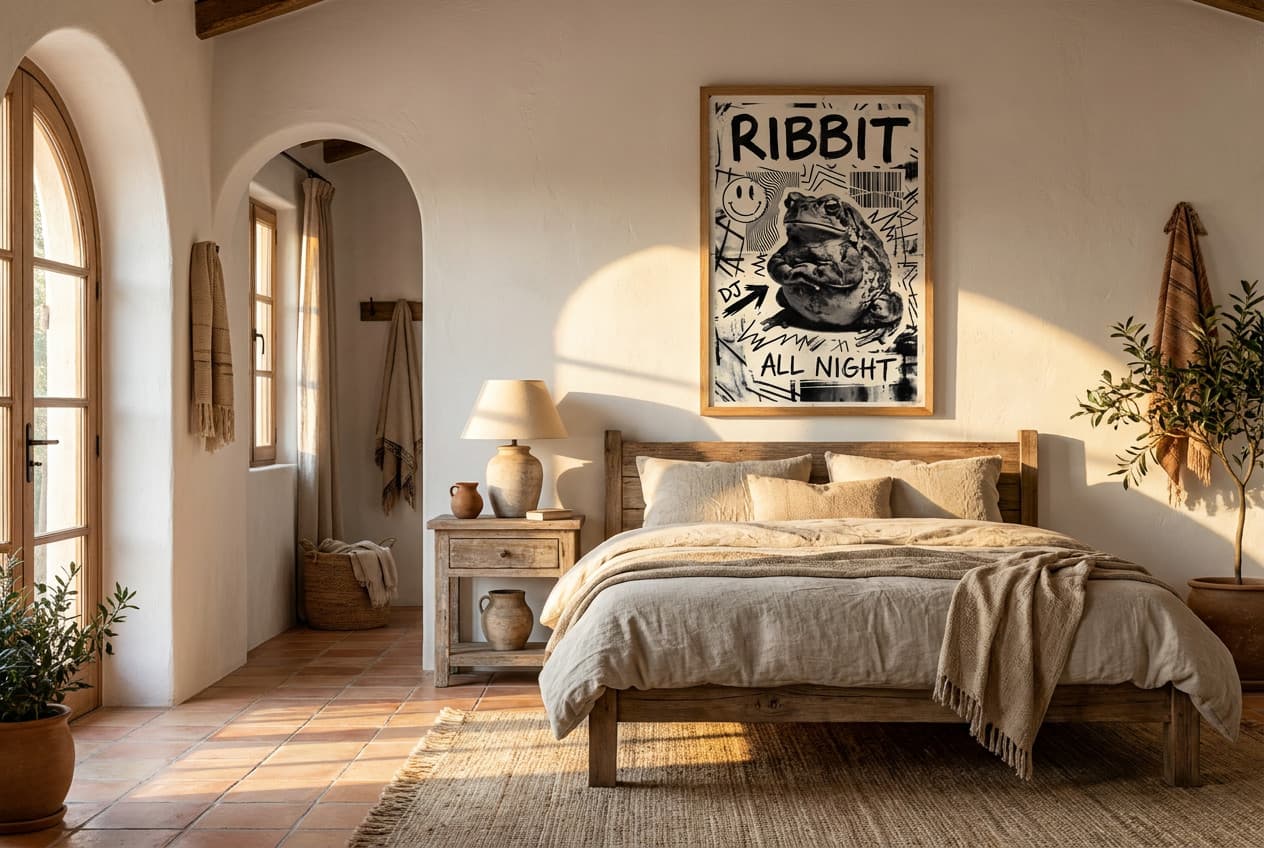
Bold, joyful art earns its place here. Bright colors, cartoon energy, unexpected subjects — the same visual language as posters for kids room translates perfectly to a dog's space, because both rooms are designed for play without apology. A frog mid-rave or a neon dinosaur will make you smile every time you scoop kibble, which is the entire point.
One constraint keeps it grown-up: limit the palette. Two or three loud pieces that share a color family read as a curated set; five that don't read as a daycare.
11. Blend a bedroom dog corner into your scheme
Most dogs don't get a room — they get a corner of yours, and that's a design brief of its own. The goal flips: instead of giving the dog zone its own identity, dissolve it into the bedroom's existing scheme so the room still reads as one calm space.
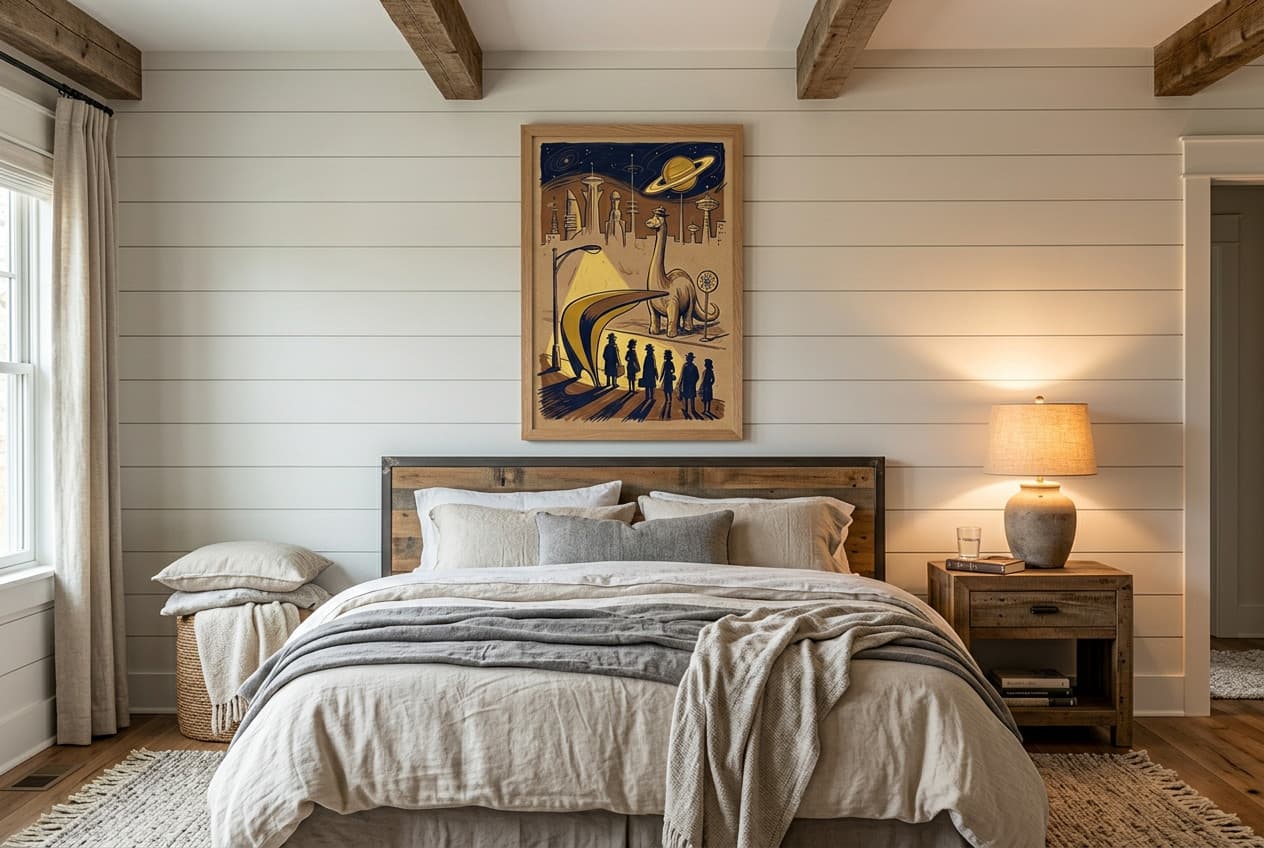
Match the dog bed's fabric to your own textiles — a linen-look cover with linen bedding, a sherpa bed with a knit throw — and place it where it aligns with your furniture rather than floating in a walkway. Then let the wall art bridge the two zones: a piece hung in the corner above the dog bed, chosen from the same mood as your posters for bedroom, ties the corner to the room instead of fencing it off.
Keep bedroom-corner art serene rather than loud — this is where your dog winds down, and where you do too. Muted tones, soft subjects, nothing that fights the headboard wall for attention.
12. Dog room ideas on a budget
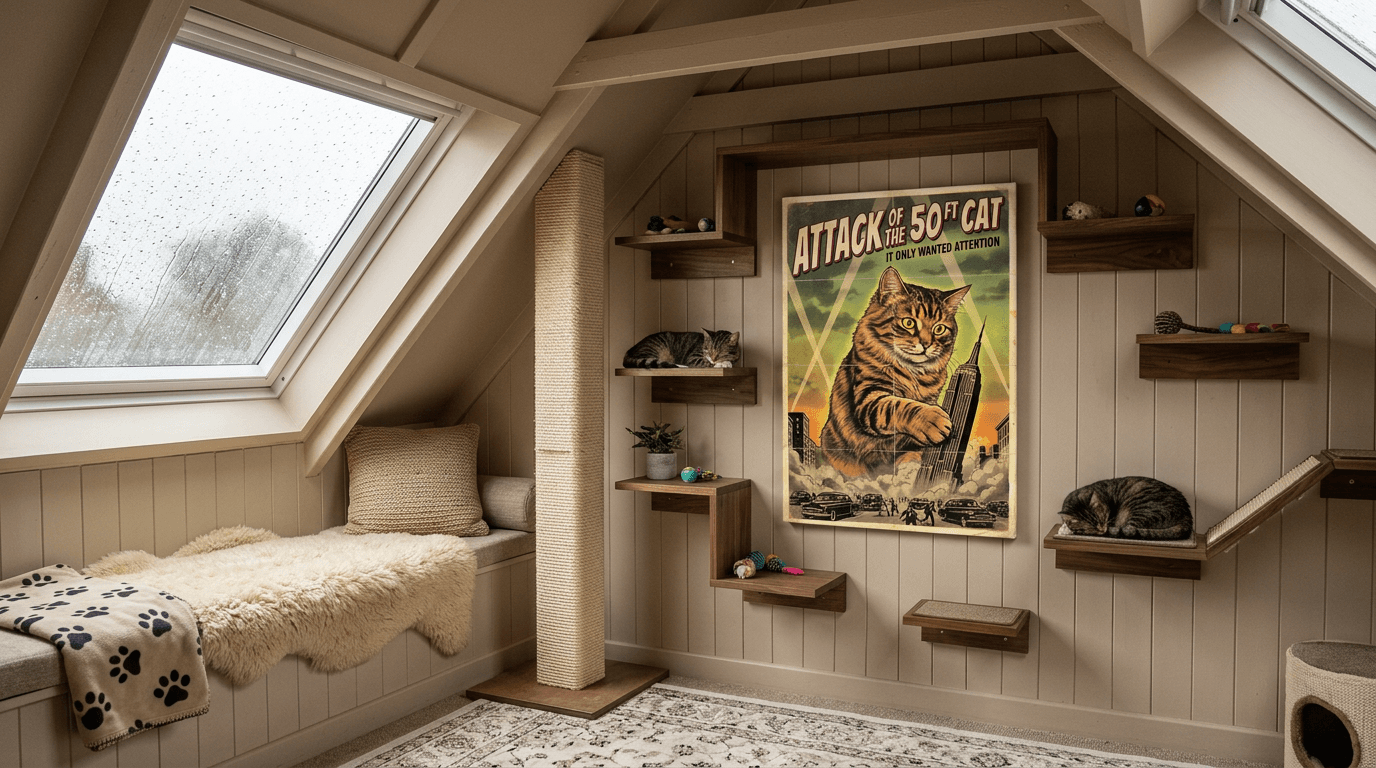
A convincing dog room costs far less than the luxury versions suggest, because the expensive-looking moves are mostly labor and judgment. Paint is the biggest lever: one deep, calm color on a single wall defines the nook for the price of a sample pot and an afternoon. The same budget order works for a feline household, as our cat room ideas show.
The rest of the budget kit: a peg rail instead of built-ins, a flat-weave rug remnant instead of custom flooring, a basket instead of a cabinet, and posters instead of large-format canvas. A 20×30 or 30×45 cm print is a small spend, and a pair of them above the bed delivers most of the gallery effect of idea six. Frame them in simple black or white wood frames — or don't frame them at all and let the paper speak.
Sequence the spending and the room improves in the right order: paint first, because it defines the zone; the rug second, because it fixes the flooring problem; art third, because it's what people see; storage last, because baskets can be upgraded any time. Doing it in reverse — gadgets first, walls never — is how most dog corners end up looking accidental.
Skip, without guilt: dog-bone wall decals, novelty furniture, and anything sold as a "pet decor set". Intentionality is what reads as expensive, and it's free.
Your dog room, from checklist to centerpiece
Run the twelve ideas in order and you'll notice the pattern: the practical half of a dog room is settled in three decisions, and everything that makes the space feel designed happens afterwards — in the palette, the materials, the light and the walls. That's the half most dog room ideas skip, and it's the half your guests (and your camera roll) will actually notice.
If you take one thing from this list, make it the first idea. A room built around a portrait of your own dog isn't just decorated — it's dedicated, and that's the difference between a space where a dog sleeps and a room that belongs to them.
Dog room FAQ
Do dogs like having their own room?
Most dogs genuinely benefit from a defined space of their own — it satisfies denning instinct and gives anxious dogs a predictable retreat during noise, visitors or fireworks. The caveat is placement and framing: dogs are social animals, so the space works when it's near household activity and always optional. A dog room used as regular isolation, far from the family, creates stress rather than relieving it. Introduce the space gradually with treats and meals there, and let your dog choose it.
What are common mistakes to avoid when creating a dog room?
Three mistakes the design process itself won't catch: making the room feel like punishment by only sending the dog there when guests arrive or when they've misbehaved; scent-bombing it with candles or plug-in diffusers, which are overwhelming for a dog's nose and sometimes toxic; and designing it entirely from human height — get down to your dog's eye level once before finishing, and you'll immediately spot the drafts, the slippery approach to the bed, and the sightline problems you'd otherwise miss.