Pet memorial ideas: 10 gentle ways to honor a beloved companion
There is no right way to grieve a pet, but there are gentle ways to remember one. From a portrait made from your favorite photo to a tree in their sunniest spot, these ten pet memorial ideas help you keep their memory close — at your own pace.
There is no right way to grieve a pet, and no deadline for doing it. Some people want a memorial the week they say goodbye; others need months before they can look at a photo without their chest tightening. Both are normal.
The pet memorial ideas below range from things you can hang on a wall to things you can plant, write, or simply do. Take what helps and leave the rest. A good memorial has only one job: to give your love somewhere to go.
1. A custom memorial portrait from your favorite photo
For many people, the most comforting memorial is a portrait — their pet, in a favorite photo, turned into a real piece of art for the wall. Unlike a phone gallery that you have to go looking for, a portrait lives in the room with you. You pass it on the way to the kitchen. It becomes part of the house, the way they were.
You can commission a local artist, paint one yourself, or use our custom pet portrait tool. The process is deliberately simple, because nobody grieving wants a complicated project: you upload the photo you love, choose an art style — from soft watercolor to a classic painterly portrait — and add their name if you'd like it inscribed. A preview appears in about a minute, and you order it only if it feels right, as a paper poster or a stretched canvas, from 20×30 cm up to 61×91 cm. If you prefer it framed, poster prints come with a simple black or white wood frame.
Take your time with it. Some people order a portrait within days because the empty wall is harder than the memory; others let the photo sit for a season first. There is no wrong schedule, and our wall art size guide can wait until you're ready to choose a spot.
How to choose the right photo
Choose the photo that feels most like them — that matters more than technical perfection. The slightly blurry shot where their ears are doing the thing they always did will make a truer portrait than a stiff, posed one.
That said, a few practical points help the artwork come out well. Pick an image where the face is sharp and reasonably close, taken in daylight rather than lamplight. Eye level beats looking down from above: it's how you remember greeting them. And make sure both eyes are visible — the eyes are what you'll look at every day.
If every photo you have is dark or blurry, don't give up on the idea. Choose the clearest one and accept a looser, more painterly style; watercolor in particular is forgiving of soft focus in a way a detailed realistic portrait is not.
Poster or canvas for a memorial portrait?
Both work; they just feel different in a room. A stretched canvas has a matte, softly textured surface with no glare, which suits a painterly memorial — it reads as an artwork rather than a printed photo, and needs no frame at all. A paper poster gives crisper detail and costs less, and the optional black or white wood frame lends it a quiet, formal dignity that suits a remembrance piece.
Size depends on where it will live. Above the memorial shelf from idea 3, a 30×45 cm print is intimate without dominating; above a sofa or bed, 50×75 or 61×91 cm holds the wall on its own.
2. A living memorial in their favorite spot
Planting something in their memory turns grief into a small act of care that keeps going. A tree, a rose bush, or a bed of perennials in the corner where they sunbathed gives you a place to stand on hard days — and something that visibly grows through the seasons, which many people find more consoling than a static marker.
Choose a plant with meaning if one comes to mind: rosemary for remembrance, a fruit tree for a dog who stole windfall apples, catmint for obvious reasons. Mark it with a flat stone if you like, or let it stay a secret between you and the garden.
Over time, some people let the spot grow into a small memorial garden: the planted tree, a stone with the pet's name, a wind chime in the nearest branch so the place has a voice on breezy days. It doesn't need to look like a monument — a corner that's simply more tended than the rest of the garden says everything.
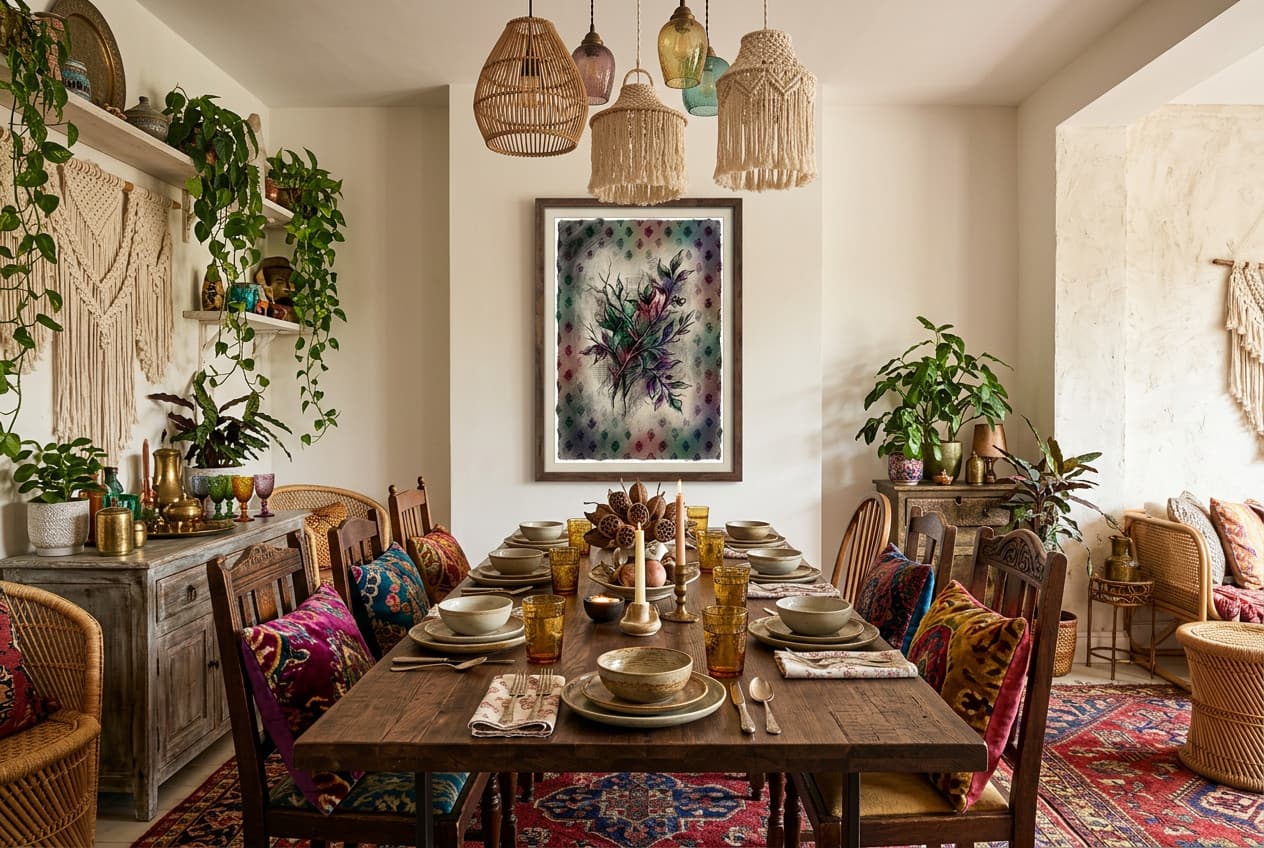
No garden? A potted olive tree or a trailing pothos on their old window ledge does the same quiet work indoors. Some people pair it with botanical art — nature posters of leaves, water, or flowers keep the same living, growing feeling on the wall through winter.
3. A memorial shelf that keeps them close
A small, intentional display beats a houseful of scattered reminders. Choose one surface — a hallway console, one shelf of a bookcase, the corner of a dresser — and gather the essentials there: their collar and tag, one favorite photo, perhaps a candle you light on difficult evenings.
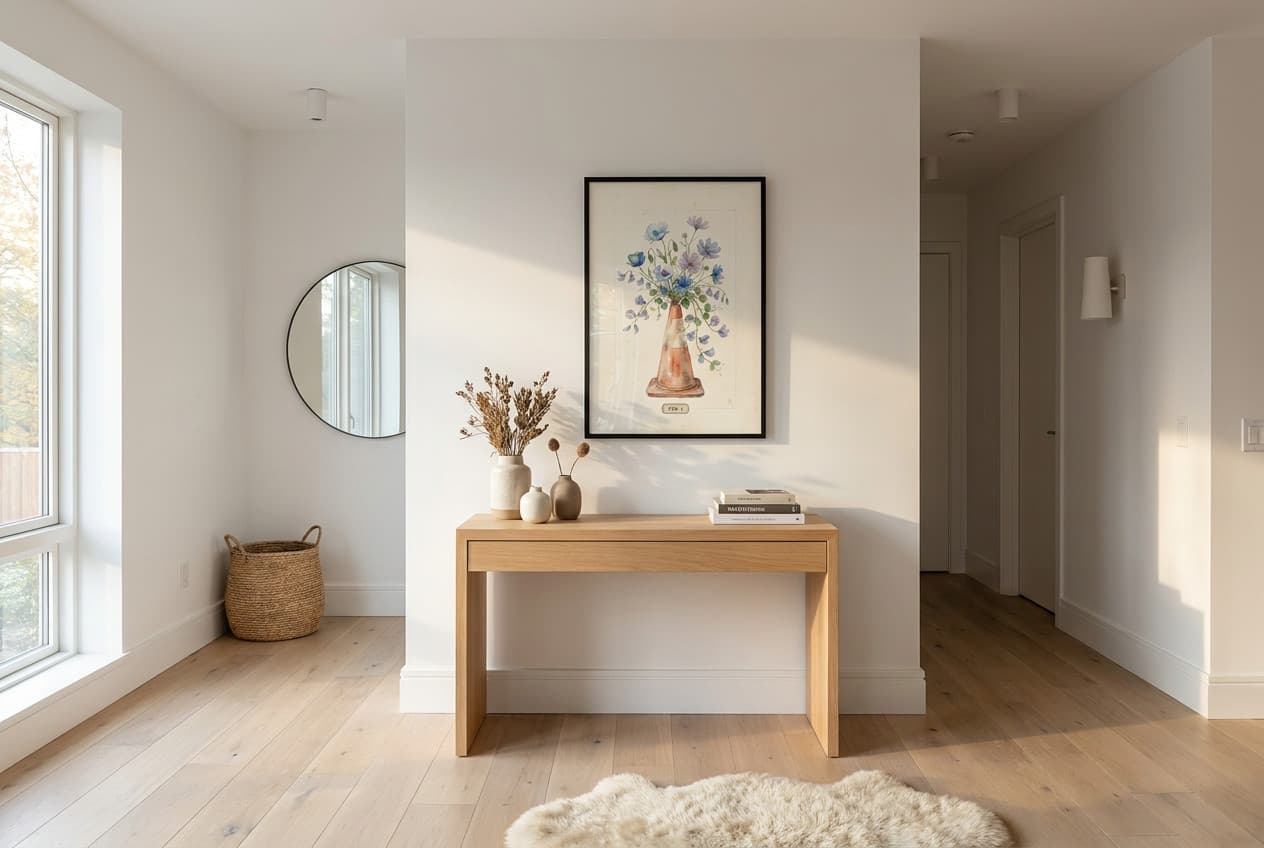
Keeping it small is the point. One curated shelf lets you decide when to visit the memory, instead of being ambushed by a leash still hanging by the door. Everything else can go into a memory box (idea 5) until you're ready.
A quiet piece of art above the shelf finishes it gently — something soft and unhurried rather than literal. A muted watercolor landscape reads as calm rather than loss:

4. A paw print keepsake
A paw print is the memorial people most often say they're glad they made. Many vets and crematoriums offer an ink or clay impression when you say goodbye — it's always okay to ask, and most will treat the request with real tenderness.
If you still have time with an aging pet, an air-dry clay kit lets you make one at home in ten minutes. Once it's dry, paint their name and years on it, and either frame it or bring it out with the holiday decorations each year — a small annual hello.
A saved tuft of fur or a whisker in a small glass vial belongs in the same family of keepsakes — physical, particular, unmistakably theirs. If the goodbye has already happened and you have neither, be gentle with yourself: the photo you'll choose for a portrait carries them just as surely.
5. A memory box for their small things
A memory box solves the hardest practical question of pet loss: what do you do with their things? Throwing them out feels like betrayal; leaving them where they were hurts every day. A dedicated box — wooden, woven, or a simple shoebox covered in fabric — gives everything a respectful place.
Put in the collar, a favorite toy, the vet tag, and a note about who they were: the weird habits, the sounds, the exact spot they claimed on the sofa. Details fade faster than we expect; the note is for you, years from now.
6. A photo book or a small gallery wall
Printing your photos moves them from a device you scroll to an object you hold. A slim photo book — even twenty pages — becomes the thing you reach for on their anniversary, and the thing children in the family ask to look through.
A practical tip for the book: don't aim for completeness. Twenty photos chosen for feeling — the puppy picture, the beach day, the gray-muzzled last summer — tell the story better than three hundred in chronological order, and the editing itself is a surprisingly healing afternoon.
If you'd rather live with the photos than shelve them, hang a few. A compact arrangement works better than one lonely frame: three or five prints of different sizes, mixing candid photos with one piece of calm art — a memorial portrait, or animal canvas prints in a style your pet somehow matched. Our gallery wall guide covers spacing and layouts when you get there.
7. A donation in their name
Giving in their name turns loss into help for an animal still waiting. Most shelters and rescues accept dedicated donations and will record the tribute — some send a card naming the pet honored, which grieving people often keep.
If money is tight, donate their unused things: unopened food, beds, toys, and medications are gladly taken by most shelters. Their kibble feeding another dog is its own kind of memorial.
Time counts too. Walking shelter dogs or fostering a litter of kittens for a few weeks, when you're ready, honors a pet in the most literal way possible — by passing on the care they taught you. Many people find this is the step that finally moves grief somewhere useful.
8. A goodbye ritual, however small
Grief settles better when it's given a moment of its own. That can be as simple as lighting a candle the evening they pass, or walking their usual route one more time — same corners, same lamppost, same pace.
If children are grieving too, include them: let them draw a picture, choose a photo, or say one thing they loved out loud. A five-minute backyard goodbye with a few words does more for a child than a careful silence meant to protect them.
Writing a short letter to your pet is another ritual that sounds strange and works. Thank them for something specific, apologize for whatever you're carrying — the appointment you dreaded making, the last day — and say goodbye in your own words. Fold it into the memory box, or tuck it behind the portrait's frame.
Some families do invite friends over to share stories, the way they would for any loved one. If that feels like too much, it isn't required. A ritual counts even when the only witness is you.
9. Art of the places you loved together
Sometimes the truest memorial isn't an image of the pet at all, but of a place. The beach where she chased gulls. The forest path of ten thousand walks. The city street at night, back when a last stroll around the block ended every day. A print of that landscape holds the memory privately — guests see a beautiful scene; you see her.

This is a gentler option for anyone who finds a portrait too raw at first, which is common in the early weeks. You can browse landscape posters and simply notice which one feels like your walks — coastlines, mountains, quiet water. Trust the pull; it knows the way.
Hang it somewhere you pause naturally rather than somewhere ceremonial: beside the door where the leash used to hang, above the armchair where the cat claimed your lap. The point isn't a shrine — it's a view you share with them, still, every ordinary day.
10. A date you keep for them
An annual remembrance gives grief a container, so it doesn't have to leak into every day. Their adoption day — "gotcha day" — or their birthday works well: light the candle on the memorial shelf, take the old walking route, look through the photo book, let yourself tell one story about them.
The first anniversary usually hurts. Over the years, many people find the day quietly turns from mourning into gratitude — the same date, remembering the same animal, but the weight has shifted. Keeping the date is how you get there.
And if the date arrives before you're ready — it often does, the first year — scale the ritual down rather than skipping it. Lighting the candle for one minute still counts. The tradition survives, and next year you'll be glad it did.
What to give someone who has lost a pet
The best sympathy gift names the pet. A card that says "I keep thinking about how Max leaned on everyone he liked" comforts more than the most expensive generic gift, because a grieving owner's quiet fear is that everyone else has already forgotten.
Beyond words, choose something that honors the animal rather than replaces it: a donation to a shelter in the pet's name, a candle, a planted rose for their garden. A custom pet portrait made from a photo of their pet is one of the most moving gifts there is — just mind the timing. Some people cry with gratitude the first week; others need a month or two before they can face an image. If you're unsure, a note offering the portrait "whenever you're ready" is safer than the surprise itself, and lets them choose the photo that means the most.
And when the sharpest grief has passed, cheerful animal art can come back into the picture — our guides to gifts for dog lovers and gifts for cat lovers are for those later, lighter occasions, not for the sympathy card.
Carrying them with you
A pet memorial isn't really about the object — the portrait, the tree, the box. It's about giving yourself permission to keep remembering out loud, in a world that moves on faster than you can.
Start with one small thing. Print one photo. Light one candle. Plant one shrub in the sunny corner. The right memorial doesn't close the door on your grief; it opens a window you can return to — on the anniversary, on the hard evenings, and eventually on the days when the memory arrives smiling.
They gave you years of unguarded love. Remembering them well is simply love, continued.
Pet memorial FAQ
Why does losing a pet hurt so much?
Because a pet is woven into more of your day than almost anyone else. They were there at every meal, every homecoming, every quiet evening — so the loss resurfaces dozens of times a day, each time a routine comes up empty. Psychologists also note that pet grief is often "disenfranchised": the world doesn't grant it the rituals and allowances human loss receives, so mourners feel pressure to recover quickly and grieve alone. If it hurts more than you expected, nothing is wrong with you. Give it the time you would give any real loss — it was one.
What is a beautiful quote for the loss of a dog?
Two that many grieving owners return to. Psychiatrist Colin Murray Parkes wrote that "grief is the price we pay for love" — a reminder that the pain is proportional to something good. And Anatole France: "Until one has loved an animal, a part of one's soul remains unawakened." Either works on a memorial card, beneath a portrait, or engraved on a garden stone.