Maximalist decor: The complete guide to bold, layered interior design
Maximalism celebrates excess through intentional layering of color, pattern, and texture. Discover how to master this bold aesthetic without creating visual chaos.
If minimalism whispers, maximalism shouts—and right now, everyone's listening. This unapologetically bold aesthetic celebrates abundance over restraint, layering saturated colors, clashing patterns, and personal treasures into spaces that feel more like curated galleries than sterile showrooms. But maximalist decor isn't about chaos; it's about intentionality, where every velvet cushion, gallery wall, and vintage find tells part of your story. In this guide, you'll learn the core principles that separate confident maximalism from visual overload, discover room-by-room strategies for balancing pattern and color, and see how statement wall art transforms empty walls into the anchors that hold the entire look together.
What Is Maximalist Decor? Understanding the More-Is-More Aesthetic
Maximalist decor is an interior design philosophy that celebrates abundance, personality, and visual richness. Where minimalism strips away, maximalism adds—layering colors, patterns, textures, and collections to create spaces that feel deeply personal and unapologetically expressive. This isn't about cramming every surface with random objects. True maximalism follows intentional design principles that balance bold choices with cohesive visual harmony, transforming potential chaos into curated storytelling.
The aesthetic thrives on contrast and juxtaposition. A vintage Persian rug might anchor a room filled with contemporary art, while jewel-toned velvet cushions sit alongside geometric prints. Every element earns its place through color relationships, scale variation, or emotional resonance. The result feels abundant but never arbitrary—a crucial distinction that separates thoughtful maximalism from mere clutter.
The core philosophy behind maximalism
At its heart, maximalism rejects the idea that restraint equals sophistication. It argues that our spaces should reflect the full complexity of who we are—our travels, passions, contradictions, and evolving tastes. This philosophy treats rooms as living galleries where every wall, shelf, and corner becomes an opportunity for self-expression.
The approach demands confidence. You're not following a prescribed aesthetic rulebook but rather curating elements that spark joy, curiosity, or conversation. A maximalist living room might feature posters for living room alongside inherited antiques, houseplants spilling from vintage planters, and books stacked both vertically and horizontally. Each layer adds depth, inviting the eye to wander and discover new details with every glance.
How maximalism differs from minimalism
Minimalism prioritizes function, negative space, and a "less is more" ethos—think neutral palettes, clean lines, and carefully edited possessions. Maximalism flips this script entirely. Where minimalism might display a single sculptural vase on an empty shelf, maximalism arranges that vase among stacked art books, framed botanical prints, and collected ceramics from weekend markets.
The emotional tone differs too. Minimalist spaces often feel serene and contemplative; maximalist rooms pulse with energy and warmth. Neither approach is inherently superior—they simply serve different personalities and lifestyles. Someone craving visual stimulation and nostalgic comfort will naturally gravitate toward maximalism's layered richness.
Why maximalism is having a cultural moment
After a decade dominated by Scandinavian minimalism and Marie Kondo's decluttering gospel, younger generations are pushing back. Gen Z and millennials—who came of age during economic uncertainty and digital saturation—increasingly view maximalism as an act of optimism and authenticity. In an era of algorithm-driven sameness, a boldly personal space becomes a form of resistance.
Social media has amplified this shift. Platforms like Instagram and TikTok reward visually complex, story-rich interiors that photograph well and invite lingering attention. Maximalist spaces deliver both—they're inherently photogenic and endlessly explorable, offering fresh angles and vignettes with every post.
Key Characteristics of Maximalist Interior Design
Maximalist spaces share a distinct visual language—one built on abundance, layering, and intentional juxtaposition. While each maximalist room tells a unique story, certain hallmarks unite them: saturated color, pattern mixing, curated collections, and statement pieces that command attention. Understanding these characteristics helps you recognize maximalism in the wild and, more importantly, translate the aesthetic into your own home with confidence rather than chaos.
Bold, saturated color palettes
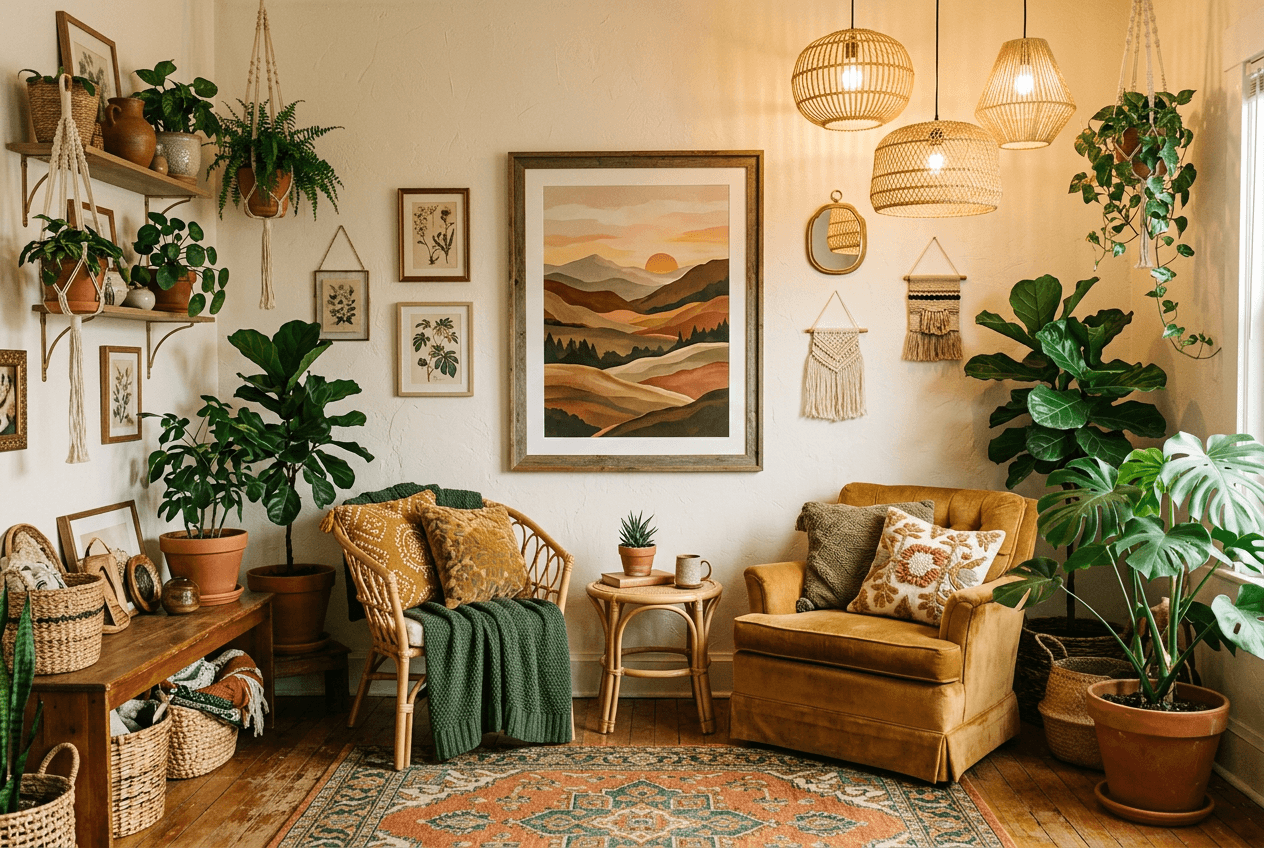
Maximalist rooms reject the beige safety net. Instead, they lean into jewel tones—emerald greens, sapphire blues, ruby reds—often layered within a single space. You might see a mustard velvet sofa against peacock-blue walls, anchored by a Persian rug in burgundy and gold. The key isn't using every color at once; it's choosing a palette of three to five saturated hues and repeating them across textiles, art, and accessories. This repetition creates visual cohesion even when the eye has multiple focal points competing for attention.
Layered patterns and textures
Pattern mixing is maximalism's signature move. A single room might combine leopard-print cushions, a geometric dhurrie rug, floral curtains, and striped throws—all without visual collapse. The secret lies in varying the scale: pair large-scale botanicals with small-scale geometrics, or mix organic patterns (florals, animal prints) with structured ones (stripes, checks). Texture adds another dimension—think velvet against linen, brass against ceramic, glossy lacquer beside raw wood. Each surface invites touch and reflects light differently, building depth that flat minimalism can't achieve.
Curated collections and meaningful objects
Maximalism thrives on personal narrative. Collections—vintage cameras, ceramic vases, antique books—become design elements rather than clutter when displayed with intention. Group objects by color, material, or theme on open shelving, mantels, or gallery walls. A collection of blue-and-white porcelain gains impact when massed together rather than scattered. The distinction between maximalism and hoarding is curation: every object should earn its place through beauty, meaning, or both. If it doesn't spark joy or tell part of your story, it dilutes the effect. If it's specifically the antique books and scholarly curiosities that draw you in, dark academia decor turns that instinct into a whole aesthetic rather than just one note among many.
Statement furniture and art pieces
Maximalist rooms need anchors—bold pieces that ground the visual complexity. An oversized tufted headboard in jewel-tone velvet. A sculptural brass chandelier. A gallery wall of landscape posters in mismatched vintage frames. These statement elements provide visual weight and prevent the space from feeling scattered. Wall art particularly matters here: large-scale canvas prints or poster groupings establish focal points that organize surrounding chaos into intentional composition.
Rich, luxurious materials
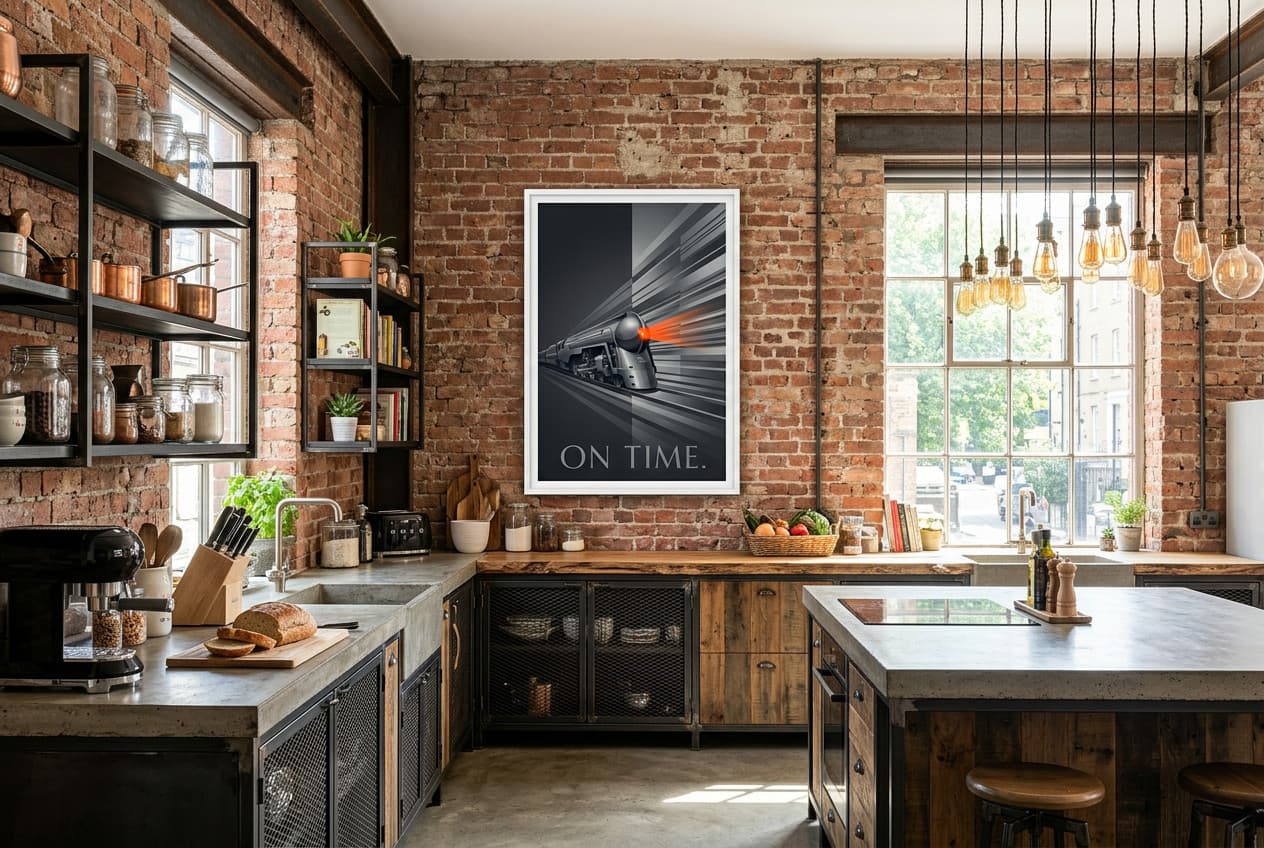
Maximalism celebrates tactile luxury. Silk cushions, marble tabletops, hand-knotted rugs, and oil-rubbed bronze fixtures signal that this abundance is curated, not accidental. Even budget-friendly spaces can adopt this principle through strategic choices: a single velvet armchair, brass picture frames, or heavyweight cotton curtains. The goal is sensory richness—spaces that feel as good to inhabit as they look. When every surface invites interaction, the room transcends mere visual appeal and becomes an immersive experience.
The Design Principles Behind Maximalist Decor
Maximalism isn't about throwing everything you own into a room and hoping it works. It's a design discipline with its own logic—one that rewards careful orchestration. The difference between a maximalist space that feels intentional and one that reads as clutter lies in understanding a handful of core principles that guide every decision, from paint color to pillow placement.
Intentionality over randomness
Every object in a maximalist room should earn its place. The key question isn't "Do I like this?" but "Does this contribute to the story I'm telling?" A vintage brass telescope on a bookshelf works when it's part of a broader narrative about travel or curiosity; alone, it's just random. Curate your collections with the same rigor a gallery curator applies to an exhibition. Group similar items—ceramic vases, vintage cameras, botanical prints—to create visual weight rather than scattering them arbitrarily. This principle applies equally to posters for kitchen in a culinary-themed space or a gallery wall that traces a color journey across multiple pieces.
Color harmony in bold schemes
Maximalist spaces thrive on saturated hues, but those colors must relate to each other. Choose a dominant color family—say, jewel tones like emerald, sapphire, and amethyst—and weave those shades through textiles, art, and accessories. The repetition creates visual rhythm. A burnt orange velvet sofa gains coherence when echoed in a terracotta vase, a rust-colored throw, and an abstract canvas with similar warm tones. Limit your palette to three to five main colors, allowing for tonal variations within each. This constraint prevents the visual chaos that happens when too many unrelated hues compete for attention.
Balancing pattern and solid surfaces
Pattern mixing is maximalism's signature move, but it demands breathing room. The rule of thirds applies here: aim for roughly one-third patterned surfaces, one-third textured solids, and one-third smooth neutrals. A room with a bold floral wallpaper, zebra-print rug, and geometric throw pillows needs solid-colored furniture and plain linen curtains to anchor the eye. Vary the scale of your patterns—pair large-scale botanical prints with small-scale geometric motifs—so they complement rather than clash. Wall art plays a crucial role in this balance; a single large canvas print with a complex composition can ground a room filled with busy textiles.
Creating focal points within abundance
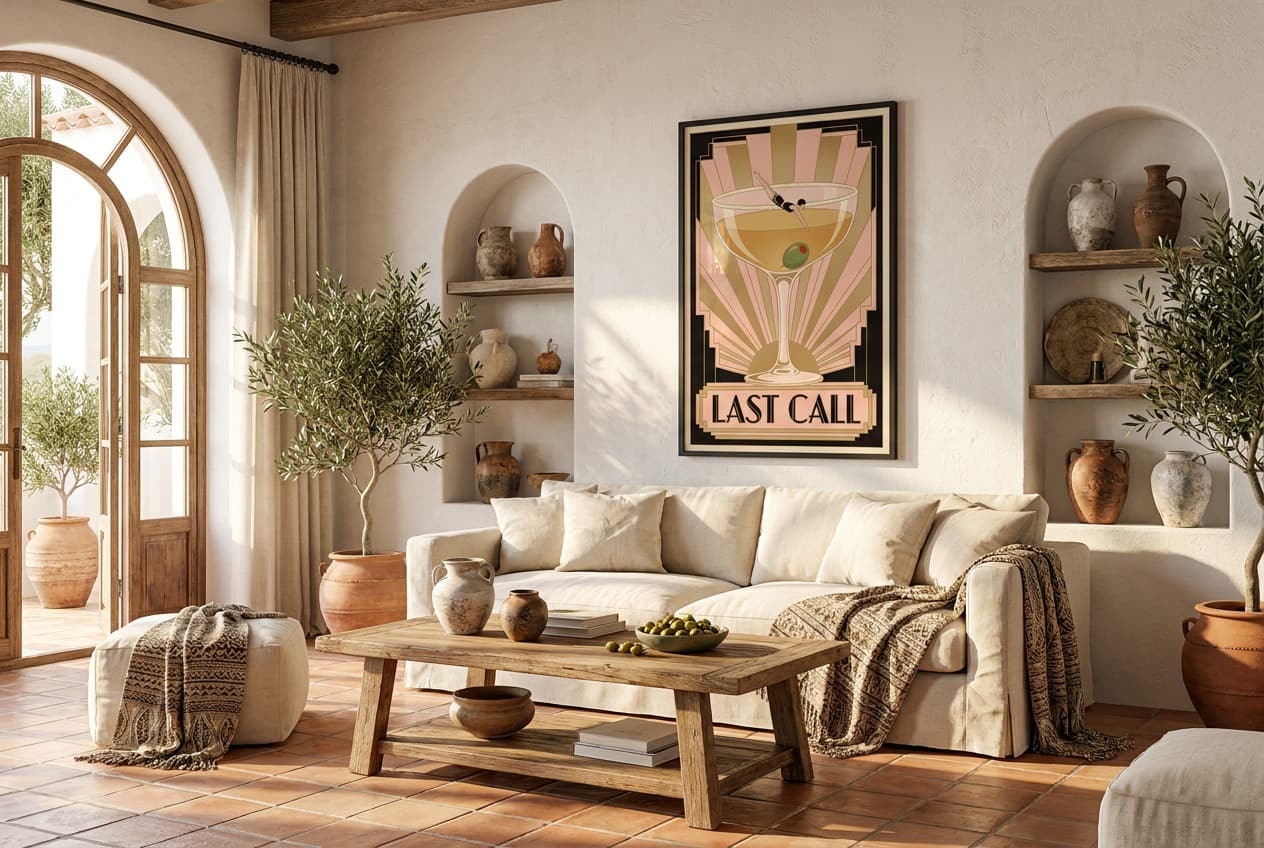
Even in a room filled with visual interest, the eye needs somewhere to land first. Establish clear focal points—a statement sofa, an oversized mirror, a dramatic gallery wall—that organize the surrounding elements. In a maximalist living room, a large-scale landscape or abstract piece above the mantel becomes the anchor that everything else orbits. Arrange furniture to face these focal points, and keep the area immediately around them slightly less dense to let them breathe. Secondary focal points can exist in different zones of the room, but they should be visually distinct enough that they don't compete.
The role of personal narrative and storytelling
Maximalist decor succeeds when it reflects genuine autobiography rather than catalog styling. Your space should read like a visual memoir—travel souvenirs from Morocco, inherited china from your grandmother, concert posters from formative shows, books you've actually read. This narrative coherence is what separates maximalism from hoarding. Each layer should add a chapter to your story, creating a space that couldn't belong to anyone else. When guests can trace your interests and history through the objects you've chosen, the abundance feels purposeful rather than excessive.
Maximalist Decor by Room: Practical Applications
Maximalism works differently in each room because function shapes how boldly you can layer. A living room invites full sensory immersion, while a bedroom might dial back intensity for restful sleep. Understanding these room-specific dynamics helps you apply maximalist principles without sacrificing comfort or usability.
Maximalist Living Rooms
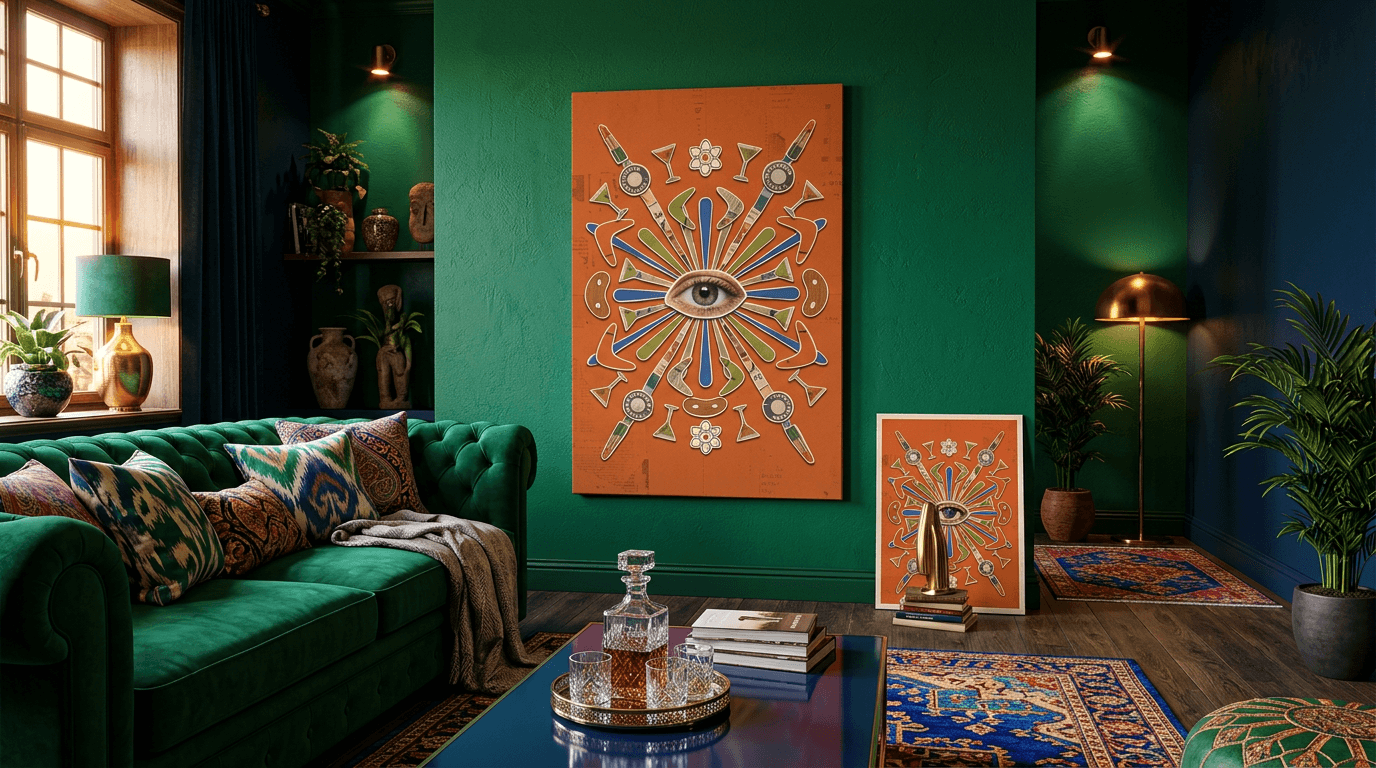
Living rooms thrive on maximalist energy. Start with a jewel-toned sofa—emerald velvet or sapphire boucle—then layer three to five patterned throw pillows in coordinating hues. An oversized Persian or Moroccan rug anchors the space, while gallery walls of minimalist posters mixed with vintage mirrors create vertical interest. Stack art books on the coffee table, drape a textured throw over the arm of a chair, and cluster three different-height candles on a side table. The key is creating conversation zones where each surface tells part of your story without blocking sightlines or movement paths.
Bold Bedroom Design
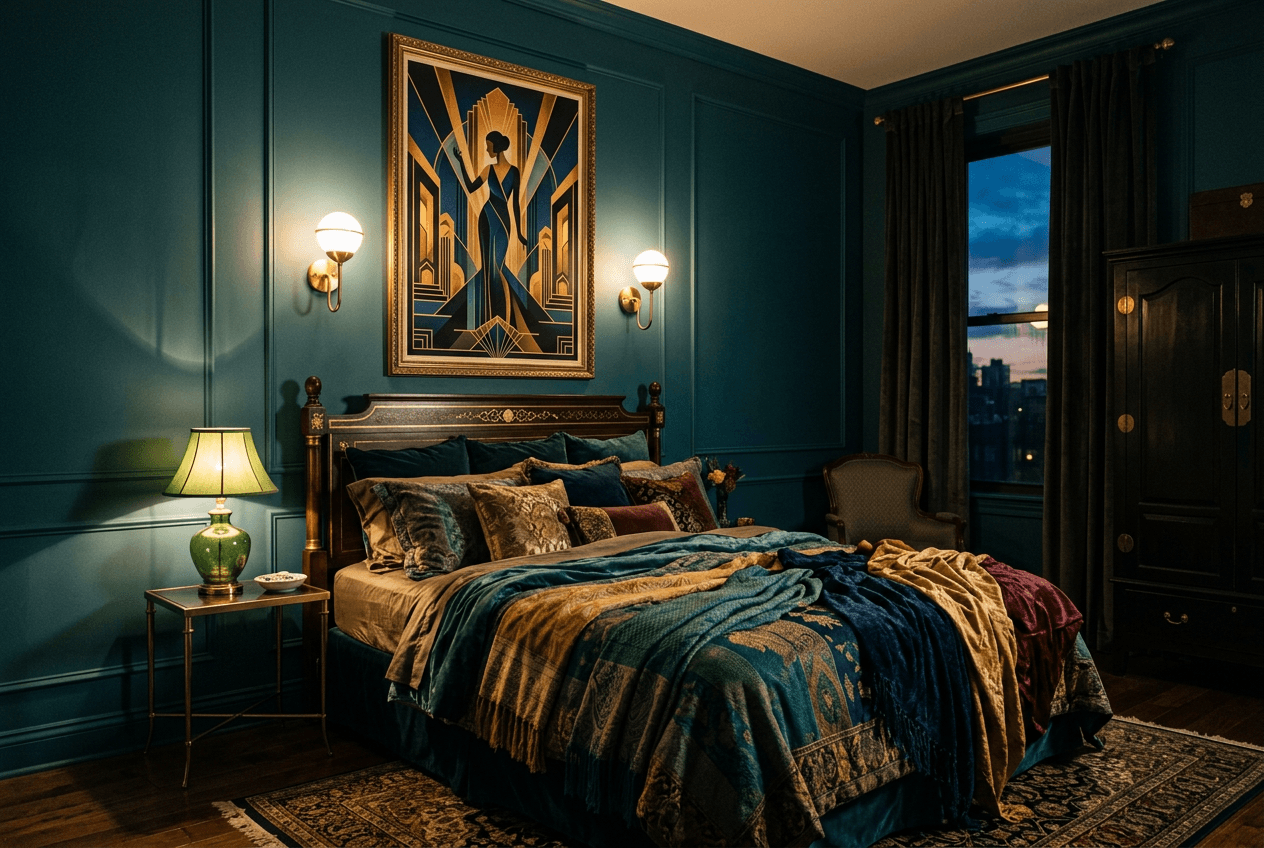
Bedrooms demand restraint within abundance. Choose one statement wall—often behind the headboard—for dramatic wallpaper or a saturated paint color like deep plum or forest green. Balance this with coordinating bedding in two or three complementary patterns: perhaps a floral duvet, geometric shams, and a solid velvet throw in an accent color. Nightstands become micro-galleries for small sculptures, vintage alarm clocks, or stacked novels with beautiful spines. Keep the ceiling and at least one wall in a lighter neutral to prevent the room from feeling claustrophobic. For more guidance on creating a restful yet visually rich sleeping space, explore our complete guide to bedroom decor that balances personal style with functionality. A single large-scale canvas print above the bed provides a focal point without overwhelming the space where you'll spend eight hours with your eyes closed.
Eclectic Entryways and Hallways
Narrow spaces paradoxically benefit from bold treatment. A vibrant runner rug in an intricate pattern immediately signals maximalist intent. Paint the hallway in a rich, unexpected color—burnt orange or peacock blue—then hang a salon-style gallery wall with varied frame sizes and styles. Include a mix of dining room posters, family photographs, and small decorative plates. A console table holds a rotating collection of seasonal objects: autumn gourds, winter pinecones, spring flowers in mismatched vintage vases. The compact scale forces intentional curation—every piece must justify its presence.
Vibrant Kitchen and Dining Spaces
Kitchens handle maximalism through color and display rather than clutter. Open shelving showcases colorful dishware—mix vintage Fiestaware with modern ceramics in your palette. Tile backsplashes in Moroccan zellige or hand-painted Portuguese azulejos add pattern without sacrificing cleanability. In dining rooms, layer a patterned tablecloth under rattan placemats, then add cloth napkins in a third coordinating print. Walls can handle bolder art since you're not staring at them while eating—think oversized botanical prints or abstract compositions that echo your color scheme. A statement chandelier with brass or colored glass ties the vertical space into your layered aesthetic.
Artistic Home Offices
Home offices need stimulation without distraction. Paint three walls in a saturated mid-tone—terracotta or sage—and reserve one wall for a curated inspiration board mixing prints, postcards, fabric swatches, and personal photos. Your desk becomes a functional vignette: a vintage brass lamp, a ceramic pencil holder, stacked reference books, and a small plant in a colorful pot. Floating shelves display a rotating collection of objects that fuel your work—art monographs, travel souvenirs, or sculptural bookends. If you're working with limited square footage, consider strategies from our studio wall decor guide that help maximize visual impact without overwhelming compact spaces. The goal is creating an environment that energizes your creativity while maintaining enough visual order to focus on screens and documents for extended periods.
Wall Art & Decor: Bringing Maximalism to Your Walls
Walls are the largest visual surface in any room, making them the natural starting point for maximalist expression. Unlike minimalist spaces where a single piece floats in isolation, maximalist walls embrace density—layered arrangements that create rhythm, tell stories, and anchor the room's entire color palette. The key is treating your walls as curated galleries rather than blank canvases waiting to be filled.
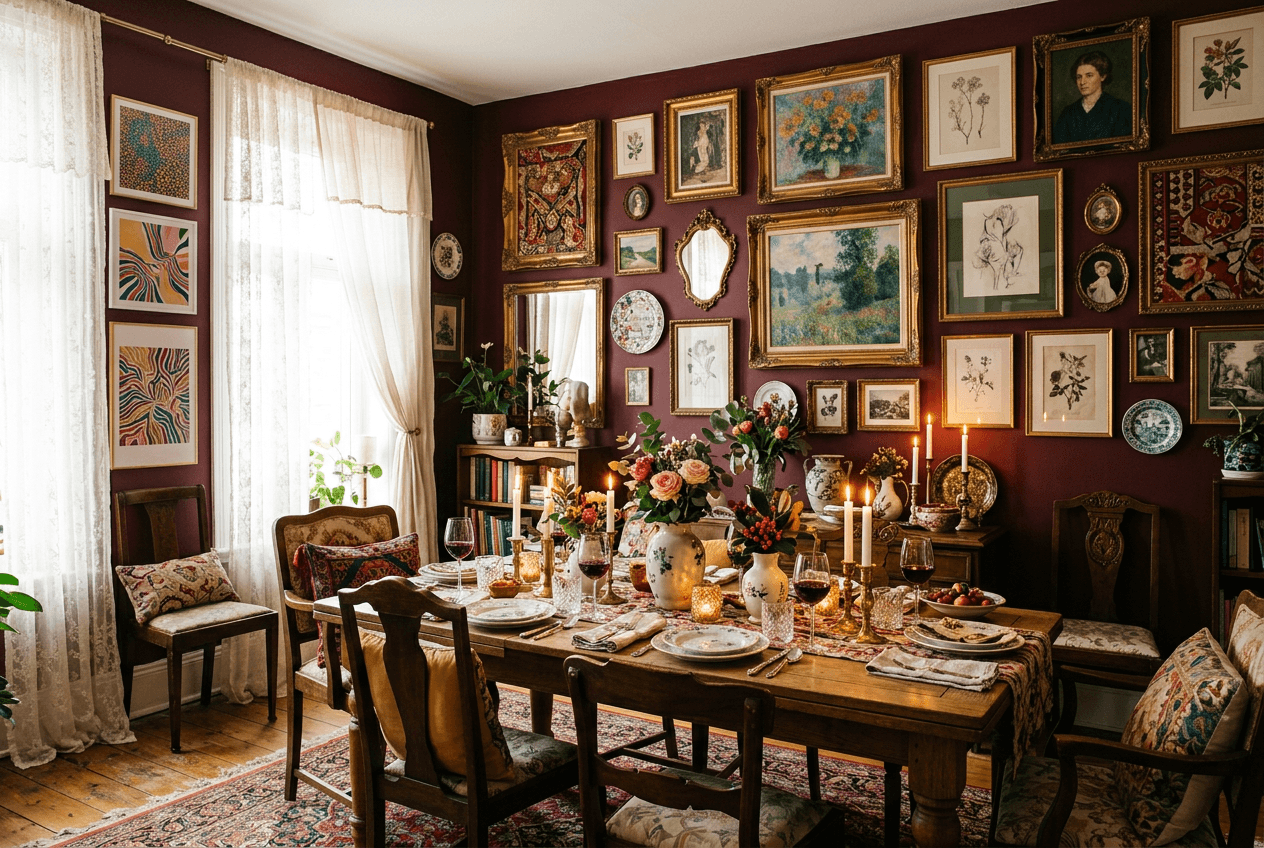
Gallery walls and salon-style arrangements
Salon-style hanging—the floor-to-ceiling, edge-to-edge approach borrowed from 18th-century European galleries—epitomizes maximalist wall decor. Start with your largest piece as an anchor, typically positioned at eye level, then build outward in concentric layers. Vary frame sizes and orientations, but maintain consistent spacing between pieces (3-5 cm works well). The goal is a cohesive cluster where individual artworks read as part of a larger composition. Include 7-15 pieces for a standard wall; fewer looks tentative, while more risks visual chaos unless you're working with a very large surface.
Bold posters and oversized canvas prints
Scale matters enormously in maximalist spaces. A single oversized canvas—60×90 cm or larger—commands attention and provides the visual weight needed to balance pattern-heavy furniture and layered accessories. Posters for living room in saturated jewel tones or intricate patterns work particularly well, especially when they echo colors already present in textiles or ceramics. For dining spaces, consider statement pieces that spark conversation; art deco posters bring the era's characteristic geometry and glamour. Canvas prints add dimensional texture that paper posters can't, making them ideal for rooms where you're layering multiple surface finishes.
Mixing art styles and mediums
Maximalism thrives on unexpected juxtapositions—a vintage botanical print beside a contemporary geometric abstraction, or a moody landscape next to a playful mid-century illustration. The unifying thread isn't style but color harmony. Pull 3-5 hues from your room's palette and ensure each artwork incorporates at least one of those tones. This creates visual cohesion despite stylistic diversity. Mix poster and canvas formats deliberately; the dimensional quality of stretched canvas breaks up the flat uniformity of multiple paper prints.
Color-coordinated wall collections
Monochromatic or analogous color schemes organize eclectic collections without sacrificing maximalist abundance. A wall of blue-spectrum pieces—from navy botanicals to turquoise abstracts—reads as intentional rather than random. Landscape posters often anchor these collections beautifully, providing naturalistic color transitions that feel organic. Group similar tones together in clusters rather than distributing them evenly; this creates focal zones that guide the eye through the composition.
Statement wallpaper and textured finishes
Wallpaper amplifies maximalism by adding pattern before you hang a single piece. Choose bold florals, geometric repeats, or mural-scale designs, then layer artwork strategically. The trick is contrast: if your wallpaper is busy, select art with solid backgrounds or simple compositions. Conversely, neutral textured wallpaper (grasscloth, linen-effect) provides a sophisticated backdrop for dense gallery walls. In narrow spaces like hallways, patterned wallpaper plus a salon-style arrangement creates dramatic impact without requiring furniture or accessories.
Color Theory for Maximalist Spaces
Color is the engine of maximalist design—the element that transforms a collection of objects into a cohesive, emotionally resonant space. While minimalist palettes rely on restraint, maximalism demands confidence with hue, saturation, and contrast. The key isn't using every color, but choosing a strategic palette of 3-5 colors and deploying them with intention across furniture, textiles, art, and accessories. Master this foundation, and even the boldest combinations will feel deliberate rather than chaotic.
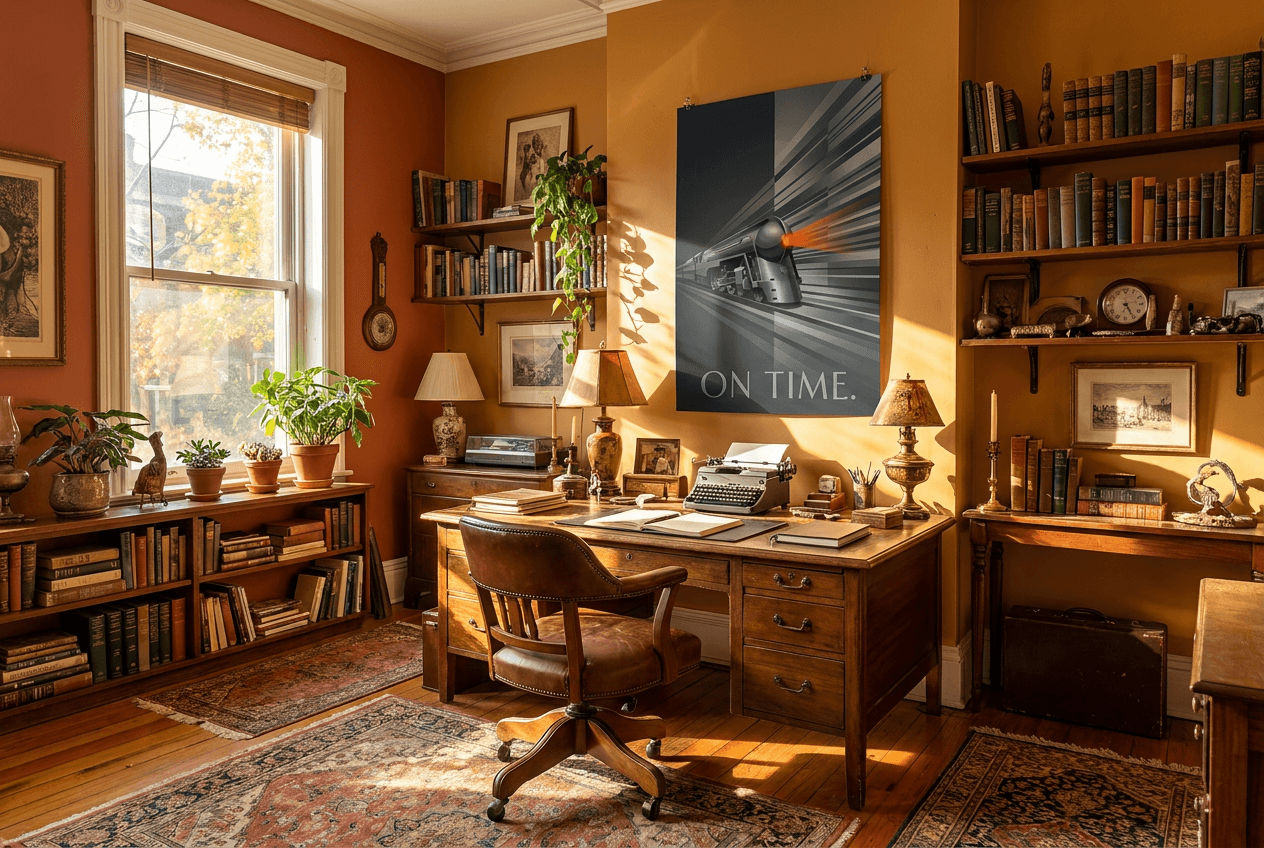
Complementary and analogous color schemes
Complementary schemes—colors opposite on the wheel like teal and burnt orange, or violet and chartreuse—create maximum visual tension and energy. They're ideal for maximalist spaces because they naturally draw the eye and add drama. Use one as the dominant hue (covering 60% of the room) and the other as a bold accent. Analogous schemes, which use neighbors like emerald, teal, and cobalt, offer a gentler approach. These harmonious progressions feel lush and enveloping, perfect for bedrooms or reading nooks where you want richness without visual clash.
Using jewel tones and saturated hues
Jewel tones—sapphire, emerald, ruby, amethyst—are maximalism's signature palette. Their high saturation and depth prevent spaces from feeling washed-out even when layered heavily. A sapphire velvet sofa anchors a living room; emerald curtains frame a window; ruby throw pillows punctuate a neutral chair. These hues photograph beautifully and age well, maintaining their impact over years. Avoid pastels in maximalist schemes—they lack the visual weight to hold their own against patterned rugs and dense gallery walls.
Accent colors and pop elements
Within your 3-5 color palette, designate one as your "pop" color—a high-contrast hue that appears in small doses to create surprise. If your base is navy, forest green, and burgundy, a pop of mustard yellow in a single throw pillow or a small poster adds sparkle without disrupting harmony. Limit pop colors to 5-10% of the room's visual field. They work best in accessories you can swap seasonally: cushions, small art prints, decorative objects.
Balancing warm and cool tones
Successful maximalist rooms balance temperature. An all-warm palette (reds, oranges, golds) can feel oppressive; all-cool (blues, greens, grays) reads stark. Aim for a 60-40 or 70-30 split. A room dominated by cool teals and cobalts benefits from warm brass lighting fixtures and terracotta accents. Conversely, a warm burgundy-and-mustard scheme needs cool navy or charcoal to ground it. This temperature balance prevents sensory fatigue and makes spaces feel lived-in rather than styled.
Creating depth through color layering
Depth emerges when you vary saturation and value within your palette. Pair a saturated emerald wall with a muted sage armchair and a dark forest-green rug—three versions of green at different intensities. This tonal layering creates visual texture even before you add patterns. Apply the same principle to wall art: cluster prints that share your room's 3-5 colors but vary in saturation, allowing some pieces to recede while others command attention. The result is a space that reveals new details with every glance.
Common Maximalist Decor Mistakes to Avoid
Even seasoned decorators stumble when translating maximalist principles into real rooms. The difference between intentional abundance and visual chaos often comes down to a handful of avoidable missteps that undermine the cohesion you've worked to build.
Overcrowding Without Breathing Room
The most frequent error is filling every surface and wall inch without leaving visual pauses. Maximalism requires density, but your eye needs occasional rest stops—a stretch of solid-colored wall between gallery clusters, an empty section of shelf beside a curated vignette. Aim for 70-80% coverage in high-impact zones like feature walls, leaving 20-30% as breathing space. This contrast makes your layered elements feel intentional rather than accidental.
Clashing Patterns Without Cohesion
Mixing patterns is maximalism's signature move, but random combinations create discord. The fix: anchor every pattern combination with your 3-5 core colors. A Moroccan rug, floral curtains, and geometric throw pillows work together when they share burnt orange, teal, and cream—even if their styles span centuries. Without this color thread, pattern mixing reads as careless rather than curated.
Ignoring Scale and Proportion
Rooms filled entirely with small objects feel cluttered; spaces dominated by oversized pieces feel unbalanced. Successful maximalist rooms distribute scale deliberately—a 60×90 cm canvas anchors a gallery wall of smaller prints, an oversized floor vase balances a cluster of petite ceramics. Follow the rule of thirds for scale: one-third large anchor pieces, one-third medium supporting elements, one-third small detail items.
Forgetting Functional Storage
Maximalism celebrates display, but functional items still need homes. Visible clutter—stray cables, unsorted mail, mismatched storage bins—breaks the curated illusion. Invest in decorative storage that serves double duty: vintage trunks for blankets, ornate boxes for remotes, styled baskets for magazines. Every visible object should either contribute to your aesthetic or be hidden entirely.
Neglecting Lighting in Busy Spaces
Dense, richly colored maximalist rooms absorb light differently than airy minimalist ones. Insufficient lighting makes jewel tones look muddy and patterns disappear into shadow. Layer at least three light sources per room—ambient overhead, task lighting for functional areas, and accent lights (picture lights, uplights) that highlight your curated collections. Warm bulbs (2700-3000K) enhance the cozy richness maximalism thrives on.
Maximalism vs. Minimalism: Understanding the Contrast
The tension between maximalism and minimalism defines contemporary interior design, yet these aesthetics aren't opposites—they're different answers to the same question: how do we create spaces that feel authentically ours?
Philosophy and worldview differences
Minimalism emerged from mid-century modernism and Scandinavian design traditions, prioritizing function, restraint, and the idea that removing excess reveals essential beauty. It asks "what can I eliminate?" and finds peace in negative space, neutral palettes, and carefully selected objects that serve clear purposes.
Maximalism draws from baroque grandeur, Victorian eclecticism, and global craft traditions, celebrating abundance as a form of self-expression. It asks "what stories do I want to tell?" and finds joy in layering colors, patterns, and collected objects that reflect personal history. Where minimalism seeks universal calm, maximalism embraces individual complexity.
Visual and emotional impact
Minimalist spaces typically feature white or neutral walls, sparse furniture arrangements, and minimalist posters with clean lines and ample breathing room. The emotional effect is serene and contemplative—these rooms feel like visual exhales, reducing sensory input to create mental clarity.
Maximalist rooms pulse with saturated jewel tones, dense gallery walls, and layered textiles that engage multiple senses simultaneously. The emotional effect is energizing and intimate—these spaces feel like visual conversations, offering new details to discover with each glance. They're particularly appealing to collectors, artists, and those who find stark minimalism emotionally cold.
When to choose each aesthetic
Choose minimalism when you need mental clarity, have limited square footage that benefits from visual expansion, or your lifestyle requires frequent reorganization. It excels in home offices, small apartments, and spaces meant for focused activities like meditation or work. For professionals seeking productivity-focused environments, our office decor guide offers strategies for creating inspiring yet functional workspaces that balance visual interest with concentration.
Choose maximalism when you want spaces that reflect rich personal narratives, have collections worth displaying, or find minimalist environments feel impersonal. It thrives in living rooms, dining areas, and creative studios where visual stimulation enhances the room's purpose.
Hybrid approaches and eclectic design
Many successful interiors blend both philosophies—minimalist furniture anchoring maximalist wall displays, or bold accent walls balanced by restrained furnishings. This "edited maximalism" applies maximalist principles to select zones while maintaining breathing room elsewhere, creating dynamic contrast without overwhelming smaller homes. If that restrained end of the spectrum appeals to you most, japandi interior design shows how warm minimalism can carry a whole home on its own.
Start Your Maximalist Journey: Actionable Next Steps
Maximalism rewards intention over impulse. The difference between a curated space and visual chaos lies in your approach—start with clarity, build gradually, and trust your instincts as you layer.
Assessing Your Current Space
Walk through each room with your phone camera. Photograph corners, walls, surfaces. What do you already love? A vintage rug, a collection of ceramics, a bold armchair—these become your anchors. Identify one room to transform first; living rooms and bedrooms offer the most creative latitude. Measure your largest blank wall and note existing furniture colors. This inventory prevents impulse purchases that clash with what you already own.
Building a Mood Board
Create a digital folder or physical pinboard collecting images that resonate. Don't self-edit yet—save everything from jewel-toned interiors to patterned textiles to bold wall art. After two weeks, patterns emerge: Do you gravitate toward warm terracotta and emerald, or cool sapphire and fuchsia? Are your patterns geometric or organic? This reveals your natural maximalist vocabulary before you spend a euro.
Layering Gradually and Intentionally
Begin with your anchor wall. Select 5-7 posters or canvas prints in your identified color palette, varying sizes from A3 to 60×90 cm. Arrange them salon-style with 3-5 cm spacing. Live with this for a week. Then add textiles—a patterned throw, velvet cushions in complementary hues. Wait another week. Add your next layer: books, ceramics, a vintage find. This paced approach lets you assess each addition's contribution rather than overwhelming the space in a single afternoon.
Finding Your Maximalist Style Signature
Maximalism accommodates infinite personalities. Some lean Art Deco glamour with geometric patterns and metallic accents. Others embrace bohemian eclecticism mixing global textiles and natural materials. Your signature emerges through repetition—the colors you return to, the patterns you can't resist, the eras that speak to you. Trust these instincts. Maximalism succeeds when it reflects your story, not Pinterest's algorithm.
Maximalist decor isn't about chaos—it's about curating a space that tells your story through color, pattern, and personality. The key is intention: every layer, every texture, every piece should feel like a deliberate choice rather than clutter. Start with one room, experiment with what excites you, and remember that maximalism evolves. Your walls are the largest canvas you have, so choose art that energizes you every time you walk through the door. Whether you lean into jewel tones and velvet or prefer eclectic gallery walls and botanical prints, the beauty of this aesthetic is that it bends to your vision. Trust your instincts, embrace the abundance, and create a home that feels unmistakably, unapologetically yours.