Art Deco interior design: The complete guide to geometric glamour & timeless style
Discover what makes Art Deco interior design timeless. From geometric patterns and jewel tones to luxe materials, learn how to authentically incorporate this 1920s aesthetic into your modern home.
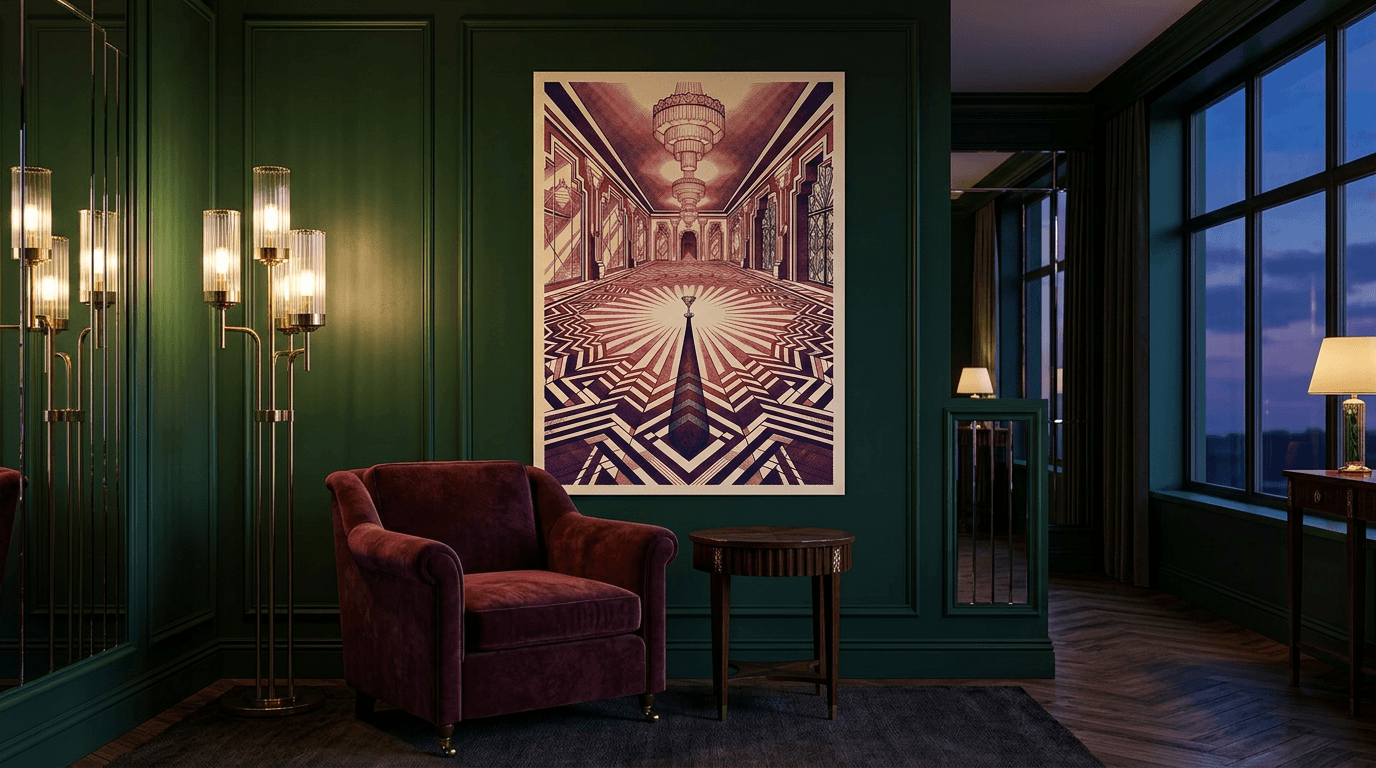
The moment you step into a true Art Deco space, you feel it—geometry that commands attention, materials that catch the light, colours that refuse to whisper. Born in the opulent 1920s and 30s, art deco interior design married industrial-age precision with unabashed glamour, and nearly a century later, it remains one of the most distinctive aesthetics you can bring into your home. This guide walks you through the style's core principles, then shows you exactly how to layer Art Deco elements into every room—from choosing the right wall art and textiles to balancing bold patterns without tipping into chaos. Whether you're working with a studio flat or a period property, you'll finish with a clear roadmap for making the look both authentic and liveable.
What Is Art Deco Interior Design?
Art Deco interior design is a distinctive decorative style that emerged in the 1920s and reached its zenith in the 1930s, blending industrial modernity with unabashed glamour. Born from the 1925 Exposition Internationale des Arts Décoratifs et Industriels Modernes in Paris, the movement celebrates geometric precision, luxurious materials, and bold symmetry. Think stepped skyscrapers rendered in chrome and ebony, sunburst mirrors catching afternoon light, and chevron patterns marching across upholstery with military confidence.
Why Art Deco Endures
Nearly a century later, Art Deco remains one of the most recognisable and coveted interior styles. Its appeal lies in its democratic luxury—the belief that beauty and craftsmanship should permeate everyday objects, not just museum pieces. While original Art Deco furniture commands eye-watering prices at auction, the style's graphic vocabulary translates beautifully to accessible formats. Art deco canvas prints and paper posters capture the movement's signature geometry and metallic palettes without requiring a collector's budget, making the aesthetic attainable for renters and homeowners alike.
The style works because it occupies a sweet spot between maximalism and restraint. Art Deco interiors feel opulent yet ordered, playful yet sophisticated—a balance that suits both intimate flats and expansive lofts. Its emphasis on vertical lines and reflective surfaces also makes spaces feel larger and brighter, a practical advantage that transcends pure aesthetics.
Key Characteristics of Art Deco Design
Art Deco interior design rests on four visual pillars that work together to create its unmistakable glamour. Understanding these elements helps you recognize authentic Art Deco pieces—and replicate the style confidently in your own space.
Geometric Shapes & Symmetry
Art Deco's signature look comes from bold, angular geometry: chevrons, zigzags, sunbursts, and stepped pyramids appear everywhere from textiles to architecture. Unlike the flowing curves of Art Nouveau, Art Deco favors sharp lines and mirror-image balance. You'll see concentric circles, overlapping triangles, and fan motifs (the "sunburst" pattern) that radiate from a central point. This symmetry creates visual calm even when patterns are intricate. Look for these shapes in art deco posters—vintage travel advertisements and cocktail-lounge graphics are especially rich sources—or in rugs, cushions, and wall panels.
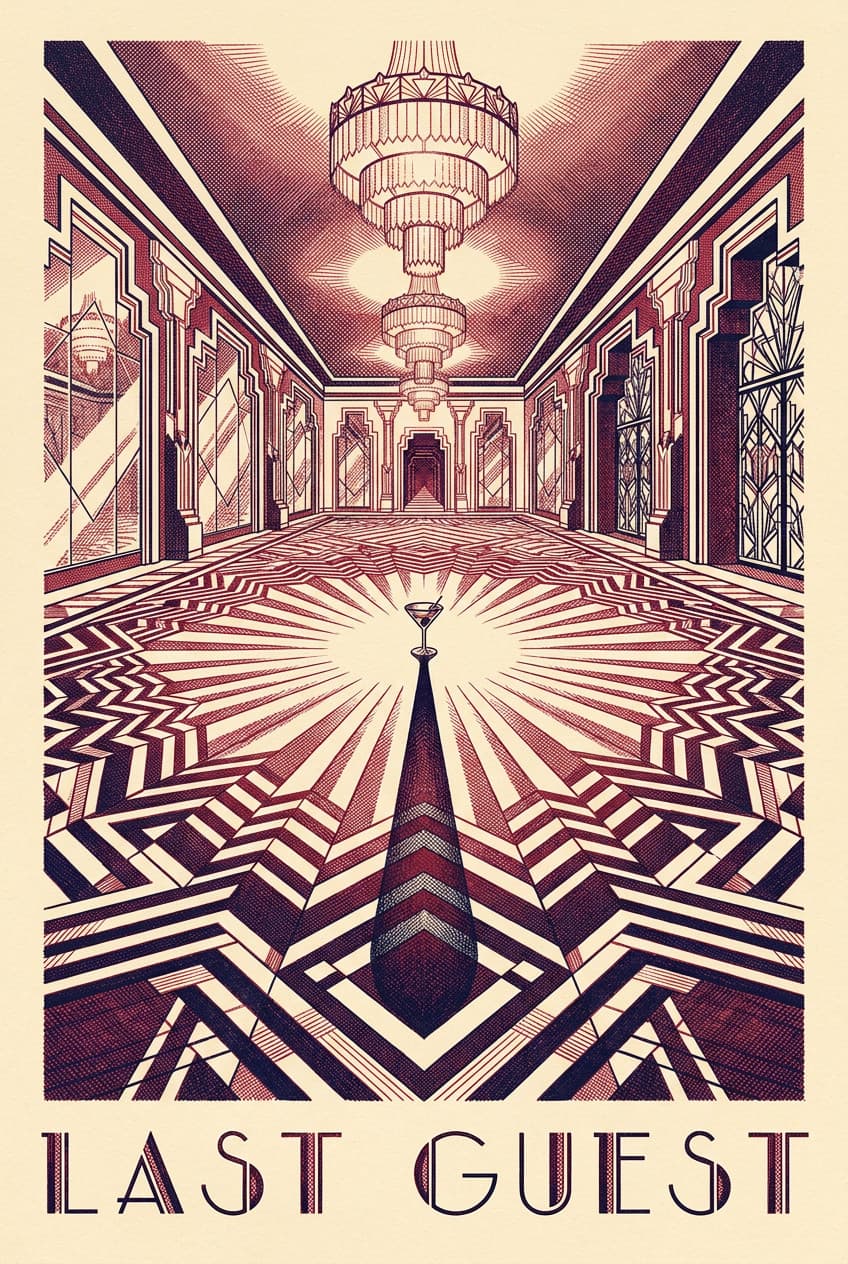
Symmetry extends to room layout: pairs of matching lamps, centered furniture arrangements, and balanced wall compositions all reinforce the style's architectural precision. The effect is both commanding and orderly, making even small rooms feel intentionally designed.
Bold Color Palettes & Jewel Tones
Art Deco embraces drama through color. Deep emerald, sapphire blue, ruby red, and amethyst purple dominate, often set against black, cream, or metallic gold. These jewel tones evoke luxury without requiring expensive materials—a poster in midnight blue and gold delivers the same opulent mood as a silk curtain. Contrast is key: black lacquer against ivory walls, chrome against burgundy velvet. The palette can feel moody or celebratory depending on your mix, but it's never timid.
Accent walls in charcoal or forest green provide a dramatic backdrop for metallic fixtures and minimalist posters with geometric line work. Even neutral schemes adopt Art Deco character when you introduce a single jewel-toned element—a teal sofa, a garnet-red throw, or a set of cobalt glassware.
Luxurious Materials & Finishes
Chrome, lacquer, marble, mirror, and exotic woods define Art Deco's material vocabulary. The style celebrates industrial-age materials—polished steel, glass bricks, Bakelite—alongside traditional luxury like velvet and shagreen. Reflective surfaces multiply light and create depth, making rooms feel larger and more dynamic. A mirrored console or chrome floor lamp instantly signals the era.
You don't need a marble fireplace to capture this quality. High-gloss paint, metallic picture frames, and glass-topped tables all contribute to the light-catching effect. Even budget-friendly choices—a glossy black poster frame, a faux-leather ottoman—can channel the style's polished sophistication.
Sleek Lines & Streamlined Forms
Art Deco furniture is low-slung, horizontal, and aerodynamic. Inspired by ocean liners and locomotives, pieces feature rounded corners, cantilevered surfaces, and minimal ornamentation beyond their inherent geometry. This streamlining makes the style feel modern even a century later. Avoid fussy details—no ruffles, no carved florals. Instead, choose clean-lined sofas, cylindrical side tables, and stepped bookcases that echo skyscraper silhouettes.
This restraint applies to decor, too: a single bold canvas print makes more impact than a gallery wall of small frames. Art Deco trusts a few well-chosen elements to carry the room.
The History & Origins of Art Deco
The 1920s & 1930s Golden Age
Art Deco exploded onto the design scene at the 1925 Exposition Internationale des Arts Décoratifs et Industriels Modernes in Paris—the event that gave the movement its name. The decade that followed marked the style's peak, as architects, designers, and craftspeople embraced a visual language that celebrated the machine age with unabashed optimism. Post-WWI Europe and America craved newness, progress, and escape from the trauma of war. Art Deco delivered exactly that: a forward-looking aesthetic that felt modern, luxurious, and utterly unlike anything that had come before.
The style flourished until the late 1930s, when economic depression and the shadow of another world war shifted tastes toward austerity. Yet its golden decade left an indelible mark—skyscrapers like the Chrysler Building, ocean liners like the Normandie, and countless cinemas, hotels, and department stores that turned everyday spaces into theatrical experiences.
Influences & Cultural Context
Art Deco wasn't born in a vacuum. It drew from Cubism's fractured geometry, the exotic allure of Egyptian archaeology (Tutankhamun's tomb was discovered in 1922), and the bold patterns of African and Aztec art. The Ballets Russes brought vivid color and Eastern motifs to Parisian stages, while the streamlined forms of aeroplanes, locomotives, and automobiles inspired designers to celebrate speed and industrial precision.
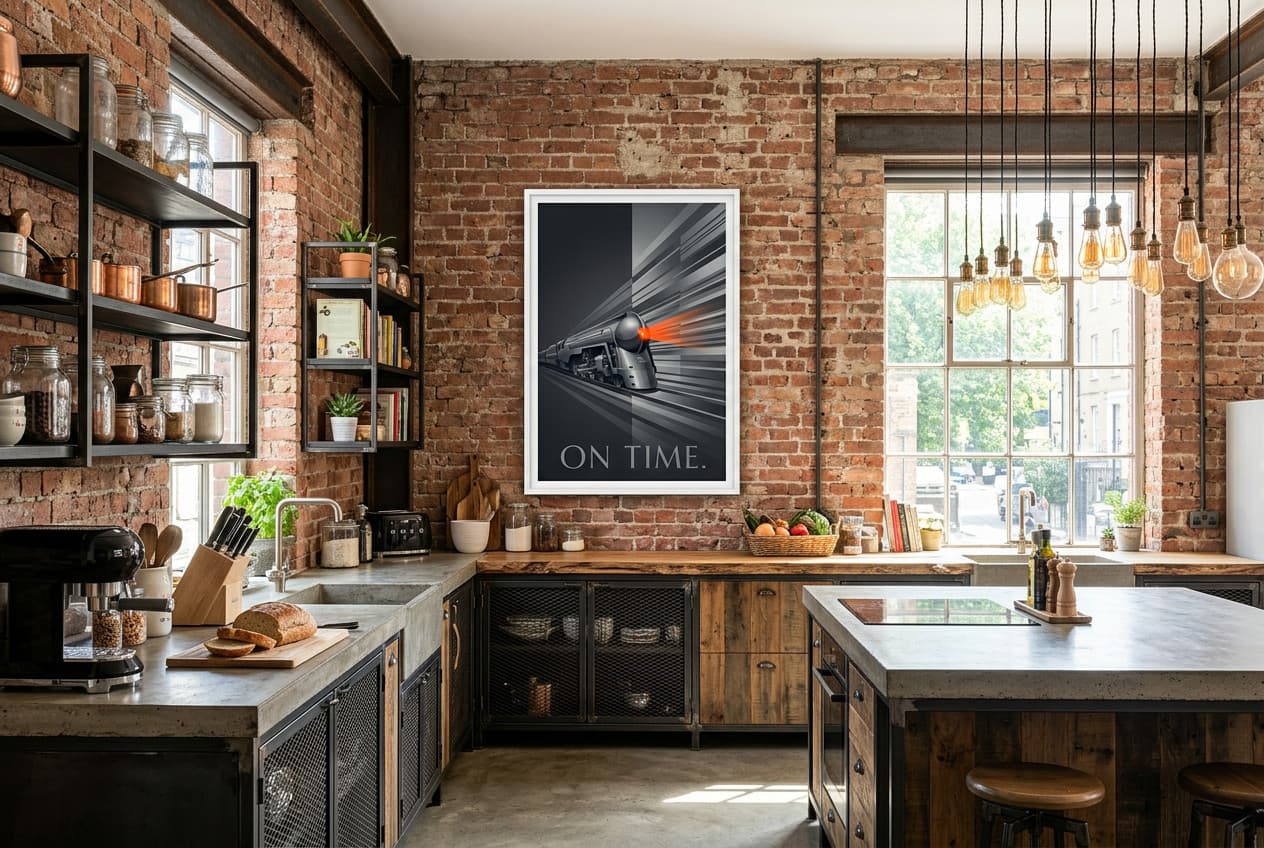
This eclectic mix created a style that felt both ancient and futuristic—ziggurats met chrome, hieroglyphs met chevrons. Art deco posters from the era often depicted stylized travel imagery, cocktail culture, and geometric abstraction, capturing the spirit of an age intoxicated by technological progress and social liberation.
From Paris to Global Movement
By the 1930s, Art Deco had spread from Paris to New York, London, Mumbai, Shanghai, and Rio de Janeiro. Each region adapted the style to local materials and tastes—Miami's pastel-hued hotels, for instance, blended Deco geometry with tropical ease. The movement thrived in cinemas and department stores, making luxury aesthetics accessible to the middle class for the first time. Today, that democratization continues: you don't need a Manhattan penthouse to capture Deco's drama—a carefully chosen canvas print or a few geometric textiles can channel the same confident glamour that defined the Jazz Age.
Art Deco Interior Design in Different Rooms
Art Deco's versatility lies in its ability to adapt to any room while maintaining its signature glamour. The style's geometric patterns, metallic accents, and bold contrasts work differently depending on the space—living areas demand drama, bedrooms call for restrained luxury, and even practical rooms like kitchens benefit from strategic Art Deco touches. Understanding these room-specific applications helps you create a cohesive home without overwhelming individual spaces.
Living Rooms & Dining Spaces
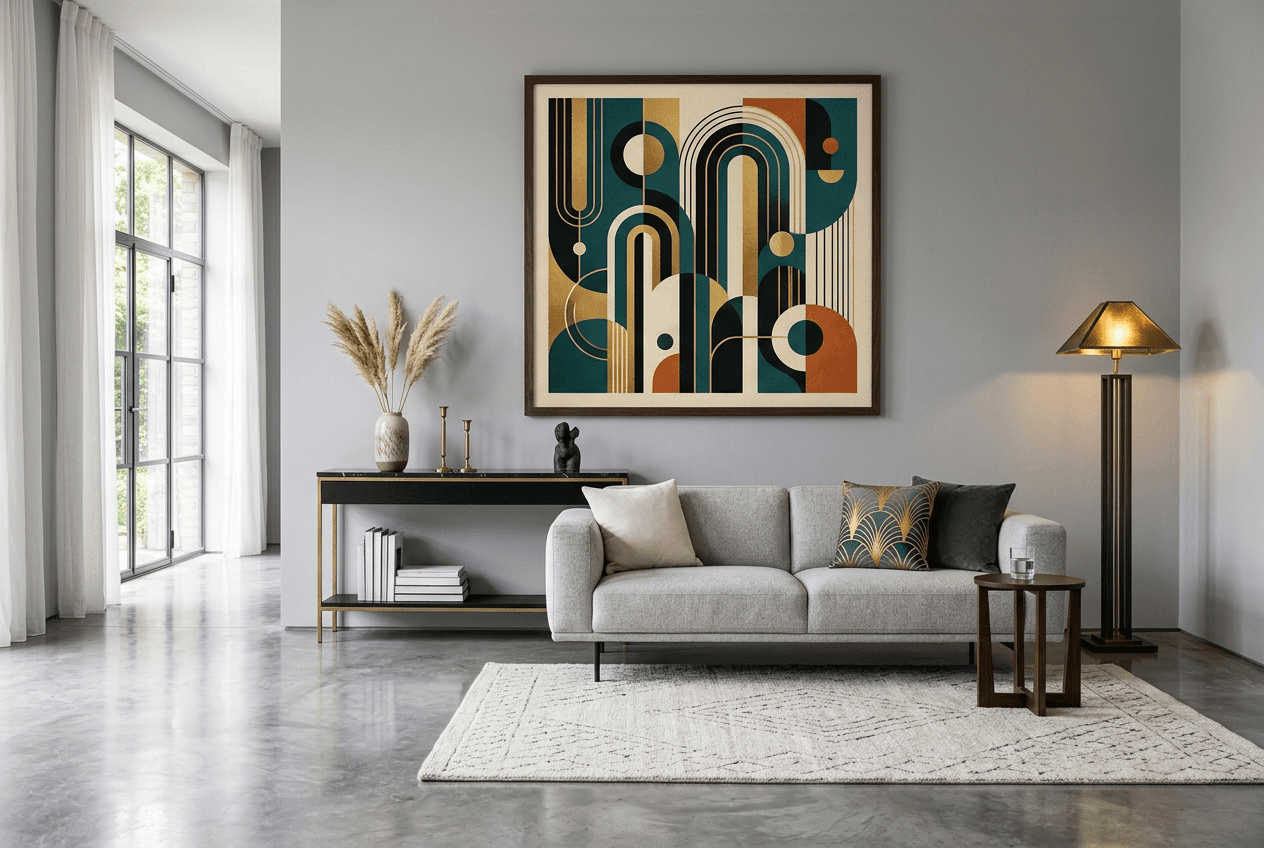
Living and dining rooms are Art Deco's natural stage. Here, symmetry reigns: anchor a velvet sofa with matching side tables, flank a fireplace with identical chrome lamps, or center a geometric rug beneath a glass-topped dining table. Walls become gallery spaces for posters for living room featuring chevron patterns or sunburst motifs—the large-scale geometry reads beautifully from across the room. In dining areas, mirrored sideboards reflect candlelight while posters for dining room with vintage cocktail advertisements or botanical prints in jewel tones tie the aesthetic together. Keep upholstery in emerald velvet or sapphire silk, and add one statement piece—a tiered chandelier or a lacquered bar cart—to anchor the glamour.
Bedrooms & Bathrooms
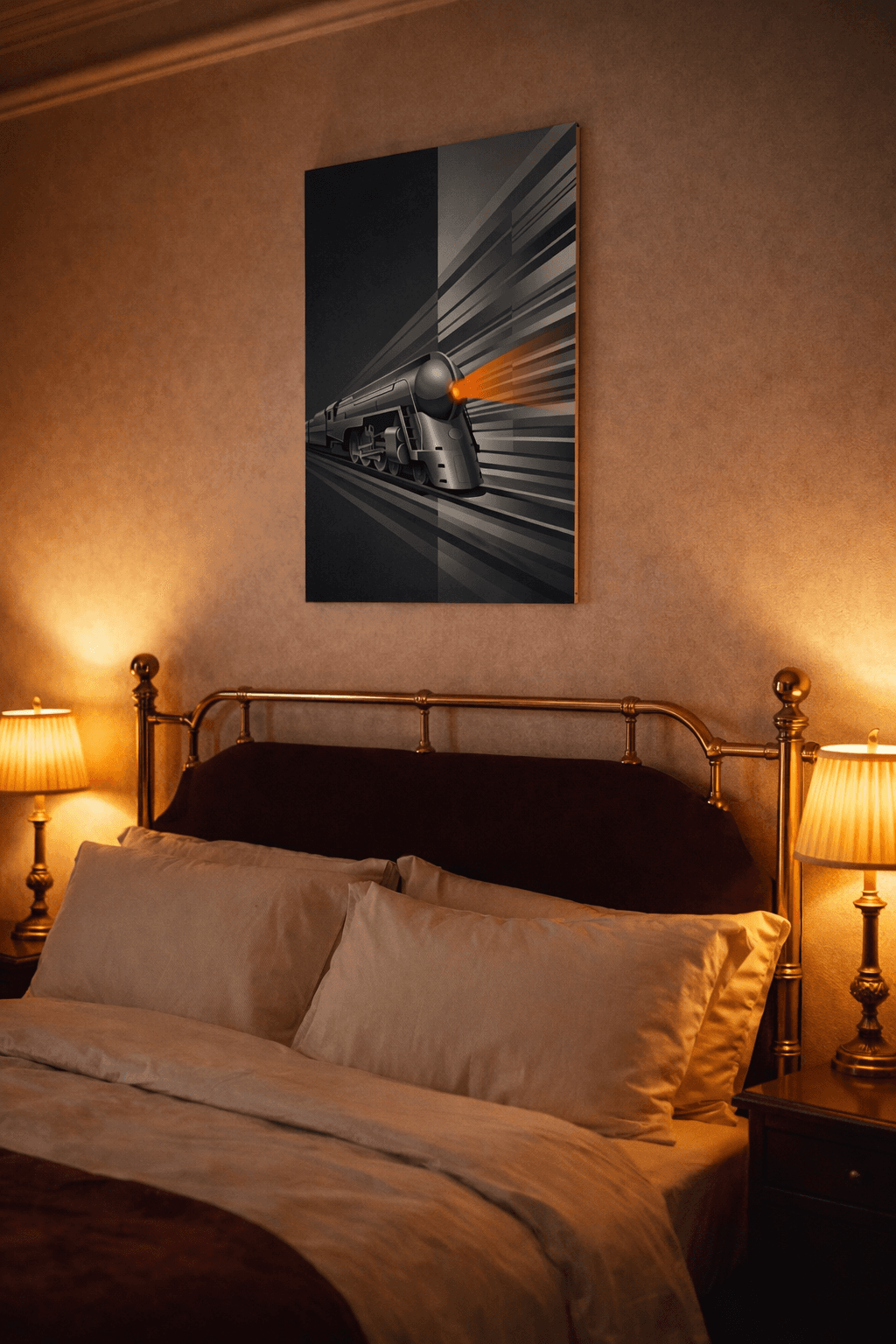
Bedrooms require a softer Art Deco approach. Choose streamlined furniture with curved edges, add a tufted headboard in champagne or blush velvet, and layer textures through silk throws and geometric-patterned cushions. Bedside lamps with stepped bases and frosted-glass shades provide ambient light without harsh glare. Bathrooms embrace the style's love of reflective surfaces: black-and-white hexagonal floor tiles, chrome fixtures, and beveled mirrors create instant period authenticity. Even small powder rooms benefit from a single bold element—a sunburst mirror or posters for toilets with linear botanical designs that don't compete with fixtures.
Kitchens & Entryways
Kitchens adopt Art Deco through cabinetry details—think stepped drawer fronts, chrome handles, and glass-front upper cabinets with geometric mullions. Subway tiles in herringbone patterns and pendant lights with brass or chrome finishes modernize the space while nodding to the era. Entryways make immediate impact: a console table with tapered legs, an octagonal mirror, and a runner with zigzag borders set the tone before guests step inside. These transitional spaces don't need every element—one or two deliberate choices signal the style without cluttering narrow halls.
How to Bring Art Deco Into Your Modern Home
Art Deco doesn't demand a complete renovation or a vintage apartment with original moldings. The style adapts beautifully to contemporary spaces when you approach it as a series of deliberate choices rather than a wholesale transformation. Start small, build confidence, and let the aesthetic reveal itself through a few well-chosen anchors that set the tone for the entire room.
Start with Statement Furniture
One bold piece carries more weight than a dozen timid accents. A velvet sofa in emerald or navy, a lacquered sideboard with geometric inlay, or a streamlined console table with chrome legs instantly signals Art Deco without crowding the room. Look for furniture with clean lines, symmetrical forms, and a touch of glamour—tufted upholstery, mirrored panels, or stepped silhouettes. Vintage markets and mid-century dealers often stock authentic pieces at reasonable prices, but high-street retailers now produce excellent reproductions that pair seamlessly with modern sofas and neutral backdrops.
Layer Geometric Patterns & Textiles
Art Deco thrives on pattern repetition, but restraint prevents visual chaos. Choose one dominant geometric motif—chevrons, hexagons, or sunbursts—and echo it across two or three surfaces: a rug, throw cushions, or art deco posters on the wall. Velvet and silk add the necessary texture, while metallic thread in cushion covers catches light like the era's signature materials. Avoid mixing more than two bold patterns in a single sightline; the style's elegance depends on symmetry and breathing room. If you're working with a compact space, strategic wall decor choices can help enlarge and define your studio while maintaining Art Deco's characteristic balance.
Choose Your Color Scheme
Commit to a palette before you shop. Classic Art Deco pairs jewel tones—sapphire, ruby, emerald—with black, cream, or soft grey, then punctuates the scheme with gold or brass accents. If jewel tones feel too dramatic for your space, try a monochrome base (charcoal and ivory) with a single metallic accent color. Paint one feature wall in a deep hue, or keep walls neutral and introduce color through textiles and wall art. Consistency across the room prevents the look from fragmenting into disconnected vignettes.
Lighting & Metallic Accents
Lighting defines Art Deco interiors as much as furniture does. Seek out geometric pendant lamps, tiered chandeliers, or sconces with frosted-glass shades and chrome or brass fittings. Table lamps with sculptural bases—stepped forms, zigzag stems—work beautifully on sideboards and nightstands. Metallic accents should feel intentional: a brass tray on the coffee table, chrome drawer pulls, or a mirrored picture frame. Three to five metallic touches per room create cohesion without excess.
Art Deco Wall Decor & Visual Impact
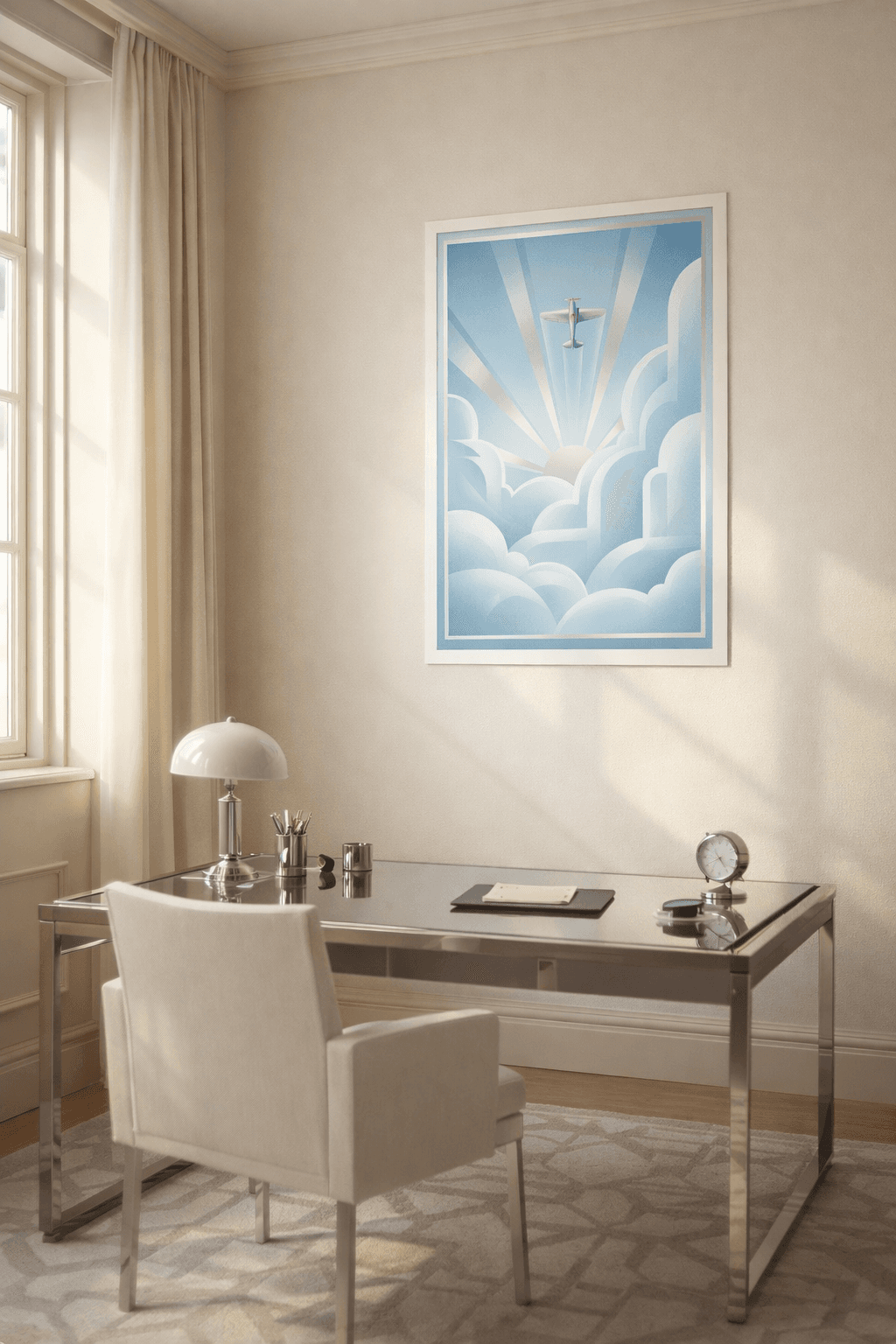
Walls are where Art Deco truly announces itself. The style's signature motifs—sunbursts, chevrons, stylized figures, and geometric typography—translate beautifully to two-dimensional art, making art deco posters and canvas prints the most accessible way to anchor a room's aesthetic. A single large-format piece above a sofa or sideboard establishes the visual language instantly, while a symmetrical gallery wall of smaller prints reinforces the movement's love of balance and repetition.
Posters & Prints That Define the Style
Vintage travel posters, cocktail advertisements, and streamlined machinery illustrations capture the era's optimism and glamour. Look for bold sans-serif typography, high-contrast palettes (black and gold, navy and cream), and compositions that emphasize speed or luxury. Paper prints work beautifully in dining rooms and entryways where you want impact without overwhelming intimacy. Choose designs with clear focal points—a stylized locomotive, an Art Deco skyscraper silhouette, or a geometric cocktail glass—that read as confident statements from across the room.
Canvas Art & Geometric Patterns
Art deco canvas prints suit larger walls and living spaces where texture matters. Stretched canvas adds subtle dimensionality that complements lacquered furniture and reflective surfaces without competing for attention. Geometric abstracts—interlocking hexagons, radiating lines, stepped ziggurats—translate the movement's architectural vocabulary into pure pattern. Scale matters: a 60×90 cm canvas commands presence above a credenza, while smaller formats (30×45 cm) work in tight arrangements or bathroom niches. For those creating a productive and inspiring workspace, Art Deco's structured geometry can bring both visual interest and professional polish to home offices.
Mirrors, Clocks & Sculptural Accents
Beyond prints, Art Deco walls thrive on three-dimensional elements. Sunburst mirrors in brass or chrome echo the era's fascination with radial symmetry, while octagonal or fan-shaped clocks double as sculptural focal points. Position mirrors opposite windows to amplify natural light—a classic Deco trick that makes rooms feel taller and more luxurious. Keep sculptural accents minimal: one statement mirror per room, paired with two or three prints, maintains the style's disciplined elegance.
Art Deco vs. Modern & Contemporary Styles
Art Deco is often confused with other twentieth-century movements, but its ornamental confidence sets it apart. Where minimalism strips away decoration, Art Deco celebrates it—through geometry, pattern, and luxe materials. Where mid-century modern leans toward organic curves and natural wood, Art Deco favors angular symmetry and reflective surfaces. Understanding these distinctions helps you layer styles intentionally, creating interiors that feel curated rather than confused.
Art Deco & Minimalism
Minimalism and Art Deco share a love of clean lines, but their philosophies diverge sharply. Minimalism seeks to reduce—fewer objects, neutral palettes, empty space as a design element. Art Deco, by contrast, seeks to elevate—through jewel tones, metallic accents, and deliberate ornamentation. A minimalist room might feature a single black-and-white photograph; an Art Deco space would anchor that same wall with a bold sunburst mirror flanked by geometric prints. The two can coexist if you borrow minimalism's restraint—limiting the number of decorative objects—while preserving Art Deco's signature drama through carefully chosen statement pieces. And if it's the restraint itself that appeals to you most, japandi interior design channels that same discipline in a warmer, more organic direction.
Art Deco & Mid-Century Modern
Mid-century modern emerged in the 1950s, a generation after Art Deco's heyday, and the two styles occasionally overlap in their appreciation for streamlined forms. But where mid-century embraces organic shapes, teak, and understated functionality, Art Deco leans into glamour—lacquered finishes, stepped profiles, and unapologetic symmetry. A mid-century sofa works beautifully beneath an Art Deco chevron canvas, provided you connect them through shared metallic hardware or a unifying color thread.
Blending Eras for Timeless Appeal
The most enduring interiors layer periods thoughtfully. Pair a mid-century credenza with Art Deco lighting. Balance minimalist walls with a single geometric poster in emerald and gold. The key is coherence: choose one or two shared elements—color, material, or line quality—to act as visual glue, so each era enhances rather than competes with the next.
Common Mistakes to Avoid
Art Deco's bold geometry and metallic gleam can tip into pastiche when executed carelessly. Three missteps account for most failed attempts: over-saturation, cheap materials, and proportion errors. Understanding each prevents your space from reading as costume rather than curated.
Over-Saturation & Clutter
Art Deco thrives on visual breathing room. Filling every surface with chevron cushions, sunburst mirrors, and geometric prints creates the opposite of glamour—it produces chaos. The style's power lies in disciplined repetition: three matching prints in a symmetrical gallery wall, not seven mismatched frames. Choose two or three signature motifs (perhaps a chevron rug, stepped furniture, and a single sunburst accent) and let negative space amplify their impact. Remember that the grand hotel lobbies and ocean liner salons that defined the era used vast expanses of polished marble and lacquer to frame their decorative moments.
Cheap Materials & Poor Craftsmanship
Nothing undermines Art Deco faster than flimsy reproductions. The movement celebrated industrial precision and quality—machine-made, yes, but built to last. Thin plastic "chrome" fixtures, poorly printed posters with pixelated geometry, and particle-board furniture with vinyl veneer all broadcast budget compromise. Invest in fewer, better pieces: a well-printed canvas on quality substrate, solid brass hardware, genuine velvet upholstery. Even affordable updates like paint and textiles should feel substantial in hand.
Ignoring Balance & Proportion
Art Deco is architecture translated to interiors—it demands structural logic. A single oversized geometric print on a narrow wall, or tiny accent pieces scattered across a large room, breaks the style's inherent symmetry. Match scale to space: larger canvases for expansive walls, paired sconces flanking a mirror, furniture heights that create visual stepping. When proportion falters, even authentic pieces look accidental rather than intentional. When decorating children's rooms with wall art, scaled-down Art Deco elements—smaller geometric prints in playful colors—can introduce the style's structure while remaining age-appropriate.
Final Thoughts: Making Art Deco Your Own
Art deco interior design works best when you treat it as a language of accents rather than a period museum. The most successful modern interpretations cherry-pick signature elements—a geometric rug, a sunburst mirror, a pair of vintage-inspired prints—and weave them into contemporary spaces that still feel lived-in. You're not recreating a 1930s ocean liner; you're borrowing its confidence, its geometry, its unapologetic glamour.
Start with one room and one or two statement pieces. Let a velvet sofa anchor your living room, or hang a trio of streamlined travel posters in your entryway. Build slowly, always prioritizing quality over quantity. The style rewards restraint: a single well-chosen canvas in deep jewel tones will outperform a wall cluttered with mediocre prints. Trust symmetry, embrace bold contrast, and remember that Art Deco's enduring appeal lies in its ability to make everyday spaces feel a little more extraordinary—without sacrificing comfort or personality.
Art Deco remains one of the most visually arresting styles in interior design—a celebration of geometry, glamour, and human ambition frozen in lacquer and chrome. Whether you lean into the full drama of mirrored surfaces and jewel tones or simply anchor a room with a single bold geometric print, the style rewards confidence and clarity. Start small if the aesthetic feels unfamiliar: swap in a few statement pieces, experiment with contrast, and let the lines speak for themselves. The beauty of Art Deco is that it doesn't whisper—it announces. And once you've felt that energy in your space, it's hard to imagine going back to anything less deliberate.